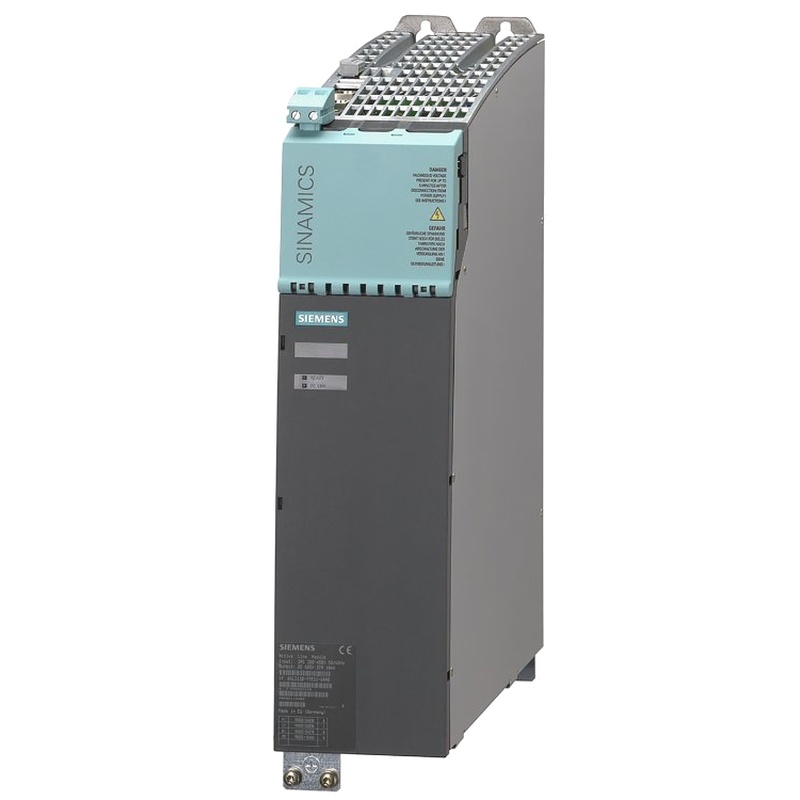












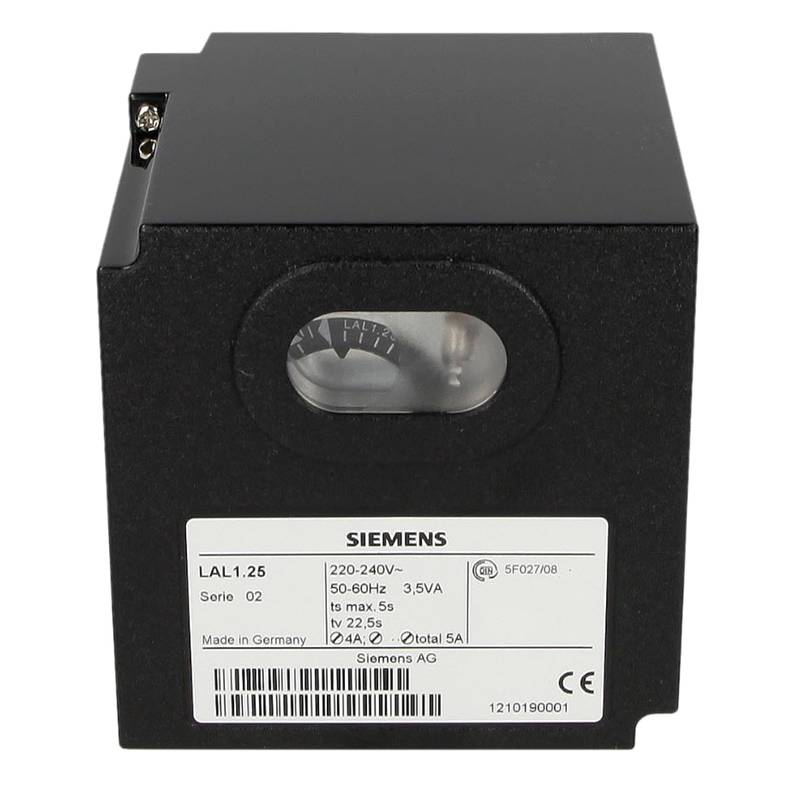
SIEMENS LGK16.333A17-110V 110V Burner Safety Control LGK16


The Siemens LGK16.333A17-110V is a robust burner safety control designed for industrial combustion applications, offering reliable flame monitoring and control. Its key advantages include a 110V AC operating voltage, ensuring compatibility with a wide range of power supplies, and a high degree of operational safety through its integrated functions. This unit is engineered to prevent hazardous situations by precisely monitoring the burner flame and initiating shutdown sequences if the flame is not detected or is unstable. The LGK16 series is recognized for its durability and performance in demanding industrial environments.
Product Specifications
| Feature | Specification |
| :--------------------- | :--------------------------------------------- |
| Product Name | Burner Safety Control |
| Manufacturer | Siemens |
| Model Number | LGK16.333A17-110V |
| Operating Voltage | 110V AC |
| Application | Industrial Burners (Gas, Oil) |
| Flame Detection | Integrated flame sensor or external options |
| Safety Functions | Pre-purge, Post-purge, Ignition control |
| Reset Type | Manual/Automatic (configurable) |
| Operating Temperature | -20°C to +60°C |
| Protection Class | IP40 (or as per specific variant) |
| Dimensions | (Refer to datasheet for specific dimensions) |
| Certifications | (Typically CE, UL, CSA as applicable) |
Core Features & Market Positioning
The Siemens LGK16.333A17-110V distinguishes itself through its advanced flame monitoring capabilities, which are critical for ensuring safe and efficient burner operation. Its market positioning is as a dependable, high-performance safety control for industrial processes where burner reliability is paramount. The unit's integration of pre-ignition and post-ignition timing sequences, along with its fail-safe design, provides a superior level of safety compared to simpler control devices. Furthermore, its robust construction allows for consistent performance even in environments with significant temperature fluctuations and electrical interference, a common challenge in industrial settings.
Key Application Scenarios
This Siemens burner safety control finds extensive use in various industrial heating applications. It is integral to the safe operation of industrial boilers, furnaces, and thermal oxidizers where precise control over the combustion process is essential. Typical user search needs revolve around ensuring burner ignition reliability, preventing fuel-air mixture explosions, and maintaining continuous operation without safety interruptions. Industries such as chemical processing, food and beverage manufacturing, power generation, and metal fabrication frequently rely on the LGK16.333A17-110V for their combustion safety requirements.
Practical System Integration Guidance
Integrating the Siemens LGK16.333A17-110V into an existing or new combustion system requires careful attention to wiring and component compatibility. The control unit typically connects to a flame detector (UV, IR, or flame rod), an ignition transformer, and various safety interlocks such as pressure switches and limit sensors. Proper wiring of the power supply to the 110V AC terminals is crucial, ensuring correct polarity and stable voltage. For systems requiring specific pre- and post-purge times, the internal programming or external timer settings need to be configured according to the burner manufacturer's specifications and local safety regulations.
Operation and Risk Mitigation
Operating the SIEMENS LGK16.333A17-110V involves ensuring the burner system is properly commissioned and maintained. The safety control actively monitors the flame signal during the ignition sequence and throughout the burn cycle. If a flame is not established within the designated ignition period, or if the flame signal is lost during operation, the LGK16 will initiate an immediate fuel shutoff and engage a post-purge cycle to clear the combustion chamber of any unburned fuel. Common troubleshooting involves checking for correct flame signal strength, verifying interlock status, and ensuring the reset button is functional. Fault codes, if indicated by the unit's status lights or associated control panel, provide diagnostic information to help mitigate potential risks.
Scalability & Long-Term Value
The Siemens LGK16.333A17-110V offers significant long-term value through its reliability and compatibility with broader Siemens industrial automation platforms. While the LGK16 itself is a dedicated burner control, its integration into a larger control architecture can be achieved through standard electrical signaling. For systems evolving towards digital integration and IIoT, the LGK16 can be interfaced with PLCs or SCADA systems that monitor its status and control signals, providing remote diagnostics and operational data. This allows for a scalable approach to combustion management, ensuring that safety remains robust even as plant-wide automation capabilities expand.
FAQs
What is the primary function of the Siemens LGK16.333A17-110V?
The primary function is to ensure safe ignition and operation of industrial burners. It monitors flame presence and controls the fuel supply.
It prevents hazardous conditions by shutting off fuel if flame is not detected. This is a critical safety interlock.
The control manages pre-purge, ignition timing, and post-purge cycles for optimal combustion safety.
What are the voltage requirements for the Siemens LGK16.333A17-110V?
This unit operates on a 110V AC power supply. It is important to ensure a stable and correct voltage is provided.
Using incorrect voltage can lead to malfunction or damage to the control unit. Always verify supply before connection.
The 110V AC requirement makes it compatible with many standard industrial power distribution systems.
Can the Siemens LGK16.333A17-110V be used with different types of burners?
Yes, it is designed for various industrial gas and oil burners. Its adaptability depends on flame detection methods.
Flame rod sensors for gas and UV/IR sensors for oil or gas are commonly supported. Check compatibility with your specific burner.
Proper configuration and selection of flame detection is key for successful application across different burner types.
How is the flame detected by the Siemens LGK16.333A17-110V?
Flame detection can be achieved via an integrated flame rod for direct ignition supervision. It senses ionization.
Alternatively, it supports external flame detectors like UV or infrared sensors for remote flame monitoring. This suits larger or hotter flames.
The choice of detector depends on the burner type, fuel, and operating environment for reliable signal acquisition.
What safety features are included in the Siemens LGK16.333A17-110V?
It includes essential safety features like pre-purge and post-purge cycles. These clear the combustion chamber.
It also ensures flame failure response, shutting off fuel immediately if the flame signal is lost. This prevents gas accumulation.
The unit manages ignition sequences and lockout functions to prevent unsafe start-up attempts.
Is manual intervention required to reset the Siemens LGK16.333A17-110V after a shutdown?
Reset functionality can be configured for manual or automatic reset. The specific application determines this.
A manual reset is common for safety-critical shutdowns to ensure human intervention. This requires an operator.
Automatic reset may be used in specific, low-risk applications but requires careful justification and approval.
What are common issues encountered during installation of the Siemens LGK16.333A17-110V?
Incorrect wiring is a frequent installation problem, especially with power and flame sensor connections. Always follow diagrams.
Ensuring proper grounding and shielding of signal cables is vital for preventing interference. This affects flame signal reliability.
Improper sequencing of component connections or incorrect dip switch settings can also cause initial startup failures.
How does the Siemens LGK16.333A17-110V integrate with other control systems?
It communicates via standard electrical signals, allowing interface with PLCs and DCS. These are supervisory systems.
Status indicators and alarm outputs can be wired to a central control panel for monitoring. This provides operational overview.
Advanced integration may involve external timers or relays for complex sequencing, managed by a higher-level controller.
What is the typical operating temperature range for this burner control?
The Siemens LGK16.333A17-110V typically operates within a range of -20°C to +60°C. This ensures robustness.
This wide range makes it suitable for many industrial environments, including those with variable ambient temperatures.
Extreme conditions outside this range may require additional environmental protection or climate control measures.
Where can I find detailed technical documentation for the Siemens LGK16.333A17-110V?
Detailed technical documentation is usually available from Siemens' official website. Search for the product datasheet.
Distributors and authorized service partners also typically provide comprehensive manuals and installation guides.
The product's full specifications, wiring diagrams, and troubleshooting procedures are contained within these official documents.