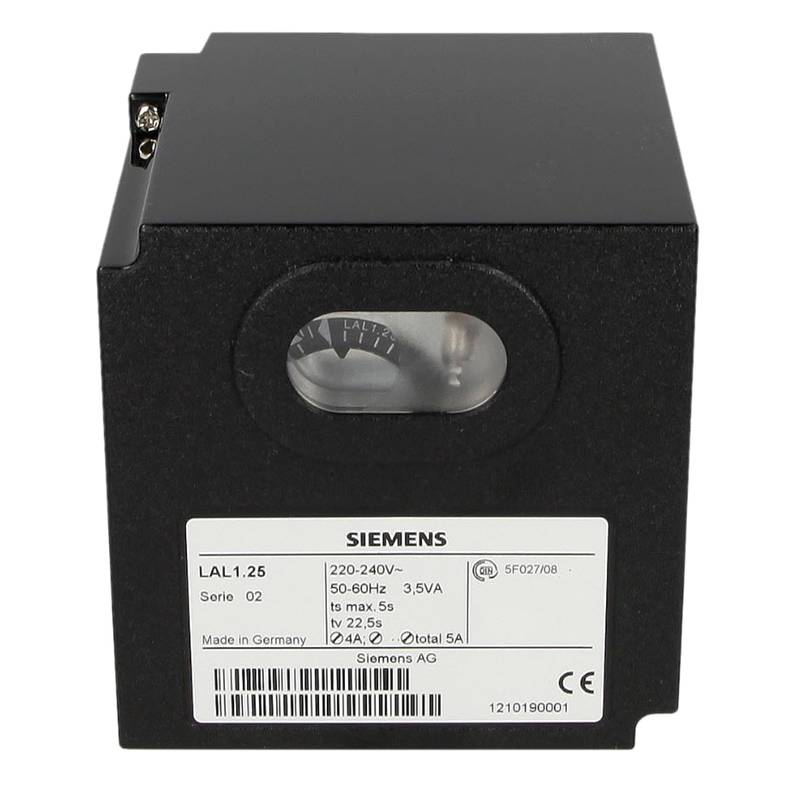













SIEMENS LMO24.255C2 Electronic Burner Control LMO24 Two-Stage


The SIEMENS LMO24.255C2 Electronic Burner Control is a sophisticated two-stage control designed for light oil burners, offering precise management of the combustion process. Its core advantages lie in its reliable ignition sequencing, flame monitoring capabilities, and robust safety features, ensuring efficient and secure operation. Key technical parameters include its operating voltage of 120V AC, a switching capacity for fan and pump typically rated at 4(2) A, and a wide operating temperature range from -20°C to +60°C. This control is engineered for single-point or two-point flame detection, utilizing an ionization probe or a UV scanner, respectively. The LMO24.255C2 exemplifies Siemens' commitment to industrial automation with its advanced electronic design and user-friendly interface, positioning it as a premium solution for demanding burner applications.
Product Specifications
| Feature | Specification |
| :--------------------- | :--------------------------------------------- |
| Product Type | Electronic Burner Control |
| Model | LMO24.255C2 |
| Stages | Two-Stage |
| Fuel Type | Light Oil |
| Operating Voltage | 120V AC |
| Switching Capacity | Fan/Pump: 4(2) A |
| Flame Detection | Ionization Probe or UV Scanner |
| Operating Temperature | -20°C to +60°C |
| Protection Class | IP 44 |
| Dimensions (W x H x D) | 135 mm x 101 mm x 62 mm |
| Mounting | Standard mounting to burner control base |
| Approvals | CE, UL, CSA |
Core Features & Market Positioning
The SIEMENS LMO24.255C2 stands out in the market due to its intelligent two-stage control logic, which optimizes fuel delivery and air supply for enhanced efficiency and reduced emissions. Unlike single-stage controllers, this unit allows for precise modulation of burner output, adapting to varying heat demands and leading to significant energy savings. Its robust internal diagnostics and comprehensive safety interlocks provide a high level of operational reliability, minimizing downtime and maintenance costs. This advanced feature set positions the LMO24.255C2 as a superior choice for industrial applications where performance, safety, and efficiency are paramount, differentiating it from simpler, single-stage burner controls. The unit's compatibility with various flame detection methods, including ionization probes and UV scanners, further enhances its versatility and market appeal.
Key Application Scenarios
This electronic burner control is ideally suited for a wide array of industrial heating applications. It is commonly integrated into industrial boilers, process heaters, and commercial furnaces that utilize light oil as their primary fuel source. Its two-stage operation makes it particularly effective in systems requiring precise temperature control and variable heat output, such as those found in food processing, chemical manufacturing, and large commercial building climate control systems. The SIEMENS LMO24.255C2 is also a preferred component in specialized combustion equipment where consistent performance and stringent safety standards are critical. Users often seek this control for retrofitting older systems to improve efficiency and compliance with modern environmental regulations.
Practical System Integration Guidance
Integrating the SIEMENS LMO24.255C2 involves careful wiring according to the provided wiring diagram and local electrical codes. The control unit typically mounts directly onto a standard burner control base, ensuring secure electrical and mechanical connections. It requires a stable 120V AC power supply and direct connections to the ignition transformer, fuel valve(s), combustion fan, and flame sensing device (ionization probe or UV scanner). Proper grounding is essential for safe operation and reliable flame detection. Commissioning involves setting the appropriate timing sequences for ignition, purge cycles, and stage transitions based on the specific burner and application requirements. This often includes adjusting pre- and post-purge times and stage changeover points via internal jumpers or DIP switches, ensuring optimal combustion performance and safety interlocks are active.
Operation and Risk Mitigation
The SIEMENS LMO24.255C2 operates by sequencing the burner through its ignition, low-fire, and high-fire stages, ensuring a safe and efficient startup, operation, and shutdown. Flame monitoring is continuous; if flame is lost during operation, the control immediately initiates a safety shutdown sequence, closing the fuel valve and initiating a purge cycle to clear any unburned fuel. Critical fault codes, often indicated by LED status lights on the unit, signal specific issues such as flame failure, internal faults, or locked-out conditions. Understanding these codes, detailed in the product manual, is crucial for effective troubleshooting. Risk mitigation is inherent in the control's design, with multiple redundant safety checks and a failsafe shutdown mechanism that prevents hazardous situations such as burner flameout without ignition or incomplete purge cycles.
Scalability & Long-Term Value
The SIEMENS LMO24.255C2 offers significant long-term value through its robust design and compatibility with established Siemens industrial automation platforms. While not directly scalable in terms of adding more stages, its two-stage capability provides a level of flexibility that accommodates a broad range of applications, reducing the need for more complex or proprietary control systems. Its integration potential with SCADA systems or Building Management Systems (BMS) via auxiliary relays or communication modules (depending on specific system architecture) allows for remote monitoring and data logging, aligning with Industry 4.0 initiatives. The durability and reliability engineered into the LMO24.255C2 ensure a long service life, minimizing the total cost of ownership and providing a stable, dependable control solution for years to come.
Frequently Asked Questions (FAQs)
What is the primary function of the SIEMENS LMO24.255C2?
The LMO24.255C2 is an electronic burner control managing two-stage light oil burners. It sequences ignition, regulates fuel and air, and ensures safe flame monitoring.
Its core purpose is to provide automated, safe, and efficient operation for industrial heating systems. This ensures consistent performance and minimizes energy consumption.
It acts as the brain of the burner, orchestrating all combustion phases and safety protocols. This prevents hazardous conditions and optimizes burner output.
Can the LMO24.255C2 be used with natural gas burners?
No, this specific model, LMO24.255C2, is designed exclusively for light oil combustion. Its flame sensing and fuel control mechanisms are optimized for oil.
Using it with natural gas would be unsafe and ineffective, as it lacks the necessary components for gas ignition and flame detection. Different Siemens models are available for gas applications.
Always ensure the burner control matches the fuel type. For natural gas, look for controls specifically rated for gaseous fuels and their respective ignition requirements.
What are the typical voltage requirements for the LMO24.255C2?
The SIEMENS LMO24.255C2 operates on a standard 120V AC power supply. This voltage is common in industrial and commercial electrical systems.
Ensuring a stable and correct voltage supply is crucial for reliable performance and to prevent damage to the control unit. Always verify power source before installation.
Incorrect voltage can lead to erratic operation, failure to ignite, or premature component failure. Consult the product manual for precise electrical specifications.
How is flame detection handled by the LMO24.255C2?
This control supports two primary flame detection methods: ionization probes for oil flames and UV scanners for specific conditions. The choice depends on the burner setup.
The ionization probe senses electrical conductivity, while the UV scanner detects ultraviolet radiation emitted by the flame. Both provide crucial feedback to the control.
Proper installation and connection of the flame sensor are critical for accurate flame signal acquisition. A faulty sensor will trigger safety shutdowns.
What does "two-stage" operation mean for this burner control?
Two-stage operation means the burner can operate at two distinct firing rates, typically a low-fire and a high-fire setting. This allows for more precise temperature control and better efficiency.
The control automatically switches between stages based on the system's heating demand, modulating fuel and air accordingly. This optimizes performance and reduces energy waste.
This contrasts with single-stage burners, which only have one firing rate, leading to less precise control and potentially more on/off cycling.
What are the key safety features of the SIEMENS LMO24.255C2?
Safety is paramount, with features like continuous flame monitoring that triggers immediate shutdown on flame loss. It also ensures a proper pre- and post-purge cycle.
The control prevents burner ignition if the combustion chamber is not properly purged, avoiding fuel accumulation and potential explosions. It also incorporates internal diagnostics.
It will also enter a locked-out state, requiring manual reset, if critical faults are detected, ensuring safety before restart. This prevents operation under unsafe conditions.
What is the operating temperature range for this control?
The SIEMENS LMO24.255C2 is designed to operate reliably within a wide temperature range of -20°C to +60°C (-4°F to 140°F). This allows for use in diverse industrial environments.
This broad range ensures consistent performance in both cold and hot operating conditions. It is important to ensure ambient temperatures remain within these limits for longevity.
Exceeding these temperature limits can lead to component damage or failure, compromising burner operation and safety. Proper ventilation is key in enclosed spaces.
How do I reset a locked-out LMO24.255C2?
A locked-out state typically requires a manual reset to ensure the fault condition is understood and addressed. This is usually done by pressing a reset button on the unit.
Before resetting, it is critical to diagnose and rectify the underlying cause of the lockout, such as a flame failure, sensor issue, or electrical problem. Consult the manual for specific fault codes.
Attempting to reset without addressing the root cause may lead to repeated lockouts or unsafe operation. Always follow safety procedures during troubleshooting.
What is the typical switching capacity for the fan and pump?
The SIEMENS LMO24.255C2 typically has a switching capacity of 4 Amperes at 120V AC for both the fan and pump circuits, with a resistive load rating. The "2" in the 4(2)A designation might refer to inductive load or a reduced rating for continuous duty.
This capacity is sufficient for most standard industrial oil burners' fan motors and fuel pumps. It's important to check the motor's actual current draw against this specification.
Overloading these circuits can cause the contacts to fail, leading to burner malfunction or damage to the control. Ensure all connected loads are within the specified limits.
Where can I find the detailed installation and wiring manual?
The detailed installation and wiring manual for the SIEMENS LMO24.255C2 is typically available directly from Siemens' official website or through authorized Siemens distributors. Searching for "SIEMENS LMO24.255C2 manual" online should yield results.
These manuals contain comprehensive diagrams, step-by-step installation instructions, and troubleshooting guides specific to the unit. It is imperative to consult this document before any installation or maintenance.
Always use the latest version of the manual to ensure accuracy of specifications and procedures. Proper documentation is key for safe and effective operation.