











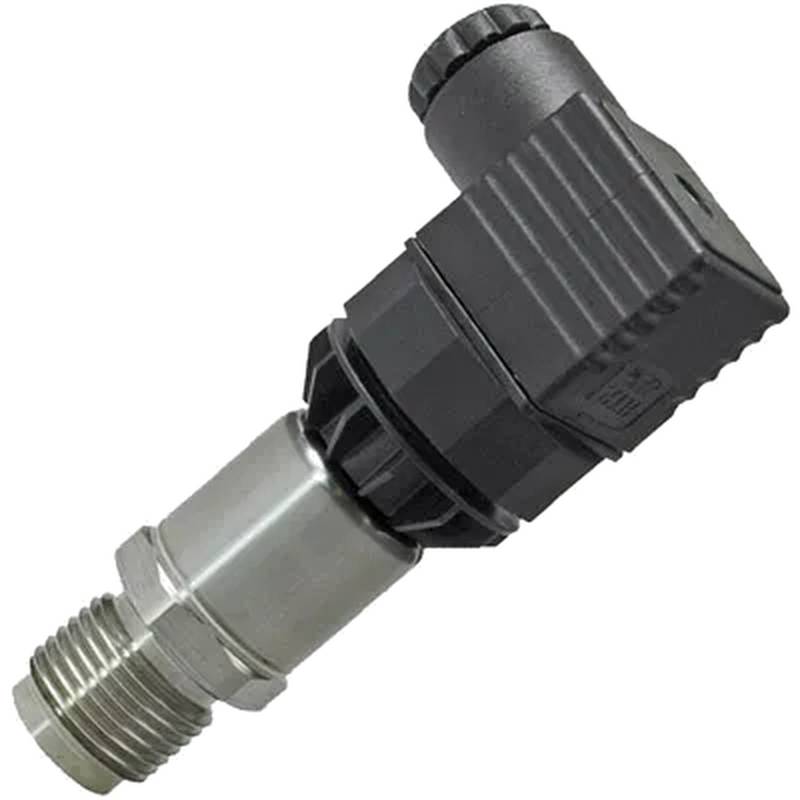
SIEMENS QBE2003-P16 Pressure Sensor QBE2003 Series 16 Bar


The SIEMENS QBE2003-P16 Pressure Sensor, part of the QBE2003 Series, is a high-performance transducer engineered for precise pressure measurement in demanding industrial environments. This sensor excels with its robust design, delivering accurate readings up to 16 bar. Key advantages include its superior accuracy, reliability, and seamless integration capabilities, making it an ideal choice for critical control and monitoring applications. The QBE2003-P16 features a fast response time and excellent long-term stability, ensuring consistent performance even under adverse conditions. Its compact form factor and versatile connectivity options simplify installation and maintenance, positioning it as a leading solution in process automation.
| Parameter | Specification |
| :--------------------- | :------------------------------------------- |
| Product Series | QBE2003 |
| Model | QBE2003-P16 |
| Pressure Range | 0…16 bar |
| Output Signal | 0...10 V |
| Power Supply | 24 V AC/DC |
| Accuracy | ±0.5 % FS |
| Operating Temperature | -20…+85 °C |
| Media Compatibility | Air, non-corrosive gases, and liquids |
| Electrical Connection | Plug-in connector (M12 x 1) |
| Housing Material | Stainless steel (1.4404/316L) |
| Protection Class | IP65 |
| Response Time | <10 ms |
| Burst Pressure | 40 bar |
Core Features & Market Positioning
The SIEMENS QBE2003-P16 pressure sensor distinguishes itself through its advanced piezoresistive sensing technology, which guarantees high accuracy and linearity across its entire 0-16 bar range. Its robust stainless steel housing (1.4404/316L) and IP65 protection rating ensure exceptional durability and resistance to harsh industrial environments, including exposure to moisture, dust, and corrosive media. This robust construction, coupled with an operating temperature range of -20 to +85 °C, positions the QBE2003-P16 as a reliable component for critical process control where precision and longevity are paramount. The sensor's output signal of 0-10 V, powered by a 24 V AC/DC supply, allows for straightforward integration into existing automation systems.
Key Application Scenarios
This SIEMENS QBE2003-P16 pressure sensor finds extensive application in HVAC systems for monitoring air and water pressures, ensuring optimal performance and energy efficiency. In industrial automation, it is crucial for process control, level measurement in tanks, and monitoring hydraulic or pneumatic systems, ensuring safe and efficient operation within its 16-bar limit. The sensor's compatibility with non-corrosive gases and liquids makes it suitable for a broad spectrum of manufacturing processes, including food and beverage, chemical processing, and water treatment facilities. Its precise measurement capabilities also lend themselves to building automation for dynamic pressure regulation and system diagnostics.
Practical System Integration Guidance
Integrating the SIEMENS QBE2003-P16 pressure sensor into an automation system is streamlined by its standard 0-10 V analog output and a common M12 x 1 plug-in connector. For installation, ensure the sensor is mounted in a position that avoids excessive vibration and direct exposure to extreme temperatures beyond its specified range. When wiring, connect the power supply terminals (typically pins 1 and 3 on the M12 connector) to a stable 24 V AC/DC source, and the output signal (typically pin 2) to the analog input of a PLC or control system. Calibration, if required, can be performed through the connected control system by establishing the zero and span points corresponding to the 0 V and 10 V outputs, respectively, within the 0-16 bar range.
Operation and Risk Mitigation
Operating the SIEMENS QBE2003-P16 pressure sensor within its specified 0-16 bar range and temperature limits (-20 to +85 °C) is critical for maintaining accuracy and preventing damage. Users should verify media compatibility, ensuring that only non-corrosive gases and liquids are connected to the sensor, as incompatible substances can lead to premature failure. During maintenance or installation, always ensure the power supply is disconnected to prevent electrical hazards. Potential troubleshooting scenarios often involve checking the power supply voltage and the integrity of the electrical connections. Faults are typically indicated by an output signal outside the expected 0-10 V range, prompting checks for proper wiring and pressure medium conditions.
Scalability & Long-Term Value
The SIEMENS QBE2003-P16 pressure sensor offers significant long-term value through its compatibility with SIEMENS' broader automation platforms and its adherence to industry-standard signal outputs. This ensures that it can be seamlessly integrated into existing or future SCADA, HMI, and PLC systems, facilitating a smooth upgrade path and avoiding vendor lock-in. Its robust construction and high-quality components contribute to a long operational lifespan, minimizing downtime and replacement costs. Furthermore, the sensor's performance data can be readily fed into IIoT platforms for advanced analytics, predictive maintenance, and process optimization, aligning with the trend towards digitalized industrial operations.
FAQs
What is the maximum pressure the SIEMENS QBE2003-P16 can measure?
The SIEMENS QBE2003-P16 pressure sensor is designed to measure pressures up to a maximum of 16 bar. This range makes it suitable for many industrial applications.
Exceeding this limit can cause irreversible damage to the sensor's internal components. Always ensure your application operates within this specified range for optimal performance and longevity.
Consult the product manual for detailed information on pressure limitations and safe operating conditions.
What type of output signal does the QBE2003-P16 provide?
The SIEMENS QBE2003-P16 provides a standard 0-10 V analog output signal. This output is proportional to the measured pressure.
This 0-10 V signal is widely compatible with most PLCs, data loggers, and other industrial control systems. It allows for easy integration and signal processing.
Users can utilize this signal for continuous monitoring, control loops, and data acquisition in various automation scenarios.
What is the accuracy of the SIEMENS QBE2003-P16 pressure sensor?
The SIEMENS QBE2003-P16 pressure sensor offers a high accuracy of ±0.5% of the full scale (FS). This level of precision ensures reliable and consistent readings for critical processes.
This accuracy rating means that the sensor's measurement error will not exceed a very small percentage of its maximum measurable pressure. This is vital for applications requiring tight control.
For critical applications, consider periodic recalibration to maintain this specified accuracy over time.
What power supply is required for the QBE2003-P16?
The SIEMENS QBE2003-P16 pressure sensor operates on a 24 V AC/DC power supply. This is a common voltage in industrial automation systems.
Ensure your power source provides a stable voltage within this range to guarantee correct sensor operation. Unstable or incorrect voltage can lead to inaccurate readings or damage.
Always verify the power supply connections and polarity when installing or troubleshooting the sensor.
Can the QBE2003-P16 be used with corrosive media?
The SIEMENS QBE2003-P16 is specified for use with air, non-corrosive gases, and liquids. It is not designed for highly corrosive substances.
Using corrosive media can degrade the sensor's materials, leading to premature failure and inaccurate measurements. Always check media compatibility.
For applications involving corrosive media, an alternative sensor with appropriate material construction, such as Hastelloy or PTFE, should be selected.
What is the operating temperature range for this pressure sensor?
This pressure sensor can operate within a temperature range of -20 °C to +85 °C. This broad range accommodates most industrial and building automation environments.
Operating the sensor outside these limits can affect its performance, accuracy, and lifespan. Ensure it is installed in an environment within these specifications.
Consider thermal management strategies if the sensor will be exposed to temperatures near the extremes of its range.
What is the protection class of the SIEMENS QBE2003-P16?
The SIEMENS QBE2003-P16 pressure sensor has an IP65 protection class rating. This signifies a high level of protection against dust and water ingress.
This rating ensures that the sensor can withstand high-pressure water jets from any direction, making it suitable for washdown environments. It also indicates complete protection against solid particle ingress.
Ensure all cable connections are properly sealed to maintain the IP65 rating of the overall installation.
How is the QBE2003-P16 physically connected in a system?
The QBE2003-P16 features an M12 x 1 plug-in connector for its electrical connection. This is a standard industrial connector type.
This connector simplifies wiring and ensures a secure, reliable connection, often with an IP67 or IP69K rating when used with a mating connector. It allows for quick sensor replacement.
Always use the correct mating connector and ensure it is securely fastened to maintain electrical integrity and environmental sealing.
What is the response time of the SIEMENS QBE2003-P16?
The SIEMENS QBE2003-P16 pressure sensor boasts a rapid response time of less than 10 milliseconds. This allows for quick detection of pressure changes.
A fast response time is crucial for dynamic processes or applications requiring immediate reaction to pressure fluctuations. It enables precise control and monitoring.
This speed ensures that control systems can react promptly to process events, preventing issues before they escalate.
What are the benefits of using the QBE2003-P16 series?
The QBE2003 series, including the P16 model, offers high accuracy and reliability due to its advanced sensing technology. Its robust design ensures longevity in demanding conditions.
These sensors are easy to integrate into existing systems thanks to standard output signals and connectors. They provide a cost-effective solution for pressure monitoring needs.
The series is backed by SIEMENS' reputation for quality and support, offering peace of mind and long-term value for industrial applications.