











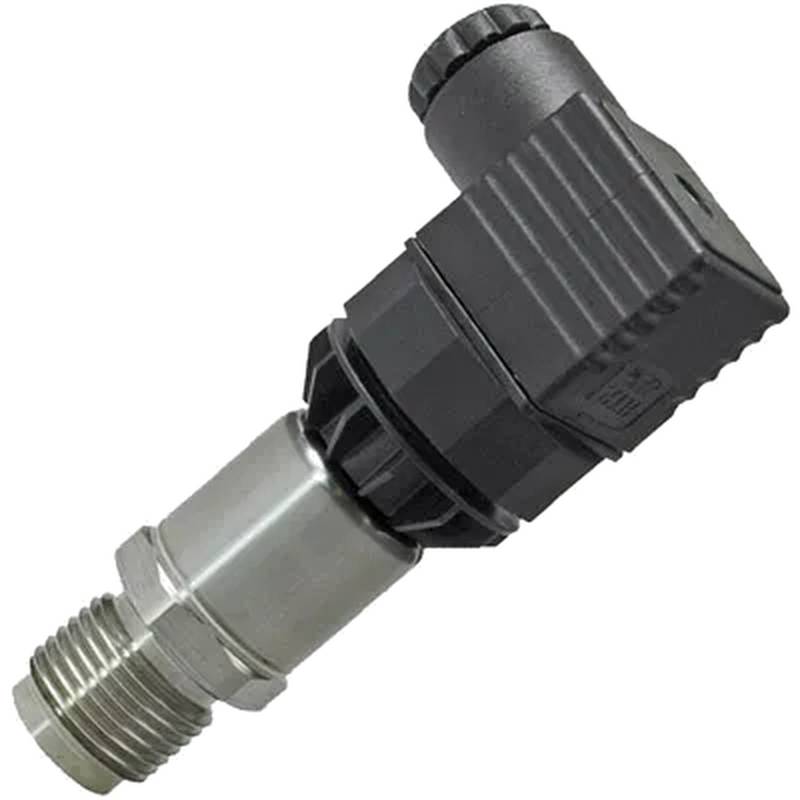
SIEMENS QBE3100-D10 Differential Pressure Sensor 10 Bar


The SIEMENS QBE3100-D10 Differential Pressure Sensor is a high-performance device engineered for precise pressure monitoring in demanding industrial environments. This sensor excels in applications requiring accuracy up to 10 bar, offering robust construction and advanced technological features that translate into significant operational advantages. Its core strengths lie in its rapid response time, exceptional long-term stability, and seamless integration capabilities within Siemens' broader automation ecosystems. Crucially, the QBE3100-D10 boasts a measurement range of 0…1000 Pa and an output signal of 0…10 VDC, making it a versatile component for sophisticated process control.
Product Specifications
| Specification | Value |
| :---------------------------- | :----------------------------------- |
| Product Type | Differential Pressure Sensor |
| Manufacturer | SIEMENS |
| Model | QBE3100-D10 |
| Pressure Range | 0…1000 Pa |
| Max. Overload Pressure | 10 bar |
| Output Signal | 0…10 VDC |
| Power Supply | 24 VAC or 24 VDC |
| Accuracy | ±1% of full scale |
| Operating Temperature Range | -20 to 50 °C |
| Ingress Protection | IP65 |
| Connection Type | Screw terminals |
| Housing Material | ABS (Acrylonitrile Butadiene Styrene) |
| Media Compatibility | Air and non-corrosive gases |
Core Features & Market Positioning
The SIEMENS QBE3100-D10 distinguishes itself through its superior accuracy and reliability, positioning it as a premier choice for critical pressure measurement tasks. Its advanced sensing element ensures consistent performance even under fluctuating environmental conditions, a key differentiator in markets where process integrity is paramount. The sensor's design prioritizes ease of installation and maintenance, reducing total cost of ownership for end-users. Furthermore, its compatibility with Siemens' renowned automation platforms, such as SIMATIC, enhances its value proposition by facilitating streamlined system integration and data management. The 0…10 VDC output signal provides a linear and easily interpretable measurement, ideal for integration with PLCs and SCADA systems.
Key Application Scenarios
This differential pressure sensor finds extensive application in HVAC systems for monitoring air filters, fan performance, and duct static pressure, ensuring optimal building efficiency and air quality. In industrial process control, the QBE3100-D10 is vital for measuring flow rates in ducts and stacks using pitot tubes, controlling fan speeds, and monitoring pressure differentials across various equipment. Its robust design and IP65 rating make it suitable for environments where dust and moisture are prevalent. The 10 bar maximum overload pressure capability provides an essential safety margin in systems that might experience transient pressure spikes.
Practical System Integration Guidance
Integrating the SIEMENS QBE3100-D10 is a straightforward process. The device requires a power supply of either 24 VAC or 24 VDC, connected to the designated terminals. The output signal (0…10 VDC) should be wired to the corresponding input on a PLC or other control system. For pressure connections, ensure the use of appropriate tubing and that the high-pressure port and low-pressure port are correctly identified and connected to the respective measurement points. Calibration is typically performed via the connected control system, leveraging the sensor's linear output for accurate span and offset adjustments.
Operation and Risk Mitigation
Proper operation of the SIEMENS QBE3100-D10 involves ensuring it is installed in an environment within its specified operating temperature range of -20 to 50 °C and that the measured media are limited to air and non-corrosive gases. Overload pressure must never exceed the 10 bar maximum to prevent damage to the sensing element. Risks of inaccurate readings can be mitigated by regular checks of the pressure tubing for leaks or blockages and by ensuring the sensor housing remains clean and free from debris, which could affect its performance or ingress protection. Fault detection within integrated systems can often identify issues related to signal loss or out-of-range readings.
Scalability & Long-Term Value
The SIEMENS QBE3100-D10 offers excellent long-term value due to its robust construction and Siemens' commitment to backward compatibility within its automation portfolio. Its integration with digital platforms and the Industrial Internet of Things (IIoT) is facilitated by its standard analog output, allowing for easy data acquisition and analysis for predictive maintenance or performance optimization. For applications requiring higher accuracy or different pressure ranges, Siemens offers a comprehensive suite of differential pressure sensors, ensuring that upgrade paths are available without necessitating a complete system overhaul.
Frequently Asked Questions (FAQs)
What is the primary function of the SIEMENS QBE3100-D10?
It measures the difference between two pressures. This is crucial for many industrial processes.
It monitors air flow, filter status, and fan performance in HVAC systems. Its accuracy ensures efficient operation.
The sensor is vital for controlling and optimizing various industrial applications by providing real-time pressure data.
What is the maximum pressure the QBE3100-D10 can handle?
The sensor has a maximum overload pressure of 10 bar. This provides a safety buffer.
Exceeding this limit can cause permanent damage to the device. Proper system design is essential.
For continuous operation, ensure pressures remain within the specified operating range, not the overload limit.
What type of output signal does the QBE3100-D10 provide?
It outputs a linear signal from 0 to 10 VDC. This is a common analog standard.
This 0-10V signal directly corresponds to the measured differential pressure. It is easy to interface with controllers.
Control systems can readily interpret this voltage output for automation and monitoring purposes.
Can the QBE3100-D10 be used with gases other than air?
It is designed for air and other non-corrosive gases. Always verify media compatibility.
Corrosive gases can degrade the sensor and lead to failure or inaccurate readings. Use appropriate sensors for such media.
For applications involving liquids or aggressive vapors, a different sensor model would be necessary.
What is the accuracy specification for this differential pressure sensor?
The QBE3100-D10 offers an accuracy of ±1% of full scale. This ensures precise measurements.
This accuracy level is suitable for most critical industrial and HVAC applications. Regular calibration maintains accuracy.
It's important to consider this accuracy in relation to the specific pressure range being monitored for critical applications.
How is the QBE3100-D10 powered?
The sensor operates on either 24 VAC or 24 VDC. This offers flexibility in power source selection.
Ensure the correct voltage is supplied to avoid damaging the unit. Verify connections before powering up.
This dual power capability simplifies integration into existing power infrastructures.
What is the operating temperature range for the QBE3100-D10?
It functions reliably within a temperature range of -20 to 50 °C. This covers many industrial conditions.
Operating outside this range can affect sensor performance and lifespan. Ensure proper environmental controls.
Consider the ambient temperature at the installation point to guarantee optimal operation.
What does the IP65 rating signify for the QBE3100-D10?
IP65 indicates protection against dust ingress and low-pressure water jets. This means it's suitable for harsh environments.
It can withstand washdowns and dusty conditions commonly found in industrial settings. Ensure all covers are sealed.
This rating enhances the sensor's durability and reliability in challenging operational locations.
How is the QBE3100-D10 installed and wired?
Installation involves connecting pressure ports and wiring power and output signals. Use screw terminals for electrical connections.
Ensure correct polarity for DC power and proper identification of high/low-pressure ports. Consult the manual for detailed diagrams.
Proper wiring and connection are critical for accurate readings and to prevent damage to the device or system.
Where is the QBE3100-D10 typically used in industrial settings?
It is widely used in HVAC for air duct monitoring and filter status. Also used in process control for flow measurement.
Applications include fan control, pressure regulation, and system balancing. Its versatility is a key advantage.
The sensor is essential for maintaining optimal conditions and ensuring the efficiency of various industrial operations.