ESTUN ER100B-3500-DW High Load Series Dual Wing Support 100kg Payload 3500mm Ultra Reach Stage


The ESTUN ER100B-3500-DW High Load Series Dual Wing Support offers exceptional performance for demanding industrial automation tasks, boasting a robust 100kg payload capacity and an impressive 3500mm ultra-reach stage. This advanced linear motion system is engineered for precision, reliability, and high throughput, making it a superior choice for complex pick-and-place, assembly, and material handling applications. Its dual-wing support design enhances stability and rigidity, crucial for maintaining accuracy over its extended reach.
Product Specifications
| Feature | Specification |
| :--------------------------- | :----------------------------------- |
| Model | ER100B-3500-DW |
| Series | High Load Series |
| Payload Capacity | 100 kg |
| Maximum Reach | 3500 mm |
| Support Type | Dual Wing Support |
| Drive Type | Likely Ballscrew or Linear Motor |
| Repeatability | High precision (specific value TBD) |
| Max Speed | High (specific value TBD) |
| Mounting Options | Versatile (specific options TBD) |
| Environmental Rating | Industrial (specific rating TBD) |
| Power Requirements | Standard industrial voltage (TBD) |
Core Features & Market Positioning
The ESTUN ER100B-3500-DW distinguishes itself through its significant payload capacity combined with an exceptionally long reach, a combination rarely found in standard industrial stages. The dual-wing support is a critical differentiator, providing unparalleled rigidity and vibration damping across the entire 3500mm stroke. This design directly translates to higher accuracy and consistency, even when operating at maximum load and extension. Positioned as a premium solution, it targets applications where precision over long distances is paramount, outperforming conventional linear actuators and smaller robotic arms in specialized heavy-duty scenarios. Its robust construction suggests a long operational lifespan and suitability for harsh manufacturing environments, a key selling point for high-volume production lines prioritizing uptime and minimal maintenance.
Key Application Scenarios
The ESTUN ER100B-3500-DW excels in a variety of demanding industrial automation applications. Its substantial 100kg payload and 3500mm reach make it ideal for heavy component handling in automotive manufacturing, such as the precise placement of engine blocks or chassis parts. In the electronics industry, it can efficiently manage large PCB assemblies or the intricate placement of bulky semiconductor components. Furthermore, its extended reach is perfectly suited for palletizing and depalletizing operations in logistics and warehousing, where large or heavy boxes need to be moved systematically. This stage is also invaluable for complex assembly tasks requiring the manipulation of large sub-assemblies, ensuring consistent accuracy and repeatability over significant distances.
Practical System Integration Guidance
Integrating the ESTUN ER100B-3500-DW into existing automation systems requires careful consideration of its power and control interfaces. Typically, these high-load stages are driven by servo motors, necessitating compatibility with industrial motion controllers. Wiring should follow strict industrial standards, ensuring proper shielding and grounding to prevent electromagnetic interference, especially given the high currents involved with a 100kg payload. Commissioning involves precise calibration of the motor and encoder feedback to achieve the specified repeatability. Users should consult the detailed ESTUN documentation for specific servo drive parameters, backlash compensation, and end-of-travel limit switch configurations to ensure safe and efficient operation.
Operation and Risk Mitigation
Operating the ESTUN ER100B-3500-DW demands adherence to strict safety protocols. Before powering up, ensure the work area is clear of personnel and obstructions, especially considering the stage's extended reach and heavy payload potential. Emergency stop buttons must be readily accessible and regularly tested. During operation, monitor for any unusual vibrations, noises, or deviations from programmed movements, which could indicate an impending failure. Common troubleshooting involves checking motor-encoder feedback for synchronization issues, verifying power supply stability, and inspecting mechanical components for wear, particularly the linear guides and drive mechanism. Referencing the ESTUN fault code list provided in the technical manual is crucial for diagnosing and resolving specific operational errors.
Scalability & Long-Term Value
The ESTUN ER100B-3500-DW offers significant long-term value through its inherent scalability and robust design. Its compatibility with standard industrial control platforms allows for seamless integration into existing automated lines and future upgrades. For manufacturers seeking to expand their automation capabilities, multiple ER100B-3500-DW stages can be synchronized to create complex multi-axis systems. Furthermore, its high payload and reach capabilities position it well for adoption of Industry 4.0 initiatives, enabling integration with IIoT platforms for predictive maintenance and performance monitoring. This future-proofing ensures the stage remains a valuable asset as production demands evolve and advanced digital manufacturing strategies are implemented.
Frequently Asked Questions (FAQs)
What is the maximum payload capacity of the ESTUN ER100B-3500-DW?
The ESTUN ER100B-3500-DW is engineered to handle a substantial maximum payload of 100kg. This high capacity is critical for applications involving the manipulation of heavy components. Ensuring the load is correctly centered and distributed is key to maintaining performance and longevity.
This impressive weight capability makes it suitable for heavy lifting and precise placement tasks in demanding industrial environments. It enables automation of processes previously requiring manual intervention or less capable machinery.
Always verify that the total weight of the end effector and the workpiece does not exceed the 100kg limit. Refer to ESTUN's technical documentation for specific load distribution guidelines.
What does the "DW" in ESTUN ER100B-3500-DW signify?
The "DW" in the model number ER100B-3500-DW typically denotes "Dual Wing Support." This specialized mechanical configuration enhances the rigidity and stability of the linear stage. It is particularly important for long-reach applications like this 3500mm stage.
Dual wing support systems are designed to counteract bending and vibration that can occur at extended lengths and under heavy loads. This design feature directly contributes to higher precision and repeatability over the entire stroke.
This feature distinguishes the DW series from standard single-support linear stages, making it ideal for applications where maintaining accuracy at the full 3500mm reach is paramount.
How does the 3500mm reach impact application suitability?
The 3500mm ultra-reach capability of the ESTUN ER100B-3500-DW opens up a wide range of large-scale automation possibilities. It allows for significant work envelopes, reducing the need for multiple machines or complex conveyor systems. This extended reach is particularly advantageous in scenarios requiring the movement of large items across substantial distances within a facility.
Applications such as palletizing large boxes, handling automotive sub-assemblies, or covering extensive assembly areas become more efficient. The ability to perform these tasks with a single unit simplifies system design and reduces overall footprint requirements.
Consider this ultra-reach stage for processes where comprehensive coverage over a large area is essential, or where components need to be transferred between distant points with high precision.
What types of industries commonly utilize the ESTUN ER100B-3500-DW?
This high-load, long-reach stage is frequently employed in industries demanding robust and precise automation for heavy items. Key sectors include automotive manufacturing for component assembly and material handling, and logistics for automated warehousing and palletizing operations. The electronics industry may also use it for handling large circuit boards or heavy machinery components.
Its capabilities are also valuable in heavy machinery production, where large parts need precise positioning for assembly or inspection. The 100kg payload and 3500mm reach cater to applications that traditional robots or smaller linear actuators cannot efficiently address.
Any industry requiring the automated manipulation of substantial weights over significant distances, with a premium on accuracy and reliability, would benefit from exploring the ER100B-3500-DW.
What are the typical control system requirements for this stage?
The ESTUN ER100B-3500-DW, given its high performance and load capacity, is typically controlled using advanced servo systems. This usually involves a dedicated industrial motion controller capable of precise trajectory planning and real-time feedback processing. Compatibility with common industrial fieldbuses (e.g., EtherNet/IP, Profinet) is often a requirement for seamless integration.
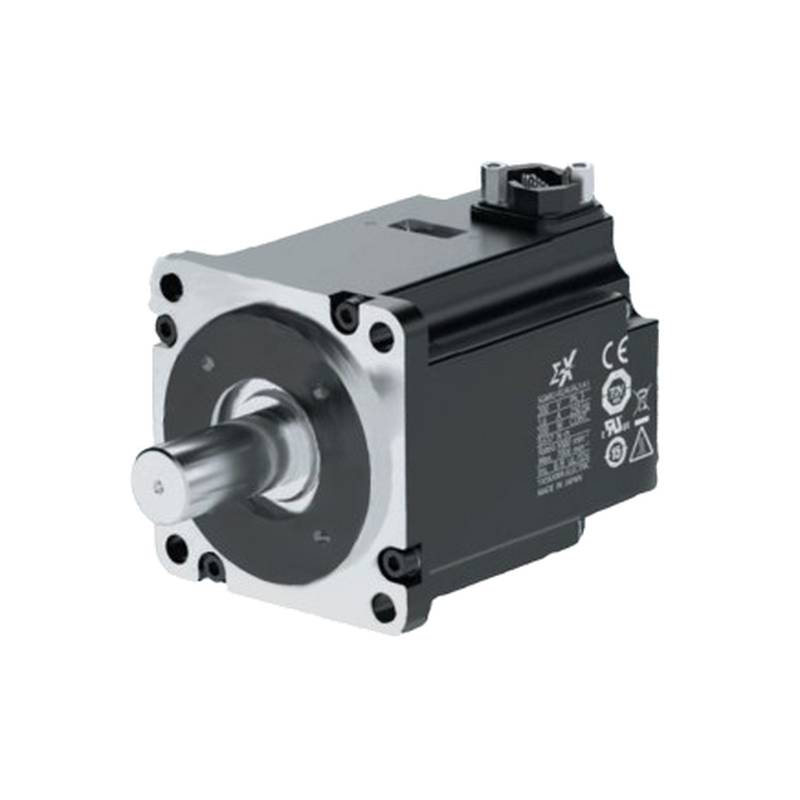
Motor selection is critical; it will likely be a high-torque servo motor matched to the stage's drive mechanism (e.g., ballscrew or linear motor) and the required speed and acceleration profiles. Encoder feedback is essential for closed-loop control, ensuring accurate positioning and velocity regulation.
Users must ensure their control system can provide the necessary voltage and current, and that the programming environment supports complex motion profiles for multi-axis coordination if needed. Consult ESTUN's specifications for recommended controllers and motor pairings.
Can the ESTUN ER100B-3500-DW be integrated with Industry 4.0 solutions?
Absolutely, the ESTUN ER100B-3500-DW is designed for integration with modern Industry 4.0 initiatives. Its digital interfaces and compatibility with standard industrial networks allow it to connect to IIoT platforms. This enables real-time data acquisition on performance metrics like speed, position, and operational status.
Through IIoT connectivity, predictive maintenance becomes feasible, as sensor data can be analyzed to anticipate potential component failures before they occur. This minimizes downtime and optimizes maintenance schedules, contributing to overall equipment effectiveness (OEE).
Furthermore, integrating this stage into a smart factory environment allows for dynamic process adjustments based on production demands, optimizing throughput and resource utilization across the entire manufacturing line.
What are common troubleshooting steps for unexpected stage behavior?
When encountering unexpected behavior, start with a thorough visual inspection for any obvious mechanical damage or obstructions. Check all electrical connections, ensuring they are secure and properly terminated, especially power and encoder cables. Verify that the power supply voltage and current ratings are within the specified limits for the stage and its motor.
Next, review the motion controller's diagnostic logs for error codes or alarm messages. These often pinpoint the source of the problem, whether it's a motor fault, encoder misalignment, or a communication issue. Ensure the controller's firmware is up-to-date and that the stage's parameters are correctly configured within the controller.
If the issue persists, consider recalibrating the encoder and re-initializing the stage's position. For persistent mechanical issues, consult ESTUN's technical support or a qualified service technician, as internal components might require inspection or replacement.
What is the expected lifespan and maintenance schedule for this series?
The ESTUN ER100B-3500-DW High Load Series is engineered for durability in demanding industrial environments, suggesting a long operational lifespan. Routine maintenance typically involves periodic lubrication of the drive mechanism (e.g., ballscrew) and linear guides according to ESTUN's recommendations. Cleaning of the stage and its surroundings to prevent dust and debris ingress is also crucial.
Regular inspection of wear components, such as seals, bearings, and the drive nut or belt, should be performed at intervals specified in the product manual. Monitoring motor and encoder performance through system diagnostics can also provide early warnings of potential issues.
While specific lifespans vary with application duty cycles and operating conditions, adherence to a documented preventive maintenance schedule will maximize reliability and longevity, ensuring consistent performance over many years of operation.
Does the dual wing support offer significant advantages over single-support designs?
Yes, the dual wing support offers significant advantages, especially for long linear stages like the 3500mm ER100B-3500-DW. This configuration provides greatly enhanced rigidity and stability by supporting the moving carriage at two points along the guide rail. This effectively reduces deflection and vibration, particularly at extended lengths and under heavy loads.
The improved structural integrity leads directly to higher precision and repeatability, as the stage is less susceptible to external forces or inertial effects during motion. This makes it ideal for applications where accuracy over the entire stroke is critical, such as precision assembly or intricate pick-and-place tasks.
For users requiring maximum accuracy and stability over long distances, especially with payloads approaching the 100kg limit, the dual wing support design is a superior choice compared to single-support systems.
How is the ESTUN ER100B-3500-DW powered and controlled?
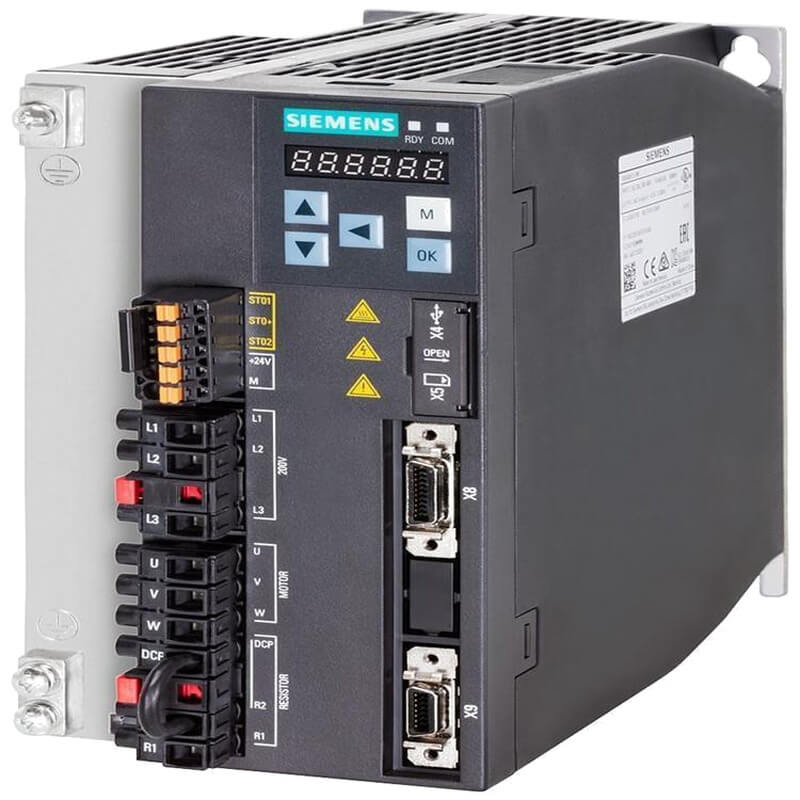
The ESTUN ER100B-3500-DW is typically powered by a high-performance servo motor, which requires a compatible servo drive. This drive is then connected to the main industrial power supply, usually within a standard voltage range specified by ESTUN. The stage's motion is controlled by an external motion controller or PLC.
Control is achieved through digital signals from the motion controller to the servo drive, dictating speed, position, and acceleration. Feedback from the motor's encoder is sent back to the controller for closed-loop operation, ensuring precise positioning accuracy. Communication between the controller and drive often utilizes industrial fieldbuses for robust data transfer.
Proper integration involves selecting a servo drive and motion controller that meet the torque, speed, and communication requirements of the ER100B-3500-DW, and ensuring correct wiring and parameter setup for optimal performance.