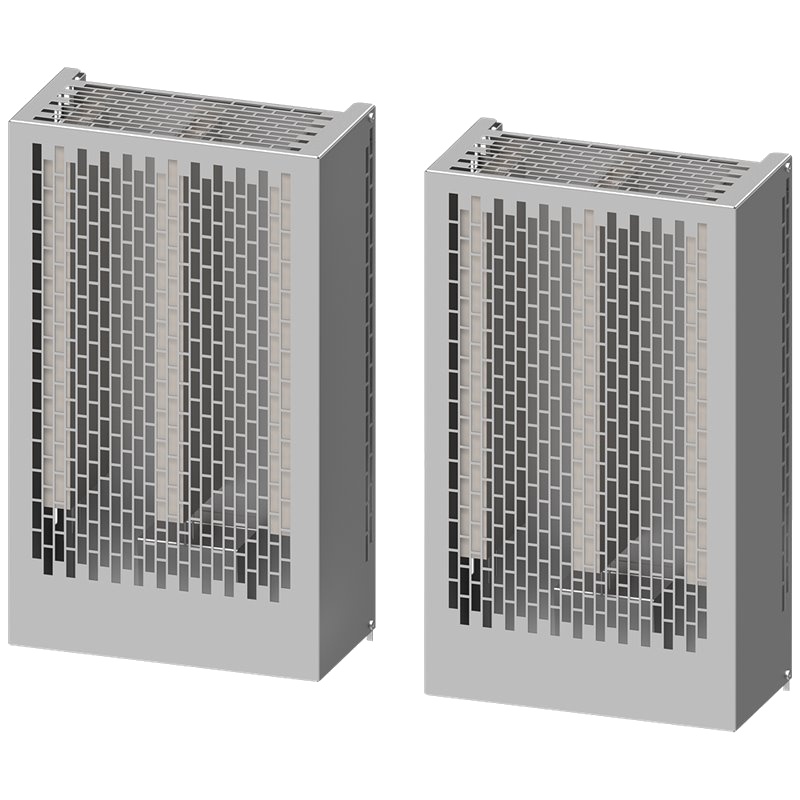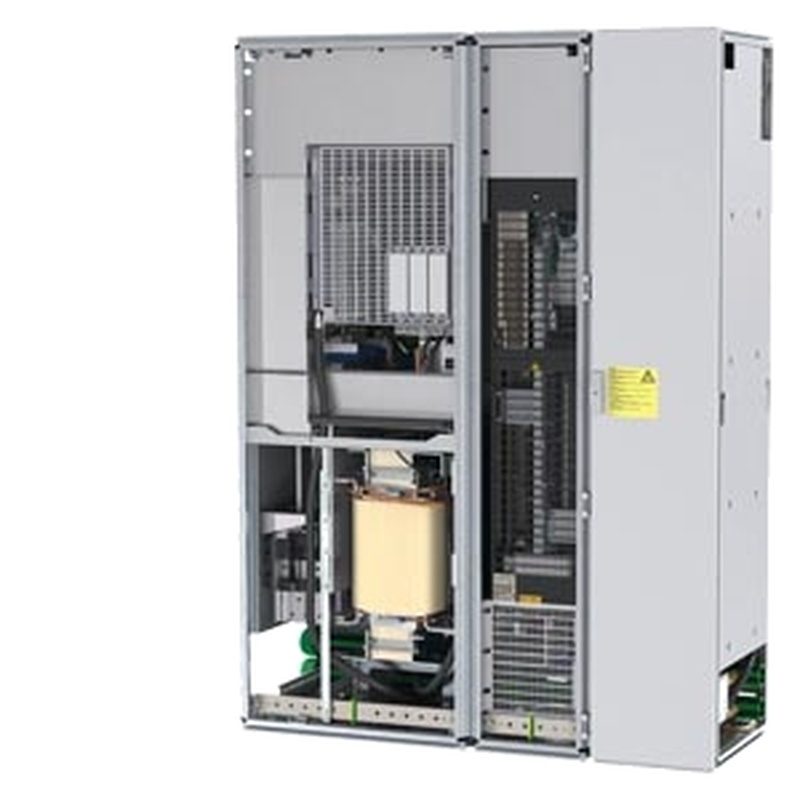
SIEMENS 6SL3735-7TG37-4MA3 SINAMICS S120 Active Line Connection Module 800kW 735A Compact 1200mm without MCB 690V Liquid Cooled


The SIEMENS 6SL3735-7TG37-4MA3 SINAMICS S120 Active Line Connection Module is a high-performance component designed for demanding industrial applications, offering exceptional power handling and advanced control. This 800kW, 735A, liquid-cooled module, measuring 1200mm without an MCB, is engineered for superior efficiency and reliability in complex drive systems. Its compact design and advanced cooling technology make it ideal for environments where space and thermal management are critical. The SINAMICS S120 platform provides a robust foundation for variable speed drives, enabling precise motion control and significant energy savings.
Product Specifications
| Parameter | Value |
| :------------------ | :-------------------------- |
| Product Number | 6SL3735-7TG37-4MA3 |
| Series | SINAMICS S120 |
| Type | Active Line Connection Module |
| Power Rating | 800 kW |
| Current Rating | 735 A |
| Cooling | Liquid Cooled |
| Dimensions (W x H) | 1200 mm (width) |
| Voltage | 690 V |
| MCB | Without |
Core Features & Market Positioning
The SIEMENS 6SL3735-7TG37-4MA3 distinguishes itself through its active line connection technology, which enables regenerative energy feedback to the grid, significantly improving overall system efficiency and reducing operating costs. This feature positions it as a premium solution for energy-conscious industrial operations. The module's liquid cooling system is a key differentiator, allowing for higher power density and sustained performance in demanding thermal conditions, unlike air-cooled alternatives. Its integration within the broader SINAMICS S120 ecosystem ensures seamless compatibility and advanced diagnostic capabilities, a strong selling point for users invested in Siemens automation platforms.
Key Application Scenarios
This module is paramount in high-power industrial applications requiring precise motor control and energy regeneration, such as large pump and fan drives in water treatment plants and HVAC systems. It is also extensively utilized in the printing and paper industry for driving large rollers and presses where consistent torque and speed accuracy are vital. Furthermore, its robust construction and high efficiency make it a preferred choice for heavy machinery in manufacturing, including large extruders and conveyor systems, where reliable, continuous operation is non-negotiable.
Practical System Integration Guidance
Integrating the SIEMENS 6SL3735-7TG37-4MA3 involves careful consideration of its liquid cooling requirements, necessitating proper connection to a suitable cooling circuit. Power connections should adhere to the 690V rating, and electrical safety protocols must be rigorously followed during installation. For optimal performance, it's recommended to pair this module with compatible SINAMICS S120 components, such as motor modules and control units, utilizing Siemens' STARTER commissioning software for configuration and parameterization. Ensure adequate clearance around the module for maintenance and airflow within the control cabinet.
Operation and Risk Mitigation
Safe operation of the SIEMENS 6SL3735-7TG37-4MA3 requires adherence to all safety directives, particularly concerning high voltage and liquid cooling systems. Personnel must be trained in handling high-power electrical equipment. Regular monitoring of coolant temperature and flow rate is crucial to prevent overheating and potential damage. In case of faults, consult the SINAMICS S120 system manuals for specific error code interpretations and troubleshooting steps. Common issues may relate to cooling system integrity or power supply fluctuations, both of which require prompt attention.
Scalability & Long-Term Value
The SINAMICS S120 platform, including the 6SL3735-7TG37-4MA3, offers excellent scalability, allowing for the expansion of drive systems by adding more motor modules and control units as production needs evolve. Its compatibility with Siemens' TIA Portal enables integration into advanced automation solutions and digital manufacturing environments, supporting Industry 4.0 initiatives. This forward-looking design ensures long-term value by facilitating upgrades and seamless integration with emerging IIoT technologies, protecting investment in automation infrastructure.
*
Frequently Asked Questions (FAQs)
Q1: What is the primary function of the SIEMENS 6SL3735-7TG37-4MA3?
Its main role is to provide a high-power interface for variable speed drives. It enables efficient energy management.
The module facilitates regenerative energy feedback to the grid. This reduces overall energy consumption.
It's a key component in demanding industrial applications needing precise motor control.
Q2: What are the benefits of liquid cooling for this module?
Liquid cooling allows for superior heat dissipation compared to air cooling. This ensures stable operation.
It enables a more compact design for high-power modules. Space constraints are often critical in industrial settings.
Sustained high performance under heavy load conditions is achievable. This prevents thermal throttling.
Q3: How does the Active Line Connection Module differ from a standard line connection module?
Active modules can feed energy back into the power supply. This improves overall system efficiency.
They offer better power factor correction capabilities. This is beneficial for grid stability.
Standard modules typically only absorb power. Active modules provide bidirectional power flow.
Q4: What type of applications is the 6SL3735-7TG37-4MA3 best suited for?
It's ideal for large industrial motors in manufacturing and processing. Think large pumps, fans, and extruders.
Applications requiring high torque and precise speed control benefit greatly. This includes many types of machinery.
Environments with significant energy regeneration potential are a perfect fit. This is where efficiency gains are maximized.
Q5: Can this module be used with any motor?
It's designed for use with AC motors controlled by SINAMICS S120 drive systems. Specific motor compatibility should be checked.
The module works in conjunction with SINAMICS S120 motor modules. It's part of an integrated system.
Always ensure the motor's voltage and power ratings are within the module's specifications. Proper matching is essential.
Q6: What are the key installation considerations for this module?
Ensure a properly functioning liquid cooling circuit is connected. Monitor coolant flow and temperature closely.
Electrical connections must meet the 690V rating and safety standards. Qualified personnel should perform installation.
Adequate space for maintenance access is necessary within the cabinet. Proper ventilation for other components is also key.
Q7: What does "without MCB" signify in the product name?
It means the module does not include an integrated Miniature Circuit Breaker. An external protection device is required.
You will need to provide your own upstream overcurrent protection. This is a crucial safety consideration.
The absence of an MCB allows for greater flexibility in selecting protection for the specific application. This depends on system design.
Q8: How is the SIEMENS 6SL3735-7TG37-4MA3 commissioned?
Commissioning is typically done using Siemens' STARTER commissioning software. This software is part of the SINAMICS ecosystem.
The process involves configuring drive parameters and motor data. It also includes setting up safety functions.
Integration with the overall control system is a critical step. This might involve PLC communication.
Q9: What are potential troubleshooting steps for this module?
First, check the status indicators and error codes displayed. Consult the SINAMICS S120 system manual for diagnostics.
Verify the integrity of the liquid cooling system. Ensure proper coolant flow and temperature.
Inspect all electrical connections for tightness and correct wiring. Check for any signs of external damage.
Q10: How does this module contribute to Industry 4.0?
It integrates with digital control platforms like TIA Portal. This enables advanced automation and data exchange.
Its energy feedback capabilities align with smart grid and sustainability goals. This supports efficient resource utilization.
Remote monitoring and diagnostics are possible through network integration. This facilitates predictive maintenance.