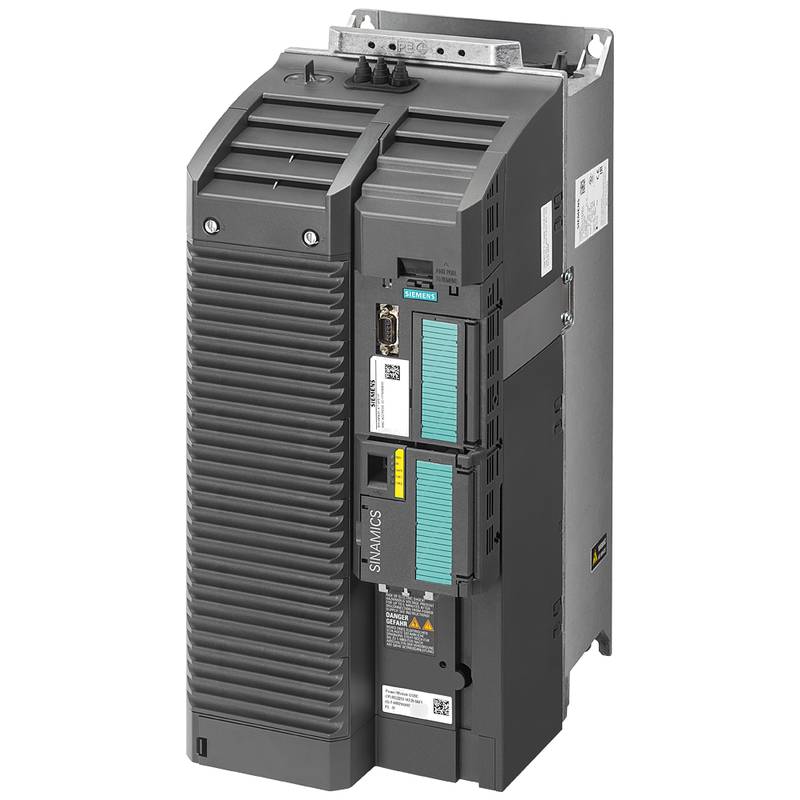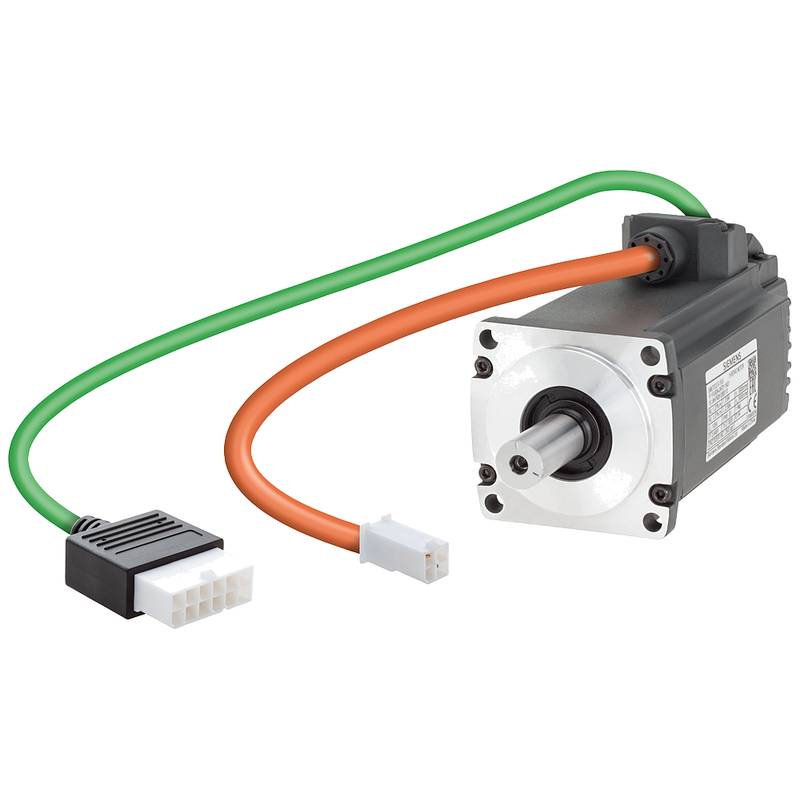













SIEMENS 6SL3725-1TE36-1AA3 SINAMICS S120 Liquid Cooled Single Motor Module 315kW 605A Cabinet Unit 400V IP21


The SIEMENS 6SL3725-1TE36-1AA3 SINAMICS S120 Liquid Cooled Single Motor Module stands as a formidable solution for demanding industrial applications, offering unparalleled performance and reliability. This cabinet unit boasts a 315kW power output and a 605A continuous current rating at 400V, all within an IP21 enclosure. Its liquid-cooled design ensures superior thermal management, crucial for high-density power applications and extended operational cycles, directly translating to increased uptime and reduced maintenance. The SINAMICS S120 platform is renowned for its advanced control capabilities, enabling precise motion control, energy efficiency, and seamless integration into complex automation architectures. This specific module is engineered for environments where robust performance, efficient heat dissipation, and compact footprint are paramount.
Product Specifications
| Feature | Specification |
| :--------------------------- | :------------------------------------------------ |
| Product Number | 6SL3725-1TE36-1AA3 |
| Product Family | SINAMICS S120 |
| Type | Single Motor Module, Cabinet Unit |
| Cooling Method | Liquid Cooled |
| Rated Power Output | 315 kW |
| Continuous Current Rating | 605 A |
| Rated Voltage | 400 V |
| Enclosure Protection | IP21 |
| Control Type | Advanced Control |
| Communication Interface | (Specific interfaces to be determined by system configuration) |
| Dimensions (H x W x D) | (Specific dimensions to be determined by system configuration) |
| Weight | (Specific weight to be determined by system configuration) |
Core Features & Market Positioning
The SIEMENS 6SL3725-1TE36-1AA3 SINAMICS S120 module distinguishes itself through its advanced liquid-cooling technology, providing a significant thermal advantage over air-cooled counterparts, particularly in high-performance drives and enclosed cabinets. This superior heat dissipation capability allows for higher power density and reduced physical footprint, making it ideal for space-constrained installations or applications with extreme thermal loads. Siemens positions the SINAMICS S120 family as a premium, highly integrated drive system, emphasizing its precise control, energy efficiency, and robust construction for mission-critical operations. The S120 platform's technological differentiation lies in its vector control algorithms, integrated safety functions, and flexible communication options, enabling it to meet the evolving demands of modern industrial automation.
Key Application Scenarios
This liquid-cooled SINAMICS S120 motor module is exceptionally well-suited for high-power, dynamic applications within industries such as general manufacturing, plastics processing, and material handling. Its robustness and efficient cooling make it a prime choice for demanding tasks like large extruders, injection molding machines, and high-speed conveyor systems where consistent performance under continuous load is essential. Industries requiring precise speed and torque control, such as printing presses or complex packaging machinery, will also benefit from the S120's advanced drive capabilities. The 400V rating and 315kW power output are indicative of its use in heavy-duty industrial environments.
Practical System Integration Guidance
Integrating the SIEMENS 6SL3725-1TE36-1AA3 requires careful consideration of its liquid-cooling system. A dedicated liquid cooling loop, typically comprising a pump, heat exchanger, and coolant reservoir, must be properly designed and installed. Ensure the coolant type and flow rate meet Siemens' specifications for optimal thermal performance and longevity. Electrical connections should adhere strictly to the provided wiring diagrams, paying close attention to power input, motor output, and control signal terminations. For programming, the SINAMICS S120 platform is typically configured using Siemens' STARTER or TIA Portal software, allowing for detailed parameterization of motor data, control modes, and safety functions.
Operation and Risk Mitigation
Proper operation of the SINAMICS S120 Liquid Cooled Single Motor Module involves adhering to environmental specifications, particularly regarding ambient temperature and coolant flow. Any interruption in coolant circulation can lead to rapid overheating and potential equipment damage; therefore, integral safety interlocks monitoring coolant flow and temperature are critical for risk mitigation. Regularly inspect hoses, connections, and the coolant for any signs of leaks or degradation. Familiarize yourself with common fault codes displayed on the drive's control unit and consult the official Siemens documentation for troubleshooting procedures. Critical fault codes often relate to overcurrent, overvoltage, or thermal protection, all of which require prompt attention.
Scalability & Long-Term Value
The SINAMICS S120 platform is designed for scalability, allowing for easy expansion and integration within larger automation systems. The modular architecture of the S120 enables the addition of further drive units or different types of modules to accommodate growing production demands. Compatibility with Siemens' broader industrial control and automation portfolio, including PLCs like SIMATIC S7, ensures seamless integration into existing or future smart factory initiatives. The focus on advanced control and communication protocols positions the 6SL3725-1TE36-1AA3 for integration with Industrial IoT (IIoT) solutions, enabling predictive maintenance, remote diagnostics, and data-driven optimization.
Frequently Asked Questions (FAQs)
1. What is the primary advantage of liquid cooling for the SIEMENS 6SL3725-1TE36-1AA3?
Liquid cooling offers superior heat dissipation compared to air cooling. This allows for higher power density and more compact designs. It also ensures consistent performance in demanding, high-duty cycle applications.
This advanced thermal management extends the operational life of components. It minimizes the risk of thermal shutdown during peak loads. This reliability is crucial for mission-critical industrial processes.
The reduced heat output also leads to a quieter operating environment. It can simplify ventilation requirements in enclosed control cabinets. This contributes to overall system efficiency and reduced ancillary costs.
2. What types of industrial applications are best suited for the SINAMICS S120 cabinet unit?
This module is ideal for high-power, dynamic industrial drives. Applications include large extruders and injection molding machines. It's also excellent for complex material handling systems.
Industries such as plastics, general manufacturing, and printing benefit greatly. Any process requiring precise speed and torque control is a strong candidate. Its 315kW rating suits heavy-duty requirements.
Its robust design and IP21 rating also make it suitable for challenging factory environments. This ensures reliable operation where dust or moderate moisture might be present.
3. How is the SIEMENS 6SL3725-1TE36-1AA3 typically programmed and commissioned?
Programming and commissioning are usually performed using Siemens' STARTER or TIA Portal software. These tools provide comprehensive parameterization capabilities. Users can configure motor data, control modes, and safety functions.
The process involves connecting the software to the drive via a communication interface. Initial setup includes defining motor nameplate data. Expert users can then fine-tune control loops for optimal performance.
Commissioning also requires proper setup of the liquid cooling loop. Ensuring correct coolant flow and temperature is critical before full power operation. Safety functions must also be verified during this stage.
4. What are the key safety considerations when operating this liquid-cooled drive?
Always ensure the liquid cooling system is fully operational before powering the drive. Loss of coolant flow is a critical risk that can lead to overheating. Interlocks monitoring flow and temperature are essential.
Electrical safety protocols must be strictly followed during installation and maintenance. Disconnect power and verify zero voltage before accessing internal components. Follow lockout/tagout procedures diligently.
Familiarize yourself with the drive's integrated safety functions, such as Safe Torque Off (STO). Ensure these are correctly configured and tested as part of the overall machine safety strategy.
5. Can the SINAMICS S120 system be expanded or integrated into Industry 4.0 solutions?
Yes, the SINAMICS S120 platform is inherently modular and scalable. You can easily add more drive units or modules to meet increasing production needs. This allows for future-proofing your automation investment.
The S120 integrates seamlessly with other Siemens automation products, like SIMATIC PLCs. This connectivity is vital for building comprehensive factory automation systems. It supports various industrial communication protocols.
Its advanced control and communication capabilities make it suitable for IIoT integration. This enables advanced diagnostics, predictive maintenance, and data analytics for process optimization.
6. What are common troubleshooting scenarios for this type of motor module?
Common issues often relate to motor control or thermal protection. Overcurrent or overvoltage faults are frequent and usually indicate a problem with the load or power supply. Thermal faults point to inadequate cooling or excessive ambient temperature.
Communication errors between the drive and the control system can occur. Verify network connections and configuration settings. Software glitches are also possible and might require a firmware update or reset.
Mechanical issues with the motor or driven load can also manifest as drive faults. Listen for unusual noises and check for excessive vibration, which could indicate bearing wear or misalignment.
7. What are the advantages of using a cabinet unit for the SINAMICS S120?
Cabinet units offer a robust, integrated solution for protecting the drive components. They provide a higher level of enclosure protection, typically IP21 or higher. This shields the drive from dust and potential water ingress.
Cabinet designs facilitate easier installation and wiring. All necessary components are pre-assembled and wired within a protective enclosure. This reduces on-site installation time and complexity.
They also contribute to a cleaner, more organized control panel layout. The enclosed nature helps manage thermal dissipation and can simplify ventilation requirements for the overall system.
8. How does the liquid cooling system for the 6SL3725-1TE36-1AA3 work?
A dedicated liquid cooling circuit circulates a coolant, typically a water-glycol mixture, through channels integrated within the motor module. This coolant absorbs heat generated by the power electronics during operation. The heated coolant is then pumped to a heat exchanger, where it transfers its heat to a secondary cooling medium, often ambient air or a facility water loop.
The cooled liquid is then recirculated back to the motor module, creating a continuous thermal management loop. The system includes components like a pump for circulation, a reservoir for coolant storage, and often sensors to monitor coolant temperature and flow rate, ensuring optimal performance.
This closed-loop system is highly efficient at removing large amounts of heat, allowing the drive to operate at higher power levels or in warmer ambient conditions than air-cooled units. Proper maintenance of the coolant level and quality is essential for system longevity.
9. What is the IP21 rating and why is it important for this product?
The IP21 rating signifies the degree of protection provided by the enclosure against solid objects and water. '2' indicates protection against solid objects larger than 12.5mm (e.g., a hand), while '1' indicates protection against vertically falling water drops.
This rating is important because it ensures a baseline level of protection for the drive's internal components in a standard industrial environment. It safeguards against accidental contact and prevents damage from dripping water.
While IP21 offers a degree of protection, it's crucial to note it's not designed for wash-down applications or direct exposure to high-pressure water jets. For such environments, higher IP ratings would be necessary.
10. What specific Siemens software is required to configure and control the SINAMICS S120?
The primary software tools for configuring and controlling the SINAMICS S120 family, including the 6SL3725-1TE36-1AA3, are Siemens' STARTER and TIA Portal. STARTER is a dedicated commissioning and diagnostics tool for SINAMICS drives, offering extensive functionalities for setup and parameterization. TIA Portal (Totally Integrated Automation Portal) is a more comprehensive engineering framework that integrates PLC programming, HMI design, safety, and drive configuration into a single environment.
TIA Portal is increasingly becoming the preferred choice for new projects due to its integrated nature, allowing for a holistic approach to automation system design and management. It provides a unified platform for configuring hardware, writing software, and commissioning all automation components, including SINAMICS drives, in a single project. STARTER can still be used, especially for standalone drive applications or for users more familiar with its specific interface.
Both software packages allow for detailed configuration of the drive's parameters, such as motor data, control modes (e.g., V/f, vector control), communication settings, and safety functions. They also provide advanced diagnostics, trace functions, and simulation capabilities to aid in troubleshooting and optimization.