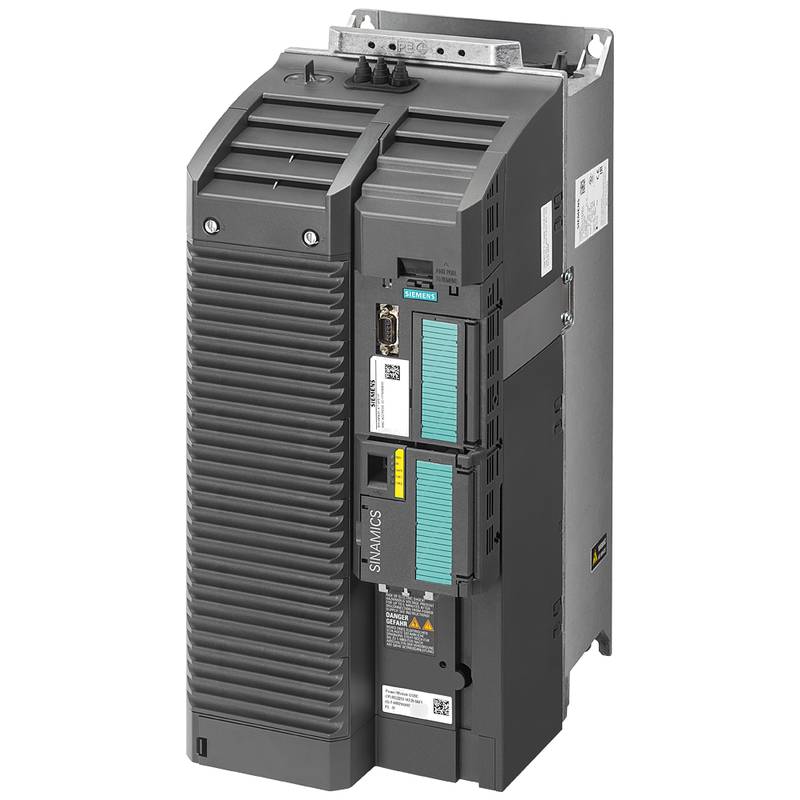













SIEMENS 6SL3710-7LG32-6AA3 SINAMICS S150 Converter Cabinet 250kW 690V AC-AC Drive System Regenerative C3 Class


The SIEMENS 6SL3710-7LG32-6AA3 SINAMICS S150 converter cabinet stands as a robust 250kW, 690V AC-AC drive system engineered for high-performance industrial applications. Its regenerative capabilities, classified under C3 harmonic levels, offer significant energy savings and reduced grid impact. This system excels in demanding environments, providing precise motor control and superior efficiency. Key technical parameters include its impressive 250kW power rating, 690V operating voltage, and advanced regenerative feedback functionality, making it a prime choice for sophisticated automation solutions.
Product Specifications
| Parameter | Specification |
| :--------------------- | :-------------------------------------------- |
| Product Number | 6SL3710-7LG32-6AA3 |
| Series | SINAMICS S150 |
| Type | Converter Cabinet |
| Power Rating | 250 kW |
| Input Voltage | 690V AC |
| Output Voltage | 690V AC |
| Control Type | AC-AC Drive System |
| Regenerative Capability | Yes |
| Harmonic Class | C3 |
| Protection Class | IP20 (typical for cabinet interiors) |
| Cooling | Integrated air cooling |
| Communication | Integrated interfaces (e.g., PROFINET, PROFIBUS) |
Core Features & Market Positioning
The SIEMENS 6SL3710-7LG32-6AA3 distinguishes itself through its powerful regenerative capability, allowing it to feed surplus energy back into the grid, thereby enhancing operational efficiency and reducing energy costs. This feature positions it as an environmentally conscious and economically advantageous solution for industries focused on sustainability and cost optimization. The SINAMICS S150 platform is renowned for its high dynamic performance and precise control, essential for applications requiring rapid and accurate speed and torque regulation. Its robust construction and integrated safety features further solidify its market standing as a reliable component in critical industrial processes.
Key Application Scenarios
This converter cabinet is ideally suited for a wide array of demanding industrial applications. High-power motor drives in the chemical and petrochemical industries, such as those used in pumps, fans, and compressors, benefit significantly from its efficiency and control. It is also a strong performer in the material handling sector, controlling cranes, conveyors, and hoists where precise and smooth operation is paramount. Furthermore, its regenerative capabilities make it an excellent choice for applications involving frequent braking or load fluctuations, like those found in mining and metal processing machinery.
Practical System Integration Guidance
Integrating the SIEMENS 6SL3710-7LG32-6AA3 into an existing system requires careful planning. Ensure the power supply at 690V AC is stable and meets the cabinet's input requirements. Electrical connections must adhere to IEC standards and local regulations, paying close attention to grounding and surge protection. Commissioning typically involves configuring motor parameters, defining control modes (e.g., V/f, vector control), and setting up safety functions via the integrated control panel or engineering software like STARTER. For regenerative operation, proper grid connection and harmonic filtering are crucial to comply with C3 class requirements and avoid interference.
Operation and Risk Mitigation
Safe operation of the SINAMICS S150 converter cabinet mandates adherence to operating procedures and awareness of potential fault conditions. Always ensure the cabinet is properly ventilated to prevent overheating, a common cause of component failure. Regular inspection of electrical connections for signs of wear or corrosion is recommended. Critical fault codes, such as F0001 (Overcurrent) or F0002 (Overvoltage), often indicate issues with the motor, cabling, or power supply and require immediate investigation by qualified personnel. Familiarize yourself with the emergency stop procedures and ensure all safety interlocks are functional before operation.
Scalability & Long-Term Value
The SIEMENS 6SL3710-7LG32-6AA3 is designed for integration within larger automation architectures. Its compatibility with Siemens' broader industrial control and automation portfolio, including PLCs like SIMATIC S7, allows for seamless system expansion. The SINAMICS S150 platform supports various communication protocols, enabling connectivity to industrial networks for remote monitoring and diagnostics. This facilitates integration into Industry 4.0 initiatives and IIoT platforms, providing data for predictive maintenance and process optimization, thus ensuring long-term operational value and adaptability to evolving industrial demands.
Frequently Asked Questions
What is the primary benefit of the regenerative feature in the SIEMENS 6SL3710-7LG32-6AA3?
The primary benefit is significant energy savings by feeding electrical power back to the grid during deceleration or overhauling loads. This not only reduces operational electricity costs but also contributes to a more sustainable industrial operation. The system actively recoups energy that would otherwise be dissipated as heat.
This regenerative capability enhances overall system efficiency and reduces the thermal stress on braking resistors, which are often required in non-regenerative drives. It also helps to stabilize the DC bus voltage within the converter. The economic payback period for the initial investment is often shortened due to these energy cost reductions.
Furthermore, the regenerative functionality helps to mitigate voltage fluctuations on the supply network caused by motor braking. This compliance with C3 harmonic class standards ensures cleaner power feeding back into the grid, reducing potential interference with other connected equipment.
How does the C3 harmonic class rating impact the installation of the SIEMENS 6SL3710-7LG32-6AA3?
The C3 harmonic class rating indicates that the converter meets specific standards for limiting harmonic distortion injected back into the power grid. This reduces the need for external harmonic filters in many installations, simplifying system design and reducing costs. It ensures compliance with grid codes and electromagnetic compatibility (EMC) regulations.
Installing the unit with the C3 rating means it contributes less to overall grid harmonics, which can prevent issues like overheating of transformers and other inductive loads connected to the same supply. This characteristic is particularly important in sensitive power grids or when multiple drive systems are in operation.
Adhering to the C3 standard also ensures better performance and longevity of the drive system itself and associated electrical equipment. It simplifies the approval process with utility providers who often have strict limits on harmonic emissions from industrial facilities.
What types of motors are compatible with the SIEMENS 6SL3710-7LG32-6AA3?
This SINAMICS S150 drive system is highly versatile and is primarily designed to control standard three-phase asynchronous (induction) motors. It also supports synchronous reluctance motors and permanent magnet synchronous motors, offering flexibility for various performance requirements. The control modes allow for optimal performance across different motor types.
The drive offers advanced vector control algorithms that provide excellent dynamic response and precise speed and torque control for asynchronous motors, even at low speeds or during rapid load changes. For synchronous motors, it ensures high efficiency and power density. Motor parameters are typically entered during commissioning to optimize performance.
When selecting a motor, ensure its voltage rating (690V) and power rating (up to 250kW) are within the specified limits of the 6SL3710-7LG32-6AA3. The motor's insulation system must also be suitable for the pulse-width modulated (PWM) output of the drive.
What are the typical communication protocols supported by the SINAMICS S150 platform?
The SINAMICS S150 platform typically supports industry-standard communication protocols, most notably PROFINET and PROFIBUS. These protocols allow for seamless integration into Siemens' automation systems and other common industrial networks for control and diagnostics. Other protocols may be available via optional communication modules.
PROFINET offers high-speed, real-time communication for demanding applications, enabling robust data exchange between the drive and controllers like SIMATIC S7 PLCs. PROFIBUS, a widely adopted fieldbus, provides reliable communication for a broad range of automation tasks. Both facilitate the transfer of process data, diagnostics, and command signals.
These communication capabilities are essential for implementing advanced automation strategies, such as coordinated drive control, remote monitoring, and integration into SCADA or MES systems. This ensures the drive can be centrally managed and its operational status continuously assessed for optimization and maintenance planning.
What safety features are integrated into the SIEMENS 6SL3710-7LG32-6AA3 cabinet?
The SIEMENS 6SL3710-7LG32-6AA3 typically incorporates safety integrated functions such as Safe Torque Off (STO). This function is crucial for preventing unexpected machine startup and ensures a high level of safety during maintenance or emergency situations, meeting relevant safety standards like SIL 2.
STO disables the motor's torque without physically disconnecting the power, providing a rapid and reliable safety mechanism. Other potential safety features include Safe Stop 1 (SS1) and Safe Operating Stop (SOS), depending on the specific configuration and optional safety modules installed within the cabinet.
Proper implementation of these safety functions requires careful wiring and configuration within the drive's safety settings and integration with the overall machine safety concept. It's essential that personnel are trained in the safe operation and emergency procedures associated with the drive.
Can the SIEMENS 6SL3710-7LG32-6AA3 be used for applications requiring very high precision positioning?
Yes, the SINAMICS S150 drive system, particularly with its advanced vector control, is capable of high-precision positioning applications. When paired with appropriate encoders and a suitable motor, it can achieve excellent accuracy and repeatability for demanding motion control tasks.
The drive's high-resolution feedback capabilities and sophisticated control algorithms allow for very accurate speed and torque regulation, which are fundamental for precise positioning. The system can be programmed to execute complex motion profiles, including synchronized movements and accurate stopping at target positions.
For extremely demanding positioning tasks, integrating the SINAMICS S150 with a higher-level motion controller or PLC with dedicated positioning functions will yield the best results. Proper tuning of the control loops and selection of an encoder with adequate resolution are critical for achieving optimal precision.
What is the typical protection class of the SIEMENS 6SL3710-7LG32-6AA3 cabinet?
The typical protection class for the internal components of a SIEMENS 6SL3710-7LG32-6AA3 converter cabinet is IP20. This rating signifies protection against solid objects larger than 12.5 mm and no protection against water ingress. The cabinet housing itself provides the primary environmental protection.
This IP20 rating is standard for enclosed industrial control cabinets, assuming they are installed in a clean and dry environment, such as a control room or a protected machine enclosure. Proper sealing of the cabinet doors and cable entry points is essential to maintain the intended level of protection against dust and incidental contact.
For applications in harsher environments with dust, moisture, or corrosive substances, additional measures such as environmental enclosures or selecting a different drive product with a higher IP rating might be necessary. Always consult the product documentation for specific environmental considerations.
How does the 690V operating voltage benefit industrial applications?
Operating at 690V allows for reduced current draw for the same power output compared to lower voltage systems, typically 400V or 480V. This lower current means smaller cable cross-sections can be used, leading to significant cost savings in terms of copper and installation labor for high-power applications.
Lower currents also result in reduced resistive losses (I²R losses) in the power cables, leading to improved overall system efficiency and less heat generation in the electrical infrastructure. This can contribute to a more energy-efficient operation and a more stable power supply to the motor.
Furthermore, 690V systems are often preferred for very high-power applications, typically above 160kW, as they offer a more compact and cost-effective solution for delivering substantial amounts of electrical power to motors and other industrial equipment. This voltage level is common in heavy industries.
What troubleshooting steps can be taken for common faults in the SIEMENS SINAMICS S150?
When encountering faults, the first step is to identify the specific fault code displayed on the drive's control panel or in the diagnostic logs. Common faults like overcurrent (e.g., F0001) or overvoltage (e.g., F0002) often relate to the power supply, motor, or cabling. Checking these connections for damage, loose wires, or shorts is crucial.
For overcurrent faults, verify that the motor is not overloaded, the motor and cable are correctly sized for the drive's output, and there are no mechanical blockages causing excessive load. For overvoltage faults, especially during regeneration, ensure the DC bus is not being overcharged, possibly indicating a faulty brake chopper or insufficient load to absorb regenerated energy.
Always consult the SINAMICS S150 operating manual for a comprehensive list of fault codes and their recommended troubleshooting procedures. Ensure that only qualified personnel perform troubleshooting and any necessary repairs or adjustments to avoid further damage or safety hazards.
What is the role of the SIEMENS 6SL3710-7LG32-6AA3 in Industry 4.0 initiatives?
The SIEMENS 6SL3710-7LG32-6AA3 plays a vital role in Industry 4.0 by enabling smart manufacturing through its connectivity and data capabilities. Its integration with industrial networks and diagnostic tools allows for real-time performance monitoring, predictive maintenance, and remote control, crucial elements of digital transformation.
Through protocols like PROFINET, the drive can send detailed operational data such as energy consumption, motor temperature, speed, torque, and fault history to higher-level systems like SCADA or MES. This data is invaluable for optimizing production processes, identifying inefficiencies, and scheduling maintenance proactively.
The regenerative capability also aligns with Industry 4.0's focus on sustainability and energy efficiency. By optimizing energy usage and recovering energy, the drive contributes to greener manufacturing processes and reduced operational costs, which are key objectives in modern industrial automation.