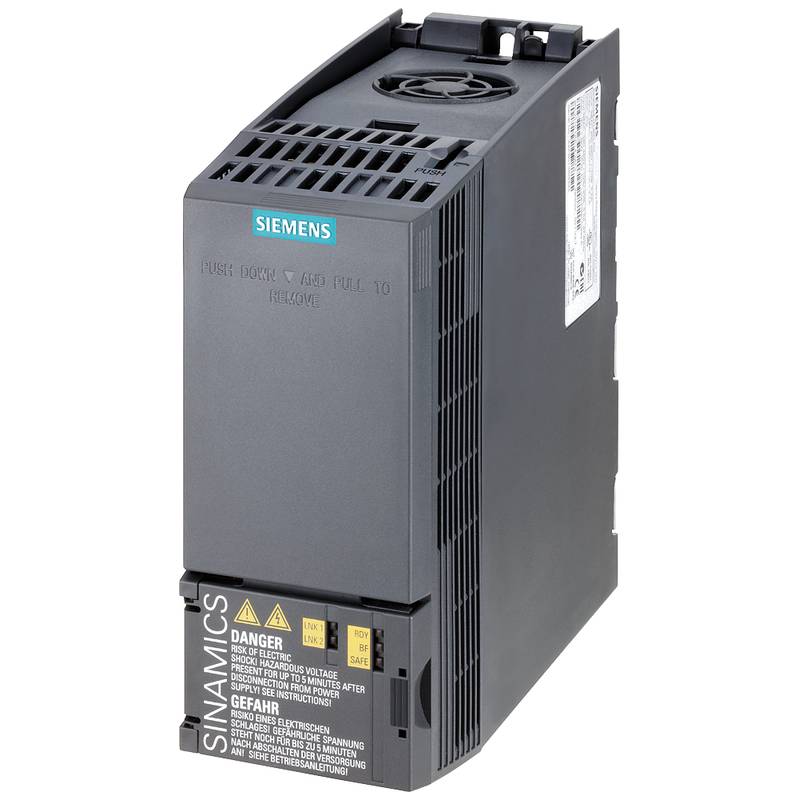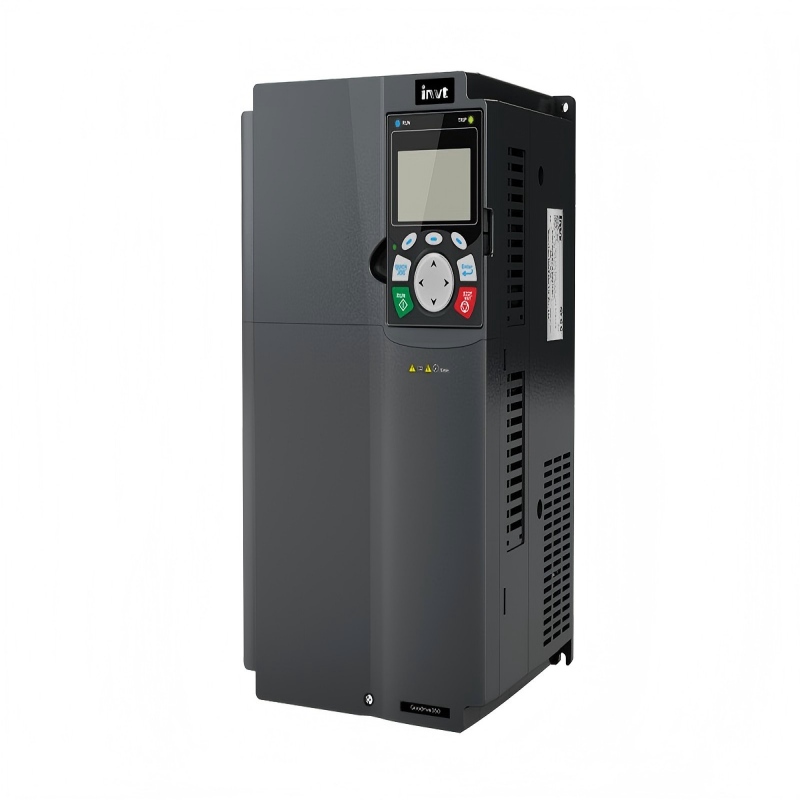













DANFOSS FC-360HK37T4E20H2BXCDXXSXXXXA0BX 0.37kW A0BX VLT Automation Drive FC-360 3AC 480V


The DANFOSS FC-360HK37T4E20H2BXCDXXSXXXXA0BX 0.37kW A0BX VLT Automation Drive represents a robust solution for precise motor control in demanding industrial environments. This 3-phase AC drive, operating at 480V, offers exceptional efficiency and reliability, boasting a power rating of 0.37kW. Its advanced features are designed to optimize energy consumption, enhance process control, and ensure operational longevity, making it a vital component for modern automation systems.
Product Specifications
| Parameter | Value |
| :---------------------- | :------------------------------------------- |
| Model Number | FC-360HK37T4E20H2BXCDXXSXXXXA0BX |
| Power Rating | 0.37 kW |
| Input Voltage | 3 Phase AC 480V |
| Series | VLT Automation Drive FC-360 |
| Enclosure | IP20 (Standard) |
| Filter | Integrated RFI Filter (C2) |
| Brake Chopper | Integrated |
| Communication | No dedicated fieldbus card (expandable) |
| Coating | Standard |
| Options | None specified in this base model |
Core Features & Market Positioning
The DANFOSS FC-360HK37T4E20H2BXCDXXSXXXXA0BX distinguishes itself through its compact design and integrated functionalities, offering significant value in a small footprint. Its advanced control algorithms ensure smooth motor operation and rapid response to changing load conditions. Compared to other drives in its class, the FC-360 series emphasizes energy efficiency through intelligent power management, a critical factor for industries aiming to reduce operational costs and environmental impact. The integrated brake chopper, for instance, provides reliable braking torque without requiring external components, simplifying installation and reducing system complexity.
Key Application Scenarios
This VLT Automation Drive is ideally suited for a wide array of applications requiring precise speed and torque control. Common use cases include pump and fan control in HVAC systems, conveyor belts in material handling, and process machinery in manufacturing. Its robust construction and adaptability make it a preferred choice for applications in food and beverage, water treatment, and general manufacturing sectors where consistent performance and reliability are paramount. The 0.37kW rating is particularly effective for smaller motor applications where energy savings are a key consideration.
Practical System Integration Guidance
Integrating the DANFOSS FC-360HK37T4E20H2BXCDXXSXXXXA0BX into existing systems is streamlined due to its user-friendly interface and standard connection options. For typical installation, ensure proper ventilation around the drive to prevent overheating; the IP20 enclosure requires mounting in a control cabinet. Wiring involves connecting the 3-phase 480V AC input to the designated terminals and outputting to the motor. Motor control parameters, such as maximum and minimum frequencies, acceleration/deceleration ramps, and motor nominal current, should be configured during commissioning for optimal performance. Basic programming for start/stop and speed reference can often be achieved using the drive's keypad or through simple external control signals.
Operation and Risk Mitigation
Safe operation of the DANFOSS FC-360HK37T4E20H2BXCDXXSXXXXA0BX hinges on adherence to electrical safety standards and proper commissioning. Always disconnect power before performing any wiring or maintenance. Key operational parameters should be monitored to prevent potential issues. Common fault codes, such as overcurrent (F001) or overvoltage (F002), typically indicate issues with motor load, wiring, or supply voltage stability. Referencing the official Danfoss manual for specific fault code interpretations and troubleshooting steps is crucial for mitigating risks and ensuring continuous operation.
Scalability & Long-Term Value
While the DANFOSS FC-360HK37T4E20H2BXCDXXSXXXXA0BX is a specific model, the VLT Automation Drive FC-360 series offers scalability through optional communication modules. This allows for seamless integration with various industrial networks like Modbus, Profibus, or Ethernet/IP, enabling sophisticated control and monitoring within an IIoT framework. For users with evolving automation needs, upgrading to a higher-power FC-360 drive or expanding the system with additional drives maintains compatibility with Danfoss's automation ecosystem, ensuring long-term value and investment protection.
Frequently Asked Questions
What are the main advantages of the Danfoss FC-360HK37T4E20H2BXCDXXSXXXXA0BX?
This drive offers superior energy efficiency, minimizing operational costs. It provides precise motor control for enhanced process automation. Its compact design simplifies installation in space-constrained environments.
Its integrated brake chopper ensures reliable stopping power. The robust build quality guarantees long-term operational reliability. It is designed for demanding industrial applications.
The drive supports advanced control algorithms for optimal performance. It is compatible with a wide range of motors. Its user-friendly interface facilitates quick setup and parameterization.
How do I wire the Danfoss FC-360HK37T4E20H2BXCDXXSXXXXA0BX for a 3-phase 480V supply?
Connect the incoming 3-phase 480V AC power to the L1, L2, and L3 terminals on the drive. Ensure proper grounding to the chassis terminal for safety. The motor power cables should be connected to the U, V, and W output terminals.
Double-check all connections for tightness and correct polarity before energizing the drive. Refer to the wiring diagram in the product manual for specific terminal layouts. Always follow local electrical codes and safety regulations.
For control signals, connect external start/stop commands and speed reference signals to the designated digital and analog input terminals. Ensure the supply voltage matches the drive's rating precisely.
What are typical applications for the 0.37kW Danfoss FC-360 drive?
This drive is excellent for controlling small pumps and fans in HVAC systems. It's widely used for variable speed drives on conveyors in material handling. It is also suitable for various process machinery in light manufacturing.
Applications demanding precise torque and speed regulation benefit from its capabilities. Examples include packaging machines, small mixers, and ventilation systems. Its efficiency makes it ideal for energy-saving initiatives.
Water and wastewater treatment facilities utilize it for flow control. Food and beverage processing lines also commonly employ this drive. It provides reliable performance in these sectors.
Can I integrate the FC-360HK37T4E20H2BXCDXXSXXXXA0BX with an existing SCADA system?
Yes, the FC-360 series supports optional communication cards for SCADA integration. Popular protocols like Modbus RTU or TCP/IP can be enabled with an add-on module. This allows for remote monitoring and control of the drive.
Ensure you select the appropriate communication option card compatible with your SCADA system. Proper network configuration, including IP addresses or serial parameters, is essential. Consult the Danfoss documentation for specific setup guidance.
This integration enables centralized data acquisition and process optimization. It facilitates diagnostics and predictive maintenance strategies. It significantly enhances overall system visibility.
What is the IP rating of the Danfoss FC-360HK37T4E20H2BXCDXXSXXXXA0BX and what does it mean?
The FC-360HK37T4E20H2BXCDXXSXXXXA0BX has an IP20 rating. This signifies protection against solid objects greater than 12.5 mm, such as fingers, but offers no protection against water ingress.
Therefore, this drive must be installed within an enclosure, like a control cabinet, to protect it from dust and moisture. The enclosure itself should provide the necessary environmental protection for the application.
The IP20 rating is standard for drives intended for installation in controlled environments. It ensures basic protection for personnel and the drive's internal components.
What are the key technical parameters of this specific Danfoss VLT Automation Drive?
The drive is rated for 0.37kW of motor power. It operates on a 3-phase AC input voltage of 480V. The model number is FC-360HK37T4E20H2BXCDXXSXXXXA0BX.
It features an integrated RFI filter (C2 class) and a brake chopper. The base enclosure is IP20, suitable for cabinet installation. It does not have built-in fieldbus communication in this configuration.
This configuration includes standard coating and no specific option boards. It is designed for general-purpose variable speed control. It represents a foundational setup for many automation tasks.
How does the integrated brake chopper function in this Danfoss drive?
The brake chopper allows the drive to dissipate excess energy generated during motor deceleration or overhauling loads. This energy is typically converted into heat. It is dissipated through an external braking resistor (often integrated within the drive's power electronics for smaller drives like this one).
When the motor acts as a generator (e.g., slowing down a heavy load), it feeds energy back into the drive. The drive detects this rise in DC bus voltage and activates the brake chopper. The chopper then directs this excess energy to the braking resistor.
This function is critical for applications where rapid stopping or holding a load against gravity is required. It prevents overvoltage faults that could occur if the generated energy isn't managed.
What are common fault codes for the Danfoss FC-360 series and their meanings?
Common fault codes include F001 (Overcurrent) and F002 (Overvoltage). F001 can indicate a motor short circuit, excessive load, or incorrect motor parameters. F002 typically signifies a problem with the DC bus voltage, often during braking.
Other frequent codes might be F003 (Undervoltage), indicating issues with the power supply, or F004 (Overtemperature), related to ambient conditions or insufficient cooling. F005 (Motor Overload) points to the motor drawing more current than its rated capacity for too long.
Always consult the specific Danfoss FC-360 manual for a comprehensive list and detailed troubleshooting steps for each fault code. Correctly identifying the fault is crucial for effective problem resolution.
What is the purpose of the integrated RFI filter (C2) in the FC-360HK37T4E20H2BXCDXXSXXXXA0BX?
The integrated RFI filter, specifically a C2 class filter, helps reduce electromagnetic interference (EMI) generated by the drive's switching electronics. This is essential for compliance with EMC (Electromagnetic Compatibility) standards in industrial environments.
By suppressing high-frequency noise, the RFI filter prevents interference with other sensitive electronic equipment operating nearby, such as control systems, communication devices, or measurement instruments. This ensures stable and reliable operation of the entire automation system.
The C2 classification indicates a level of filtering suitable for many industrial and some commercial applications. It helps meet regulatory requirements and maintains the integrity of electrical signals within the installation.
How can I program basic speed control on the Danfoss FC-360 drive?
To program basic speed control, access the drive's parameter menu via the keypad. Set the "Minimum Frequency" and "Maximum Frequency" parameters to define your desired speed range. Configure the "Acceleration Time" and "Deceleration Time" for smooth motor starts and stops.
For speed reference, you can use analog inputs (e.g., 0-10V or 4-20mA) connected to an external potentiometer or PLC output. Alternatively, use digital inputs for fixed speed selections or keypad entry for manual speed setting. Ensure the "Reference Source" parameter is set correctly.
After setting these parameters, enable the drive through a digital input or keypad command. Monitor the motor speed to confirm it responds as expected to the reference changes. Always test thoroughly in a controlled environment.