











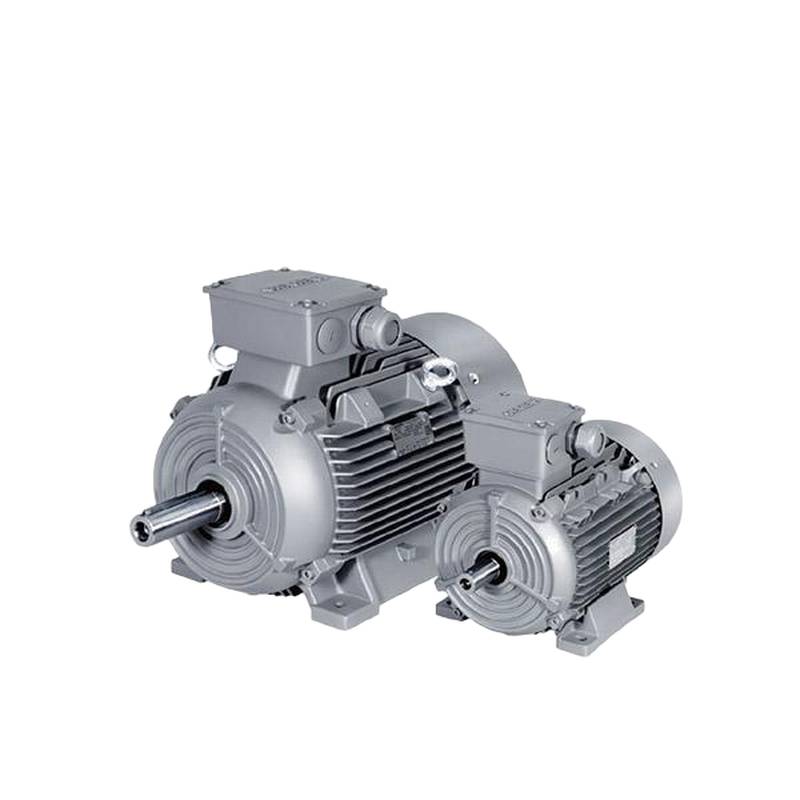
SIEMENS 1LE0003-2DD02-1AA4 37 kW 8 Pole Motor IE3


The SIEMENS 1LE0003-2DD02-1AA4 is a robust 37 kW, 8-pole motor engineered for demanding industrial applications, offering superior energy efficiency and operational reliability. This motor exemplifies Siemens' commitment to high-performance electrical engineering, featuring an IE3 efficiency rating that significantly reduces energy consumption and operating costs. Its robust construction ensures longevity in challenging environments, making it a prime choice for process industries. Key technical parameters include a rated power of 37 kW, a speed of approximately 740 RPM (based on 8 poles and standard frequencies), and a voltage range typically supporting 400V or similar industrial standards, all contributing to its versatile application profile.
Product Specifications
| Parameter | Value |
| :--------------------- | :----------------- |
| Manufacturer | Siemens |
| Model Number | 1LE0003-2DD02-1AA4 |
| Rated Power | 37 kW |
| Number of Poles | 8 |
| Efficiency Class | IE3 |
| Frame Size | (Varies, consult datasheet) |
| Protection Class | IP55 |
| Insulation Class | F |
| Voltage (Typical) | 400V |
| Frequency (Typical) | 50 Hz |
| Mounting Type | IM B3 (Flange/Foot) |
| Enclosure Type | TEFC (Totally Enclosed Fan Cooled) |
Core Features & Market Positioning
The SIEMENS 1LE0003-2DD02-1AA4 motor distinguishes itself through its IE3 efficiency rating, a critical factor for industries focused on reducing operational expenditure and environmental impact. This efficiency level translates directly into lower electricity bills and a diminished carbon footprint. The motor's design prioritizes durability, featuring a cast-iron frame and robust bearing system to withstand continuous operation under heavy loads and harsh industrial conditions, positioning it as a reliable, long-term investment for critical machinery. Siemens' established reputation for quality and innovation further underpins its market leadership in this product segment.
Key Application Scenarios
This 37 kW, 8-pole motor is ideally suited for applications requiring high torque at low speeds, such as heavy-duty conveyors, large pumps in water treatment or oil and gas facilities, mixers, and crushers in mining operations. Its IE3 efficiency makes it particularly beneficial for continuous operation scenarios where energy savings are paramount. The 8-pole configuration ensures smooth, controlled operation for processes that demand precise speed regulation and reduced vibration, common in material handling and chemical processing plants.
Practical System Integration Guidance
Integrating the SIEMENS 1LE0003-2DD02-1AA4 motor into existing industrial systems is streamlined due to its standard IEC frame dimensions and mounting options, typically IM B3 (foot-mounted) or IM B5 (flange-mounted). Ensuring proper power supply connection is crucial; verify that the supply voltage and frequency match the motor's nameplate specifications (commonly 400V, 50Hz). For variable speed applications, direct online starting is possible, but for enhanced control and energy savings, pairing with a compatible Siemens variable frequency drive (VFD) is recommended. Always ensure adequate ventilation around the motor, as the TEFC (Totally Enclosed Fan Cooled) design relies on its external fan for heat dissipation. A qualified electrician should perform all wiring and electrical connections according to local and international safety standards.
Operation and Risk Mitigation
Safe operation of the SIEMENS 1LE0003-2DD02-1AA4 motor necessitates adherence to its operating manual and industrial safety protocols. Overloading the motor beyond its 37 kW rating can lead to premature failure; utilize appropriate overload protection devices, such as thermal relays or motor protection circuit breakers, set according to the motor's full load current. Regular visual inspections for damage, debris accumulation on the fan, or unusual noises are recommended. In the event of operational anomalies, consult the Siemens technical documentation for specific troubleshooting steps related to common fault codes, though this model typically relies on external protection devices for fault detection rather than integrated diagnostics. Ensure that personnel working on or around the motor are aware of lockout/tagout procedures before maintenance.
Scalability & Long-Term Value
The SIEMENS 1LE0003-2DD02-1AA4 motor offers significant long-term value through its robust design and inherent energy efficiency. While this specific model is a standalone unit, its compatibility with Siemens' broader automation portfolio allows for seamless integration into larger control systems. For applications requiring future capacity increases, planning for larger motor sizes or multiple units operating in parallel can be considered. Furthermore, the motor's IE3 rating future-proofs operations against evolving energy efficiency regulations. Its durable construction, typical of Siemens industrial motors, ensures a long operational lifespan, minimizing the total cost of ownership over its service life.
Frequently Asked Questions
What is the starting torque of the SIEMENS 1LE0003-2DD02-1AA4 motor?
The starting torque is a critical parameter for applications with heavy loads. It typically ranges from 1.8 to 2.5 times the rated torque for standard squirrel cage induction motors like this one. This ensures it can overcome inertia and bring large machinery up to speed effectively from a standstill.
This motor's 8-pole construction contributes to higher starting torque compared to motors with fewer poles. Proper electrical protection, such as appropriately sized circuit breakers or fuses, is essential to handle the high inrush current during startup without tripping prematurely.
Consider using a soft starter or variable frequency drive (VFD) if your application requires very smooth acceleration or if the power supply has limitations on inrush current. These devices can significantly reduce starting torque and current, protecting both the motor and the power infrastructure.
How can I determine the correct voltage and frequency for the SIEMENS 1LE0003-2DD02-1AA4?
Always refer to the motor's nameplate for the definitive voltage and frequency ratings. This specific model is commonly supplied for 400V, 50Hz industrial networks. However, dual-voltage or multi-frequency versions can exist, so a nameplate check is non-negotiable.
Ensure your electrical supply precisely matches these specifications to prevent motor damage and ensure optimal performance. Incorrect voltage can lead to overheating or insufficient power, while an incorrect frequency affects the motor's speed and operational characteristics.
If there is any ambiguity or if the nameplate is illegible, consult the official Siemens product documentation or contact their technical support with the motor's serial number for accurate data. Mismatched supply can void warranties.
What maintenance is required for the SIEMENS 1LE0003-2DD02-1AA4 motor?
Routine visual inspections for external damage, cleanliness of the fan and cooling vents, and checking for unusual vibrations or noises are recommended. Ensure the motor is properly lubricated according to the manufacturer's schedule, though many modern sealed bearings require minimal intervention.
Bearing lubrication is often the most critical maintenance task for long motor life. Refer to the Siemens service manual for the specific grease type and re-lubrication intervals, which depend heavily on operating conditions such as temperature and load. Over-greasing can be as detrimental as under-greasing.
Periodically check electrical connections for tightness and signs of corrosion. For motors operating in dusty or corrosive environments, more frequent cleaning of the external surfaces and cooling fan is crucial to maintain efficient heat dissipation and prevent premature component failure.