











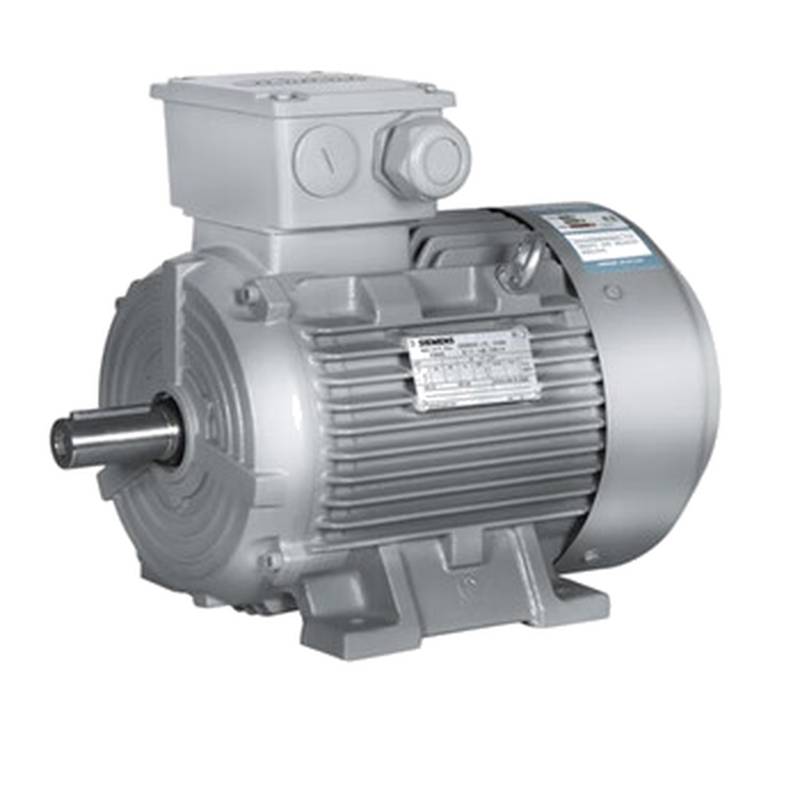
SIEMENS 1TL0003-3BB32-1AA4 250 kW IE3 Motor 4 Pole


The SIEMENS 1TL0003-3BB32-1AA4 is a robust 250 kW, 4-pole IE3 motor engineered for demanding industrial applications. This motor excels with its high efficiency, ensuring reduced energy consumption and lower operating costs. Its superior thermal management and robust construction guarantee reliability and extended service life even in challenging environments. Key technical parameters include a power output of 250 kW, a speed rating of 1490 RPM, and an IE3 efficiency class, making it a powerful and efficient choice for a wide array of industrial drives.
Product Specifications
| Parameter | Value |
| :------------------- | :---------------- |
| Manufacturer | SIEMENS |
| Product Number | 1TL0003-3BB32-1AA4 |
| Power Output | 250 kW |
| Poles | 4 |
| Efficiency Class | IE3 |
| Frame Size | 400 |
| Voltage | 400V (typically) |
| Frequency | 50 Hz (typically) |
| Speed (approximate) | 1490 RPM |
| Enclosure | TEFC (Totally Enclosed Fan Cooled) |
| Protection Class | IP55 |
| Insulation Class | F |
Core Features & Market Positioning
The SIEMENS 1TL0003-3BB32-1AA4 motor stands out in the competitive industrial motor market due to its adherence to IE3 efficiency standards, translating directly into significant energy savings and a reduced carbon footprint for end-users. Its robust construction, characteristic of SIEMENS industrial automation products, ensures exceptional durability and a long operational lifespan, minimizing downtime and maintenance costs. This motor is positioned as a reliable, high-performance solution for critical applications where efficiency, power, and longevity are paramount, offering a superior alternative to lower-efficiency motors.
Key Application Scenarios
This 250 kW IE3 motor is ideally suited for a broad spectrum of heavy-duty industrial applications. It is frequently deployed in pumping systems, driving large centrifugal pumps for water management, oil and gas, or chemical processing. Furthermore, its substantial power output makes it an excellent choice for fan applications, such as those found in industrial ventilation, HVAC systems, and power plants, where consistent and powerful airflow is required. Other common uses include driving compressors in manufacturing facilities, conveyors in logistics and mining operations, and crushers in the aggregate industry, demonstrating its versatility across numerous sectors.
Practical System Integration Guidance
Integrating the SIEMENS 1TL0003-3BB32-1AA4 motor into existing industrial setups requires careful consideration of electrical and mechanical parameters. Proper electrical connection is crucial; ensure the motor is wired according to its nameplate specifications and local electrical codes, typically utilizing a direct-on-line (DOL) starter or a variable frequency drive (VFD) for speed control. Mechanical mounting should follow best practices for shaft alignment and foundation stability to prevent vibration and premature bearing wear. Before commissioning, verify that the power supply voltage and frequency match the motor's requirements, and ensure adequate cooling is available, especially if operating at or near full load.
Operation and Risk Mitigation
Operating the SIEMENS 1TL0003-3BB32-1AA4 motor efficiently and safely involves regular monitoring and adherence to operational guidelines. Key operational parameters to observe include motor temperature, vibration levels, and current draw, which can indicate potential issues. Risk mitigation strategies include implementing a preventative maintenance schedule, which should encompass periodic inspections of bearings, seals, and electrical connections. In the event of faults, such as overheating or abnormal noise, immediate shutdown and troubleshooting are advised to prevent damage. Common fault codes, if utilizing a VFD, should be cross-referenced with the VFD manual, as they often indicate specific electrical or operational anomalies requiring corrective action.
Scalability & Long-Term Value
The SIEMENS 1TL0003-3BB32-1AA4 motor offers significant long-term value through its robust design and compatibility with modern industrial automation platforms. While this specific motor is a fixed-speed, high-power unit, its integration with variable frequency drives (VFDs) from SIEMENS or other compatible manufacturers unlocks advanced control capabilities, enabling precise speed adjustment and further energy optimization. This motor is also designed to work seamlessly within larger automated systems, aligning with the principles of Industry 4.0 and the Industrial Internet of Things (IIoT), allowing for data acquisition and integration into SCADA or MES systems for enhanced monitoring and predictive maintenance. Its durable construction ensures that it remains a reliable workhorse for many years, providing a sound return on investment.
FAQs
Q1: What is the typical voltage and frequency for the SIEMENS 1TL0003-3BB32-1AA4 motor?
The SIEMENS 1TL0003-3BB32-1AA4 motor is commonly supplied for industrial applications operating at 400V. It is also designed to function optimally with a standard industrial frequency of 50 Hz.
Ensure your power supply precisely matches these specifications to prevent motor damage. Always consult the motor's nameplate for definitive voltage and frequency ratings.
Q2: What are the main benefits of an IE3 efficiency class motor?
IE3 motors offer significantly improved energy efficiency compared to older standards. This leads to substantial reductions in electricity consumption, lowering operational costs.
The increased efficiency also translates to less heat generation, which can extend the motor's lifespan and reduce cooling requirements in some environments.
This efficiency class contributes to environmental sustainability by lowering the overall carbon footprint of industrial operations.
Q3: How do I ensure proper installation and alignment of this motor?
Proper installation begins with a solid, vibration-dampening foundation that can support the motor's weight and operating forces. Mechanical alignment between the motor shaft and the driven equipment is critical to prevent excessive stress.
Utilize precision alignment tools, such as laser alignment systems, to achieve the closest possible shaft alignment. Misalignment is a primary cause of bearing failure and premature wear.
Always follow the manufacturer's guidelines for mounting, coupling, and securing the motor to prevent movement during operation.
Q4: Can this motor be controlled by a Variable Frequency Drive (VFD)?
Yes, the SIEMENS 1TL0003-3BB32-1AA4 motor is compatible with Variable Frequency Drives (VFDs). Using a VFD allows for precise speed control, which can lead to further energy savings and process optimization.
When using a VFD, ensure it is appropriately sized for the motor's power (250 kW) and that appropriate motor protection features are configured within the VFD. Consider filter solutions if long cable lengths are involved.
Consulting the VFD manufacturer's documentation and SIEMENS' recommendations for motor-VFD compatibility is advised for optimal performance and protection.
Q5: What are the typical protection features for the 1TL0003-3BB32-1AA4 motor?
This motor typically features an IP55 protection class, indicating dust-tightness and protection against water jets from any direction. It also has an Insulation Class F rating, allowing for higher operating temperatures.
External thermal overload protection devices, such as thermal relays or integrated PTC sensors, are often used in conjunction with the motor for over-temperature protection. These should be correctly set according to the motor's full load current.
Proper ventilation and avoiding operation in excessively dusty or humid environments beyond its IP rating are crucial for maintaining its protective integrity.
Q6: What is the expected lifespan of this SIEMENS motor?
The lifespan of the SIEMENS 1TL0003-3BB32-1AA4 motor depends heavily on the operating conditions and maintenance practices. Engineered with high-quality materials and robust construction, SIEMENS motors are designed for durability.
With proper installation, regular maintenance (including lubrication and bearing checks), and operation within its specified parameters, such motors can last for many years, often exceeding 20 years in favorable conditions.
Operating the motor under severe conditions, such as frequent starts/stops, high ambient temperatures, or with poor power quality, can significantly reduce its service life.
Q7: What kind of maintenance is recommended for this 250 kW motor?
Regular visual inspections for any signs of damage, leaks, or loose connections are essential. Cleaning the motor, especially the cooling fan and surfaces, to ensure efficient heat dissipation is also vital.
Scheduled lubrication of bearings, following SIEMENS' recommendations for type and quantity, is critical for preventing premature bearing failure. Electrical connection checks for tightness should be performed periodically.
For applications with high duty cycles or harsh environments, more frequent maintenance intervals, including vibration analysis and thermal imaging, may be beneficial for proactive issue detection.
Q8: What does "4 Pole" mean in the context of this motor?
A "4 Pole" designation refers to the number of magnetic poles within the motor's stator winding. This configuration determines the motor's synchronous speed when powered by a 50 Hz supply.
For a 4-pole motor operating at 50 Hz, the synchronous speed is 1500 RPM. The actual operating speed, known as the asynchronous or slip speed, will be slightly lower, around 1490 RPM, due to rotor slip.
This pole configuration is common for industrial motors requiring a balance between speed and torque, making it suitable for many centrifugal pump and fan applications.
Q9: How can I troubleshoot common issues with this motor?
Start by checking the power supply and ensuring it meets the motor's voltage and frequency requirements. Inspect all electrical connections for looseness or signs of overheating.
Listen for unusual noises such as grinding or humming, and check for excessive vibration, which might indicate bearing issues or misalignment. Monitor motor temperature to ensure it's not exceeding its thermal limits.
If the motor trips a breaker or overload protection, investigate the load on the driven equipment and the motor's current draw. Consult the control system or VFD manual for specific fault codes if applicable.
Q10: Is this motor suitable for use with a soft starter?
Yes, this SIEMENS 1TL0003-3BB32-1AA4 motor can be used with a soft starter. Soft starters provide controlled acceleration, reducing electrical and mechanical stresses during startup.
This is particularly beneficial for large motors like this 250 kW unit, as it minimizes inrush current, thereby reducing demand on the electrical supply and preventing mechanical shock to the driven equipment.
When selecting a soft starter, ensure its current and voltage ratings are compatible with the motor's specifications and the application's requirements, including starting torque needs.