











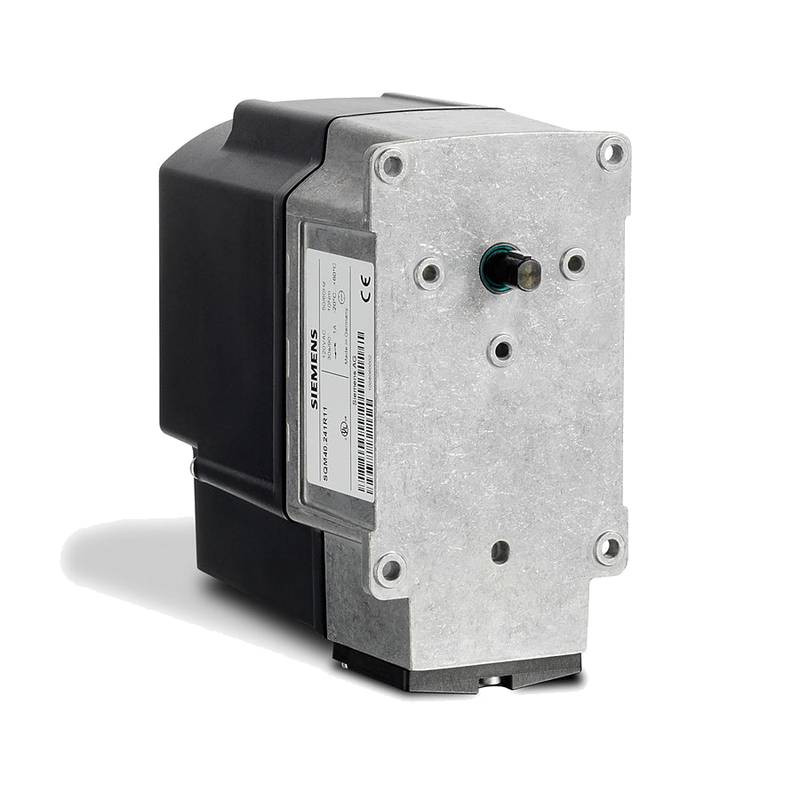
Siemens SQM45.295B9 Linear Actuator


The Siemens SQM45.295B9 linear actuator is a high-performance, robust solution engineered for precise control in demanding industrial applications. This actuator excels due to its high thrust capabilities, exceptional durability, and sophisticated control options, making it a preferred choice for boiler and burner management systems, as well as other automated processes requiring accurate linear positioning. Its compact design, coupled with a powerful motor and advanced feedback mechanisms, ensures reliable operation even in challenging environments. Key technical parameters include a nominal torque of 20 Nm, a maximum thrust of 400 N, and an operating voltage of 24 VAC, with an IP54 degree of protection for enhanced environmental resilience.
Product Specifications
| Parameter | Value |
| :---------------------- | :----------------------------------------- |
| Actuator Type | Linear Actuator |
| Model | SQM45.295B9 |
| Nominal Torque | 20 Nm |
| Maximum Thrust | 400 N |
| Operating Voltage | 24 VAC |
| Degree of Protection | IP54 |
| Travel Time (90°) | 45 seconds |
| Shaft Angle | 90° |
| Control Signal | 3-point step (open/close) |
| Ambient Temperature | -20 to +60 °C |
| Connection Type | Screw terminals |
| Mounting | Direct mounting |
Core Features & Market Positioning
The Siemens SQM45.295B9 distinguishes itself through its robust construction and reliable performance, crucial for continuous industrial operation. Its advanced internal gearing provides high torque and precise positioning, ensuring consistent control over fuel-air ratios in combustion systems. The actuator's market positioning is firmly rooted in its ability to deliver dependable, long-term operation with minimal maintenance, a significant advantage in sectors where downtime is costly. It offers superior control accuracy compared to many standard actuators, making it ideal for applications demanding precise modulation.
Key Application Scenarios
This linear actuator finds its primary utility in industrial combustion control, specifically within boiler and burner management systems. It precisely adjusts fuel and air dampers to optimize combustion efficiency and safety, a critical function for energy savings and emission reduction. Beyond combustion, the SQM45.295B9 is suitable for various industrial automation tasks requiring accurate linear movement, such as controlling valves in process industries or positioning components in automated manufacturing lines. Its IP54 rating makes it suitable for environments with dust and splashing water, common in process plants.
Practical System Integration Guidance
Integrating the Siemens SQM45.295B9 into existing systems is straightforward due to its standard mounting flange and electrical connection via screw terminals. The actuator operates on a 24 VAC supply, compatible with most industrial control panels. Its 3-point step control signal (open/close) simplifies wiring with standard controllers and relays. For optimal performance, ensure the mechanical load does not exceed the actuator's rated thrust of 400 N. Proper cable gland usage is recommended to maintain the IP54 rating, especially in dusty or wet conditions.
Operation and Risk Mitigation
Safe operation of the Siemens SQM45.295B9 linear actuator requires adherence to the specified voltage and environmental conditions. Overloading the actuator beyond its 400 N thrust limit can lead to mechanical failure and potential system malfunction. In combustion applications, incorrect damper positioning due to actuator failure can result in inefficient burning, increased emissions, or safety hazards. Regular inspection of the mechanical linkage and electrical connections is advised to prevent issues. The actuator is designed for fail-safe operation within its specified parameters, but robust system-level safety interlocks are paramount.
Scalability & Long-Term Value
The SQM45.295B9 offers significant long-term value through its durable construction and compatibility with established Siemens control platforms. While this specific model is designed for direct 3-point control, its robust mechanical design and electrical interface allow for integration into more complex automation architectures, including those leveraging IIoT capabilities, when paired with appropriate gateways or PLCs. Its reliability reduces the need for frequent replacements, contributing to a lower total cost of ownership over its operational lifespan.
FAQs
Q1: What is the primary application for the Siemens SQM45.295B9?
The Siemens SQM45.295B9 linear actuator is predominantly used in industrial combustion control systems. It is expertly engineered to manage fuel and air dampers in boilers and burners. This precise adjustment optimizes combustion efficiency and ensures safe operation.
This actuator plays a vital role in maintaining precise control over energy consumption. It also contributes to reducing harmful emissions by fine-tuning the air-fuel mixture. Its robust design ensures reliability in demanding industrial environments.
Its applications extend to other industrial automation scenarios requiring accurate linear positioning. This includes valve control in process industries or component positioning in automated manufacturing. The actuator's durability is key in these settings.
Q2: What are the key advantages of the Siemens SQM45.295B9 actuator?
A major advantage is its robust construction and high reliability. This ensures consistent performance and minimal downtime in critical industrial processes. The actuator's durability contributes to a long operational life.
The SQM45.295B9 offers precise linear positioning capabilities. This is crucial for applications like combustion control, where exact damper movement is required for efficiency. It provides superior accuracy compared to many standard actuators.
Its IP54 protection rating makes it resistant to dust and splashing water. This expands its suitability for use in challenging industrial environments. The 24 VAC operating voltage also ensures broad compatibility with existing control systems.
Q3: What are the power requirements and electrical connections for the SQM45.295B9?
The Siemens SQM45.295B9 operates on a standard 24 VAC power supply. This voltage is common in industrial control systems, facilitating easy integration. It is important to ensure the power source is stable and within the specified tolerance.
Electrical connections are made via screw terminals, simplifying installation and maintenance. The actuator typically uses a 3-point step control signal for open/close commands. This straightforward interface works well with standard relays and controllers.
Proper wiring practices should be followed to maintain the actuator's IP54 rating. Using appropriate cable glands for entry points is recommended, especially in environments prone to moisture or dust. Ensure all connections are secure.
Q4: Can the SQM45.295B9 be used in outdoor or harsh industrial environments?
Yes, the Siemens SQM45.295B9 is designed for industrial use and features an IP54 degree of protection. This rating means it is protected against solid objects greater than 1mm and against water splashing from any direction. This makes it suitable for many outdoor or washdown environments.
However, prolonged direct exposure to severe weather conditions or immersion in water should still be avoided. The actuator’s operating temperature range is -20 to +60 °C, which covers most typical industrial ambient conditions. Ensure these limits are not exceeded.
For applications in extremely harsh environments beyond IP54, additional protective measures might be necessary. Always consult the product manual for specific environmental limitations and recommended installation practices. Proper mounting and sealing are crucial.
Q5: What is the maximum thrust and torque of the Siemens SQM45.295B9?
The Siemens SQM45.295B9 linear actuator provides a maximum thrust of 400 N. This force is applied linearly to move connected components. It is essential not to exceed this limit to prevent damage to the actuator or the connected equipment.
The actuator also has a nominal torque of 20 Nm. This relates to the rotational force it can generate internally before engaging its linear drive mechanism. This torque rating is important for understanding its internal gearing and power.
These specifications ensure the actuator is capable of performing demanding tasks, such as moving heavy dampers or valves within its designed operational envelope. Always verify that application load requirements fall within these published limits.
Q6: How is the travel time of the SQM45.295B9 actuator determined?
The travel time for a 90° rotation of the Siemens SQM45.295B9 is specified as 45 seconds. This indicates the time it takes for the actuator to move from its fully open to fully closed position, or vice versa, assuming a standard rotational movement.
This travel time is a critical parameter for control system design, especially in applications requiring specific response rates. For instance, in combustion systems, the speed at which dampers can adjust affects flame stability and efficiency. The 45-second duration provides a moderate but controllable speed.
It's important to note that this is the inherent travel time of the actuator itself. The actual system response time might be affected by the inertia of the connected load and any mechanical linkages. Ensure this speed is appropriate for your application's dynamic requirements.
Q7: Does the Siemens SQM45.295B9 support proportional control signals?
No, the Siemens SQM45.295B9 is designed for a 3-point step control signal. This means it responds to simple open and close commands, operating in a discrete manner. It does not inherently support proportional (e.g., 0-10V or 4-20mA) control signals for precise intermediate positioning.
For applications requiring proportional control, external control modules or different actuator models would be necessary. These external devices can interpret proportional signals and translate them into the required 3-point commands for the SQM45.295B9.
Therefore, if your system demands variable positioning beyond fully open or closed, you will need to incorporate an intermediary control logic. This could involve a PLC or a dedicated damper controller that manages the actuator's on/off signals based on analog feedback.
Q8: What kind of maintenance is recommended for the SQM45.295B9?
The Siemens SQM45.295B9 is engineered for low maintenance, intended for long-term reliable operation. Regular visual inspections of the actuator and its linkage for any signs of wear, damage, or loose connections are advisable. This proactive check can identify potential issues early.
It is important to ensure that the mechanical linkage connected to the actuator remains properly lubricated, if applicable to the specific installation, and free from binding. Any binding can increase the load on the actuator and reduce its lifespan. Also, check electrical connections for corrosion or looseness.
Periodic functional tests, especially in critical applications like burner control, should be performed to confirm the actuator is responding correctly to control signals and moving to the expected positions. Refer to the official Siemens maintenance guidelines for detailed recommendations.
Q9: How does the IP54 rating benefit the SQM45.295B9 in industrial settings?
The IP54 rating signifies that the actuator is protected against the ingress of dust. This is crucial in many industrial environments where airborne particles are prevalent, preventing internal contamination and wear. It also offers protection against water splashing from any direction.
This level of protection allows the SQM45.295B9 to be installed in areas where it might be exposed to cleaning processes or environmental moisture. This makes it a versatile choice for applications in food processing, chemical plants, or outdoor installations where rain or washdowns are a possibility.
Ensuring that all cable entries and enclosures are properly sealed is vital to maintaining this IP rating. Using appropriate glands and ensuring covers are securely fastened will uphold the integrity of the actuator's protection against dust and water.
Q10: Can the SQM45.295B9 be integrated with modern IIoT platforms?
While the Siemens SQM45.295B9 itself is a direct-acting actuator with 3-point control, it can be integrated into modern IIoT platforms. This integration typically requires a supervisory control system, such as a PLC or industrial PC, that communicates with the actuator.
The PLC or gateway device would receive data from the SQM45.295B9's status (if available through feedback) and send control commands. This data can then be forwarded to an IIoT platform for monitoring, analysis, and remote management. This creates a bridge between the field device and the digital world.
Therefore, although not an IIoT device on its own, its reliable operation and standard control interface make it a component that can be part of a larger, digitally connected industrial system. The key is the integration layer that digitizes its operational status and commands.