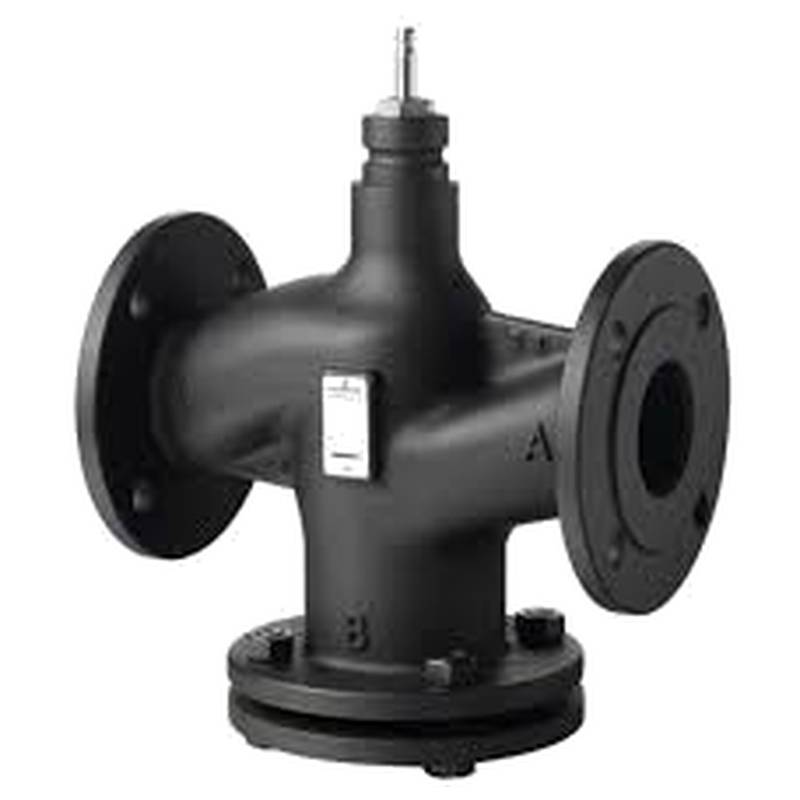












SIEMENS VAI61.25-10 Threaded Two-Way Ball Valve DN25 kvs 10


SIEMENS VAI61.25-10: Precision Control for Advanced HVAC Systems
The SIEMENS VAI61.25-10 is a highly engineered, threaded two-way ball valve designed for critical control applications within heating, ventilation, and air conditioning (HVAC) systems. This valve offers exceptional reliability, precise flow regulation, and robust construction, making it a premier choice for demanding industrial and commercial environments. Its key advantages include superior sealing capabilities, excellent flow characteristics with a kvs of 10, and compatibility with Siemens' advanced actuator technology for seamless automation. The internal thread connections, compliant with ISO 7-1, ensure secure and leak-free installations in closed-loop systems.
Product Specifications
| Feature | Specification |
| :-------------------------- | :------------------------------------------------- |
| Product Number | VAI61.25-10 |
| Valve Type | 2-Port Ball Valve |
| Connection Type | Internal Thread (Rp, as per ISO 7-1) |
| Nominal Diameter (DN) | DN25 (1 inch) |
| Flow Coefficient (kvs) | 10 m³/h |
| Pressure Nominal (PN) | PN40 |
| Medium | Water, Water with Anti-freeze |
| Medium Temperature | -10°C to +120°C |
| Valve Body Material | Brass CW602N (DZR) |
| Ball Material | Chromium-plated Brass (UNS C35330 DZR) |
| Leakage Rate | Better than Class 5 (as per EN 60534-4 L/1) |
| Rangeability | > 500:1 |
| Permissible Operating Pressure| 1600 kPa |
| Angular Rotation | 90° |
Core Features & Market Positioning
The SIEMENS VAI61.25-10 stands out in the market due to its robust construction and high-performance characteristics. Crafted from DZR (Dezincification Resistant) brass for the valve body and a chromium-plated brass ball, it ensures exceptional longevity and resistance to corrosion, particularly in water-based HVAC systems. Its equal-percentage valve characteristic offers precise, proportional control over flow rates, making it ideal for maintaining stable system temperatures and reducing energy consumption. The high rangeability of over 500:1 signifies its capability to handle a wide spectrum of flow demands with accuracy. Positioned as a premium control valve, it offers a balance of cost-effectiveness and sophisticated functionality, especially when paired with Siemens' compatible rotary actuators.
Key Application Scenarios
This ball valve is predominantly utilized in closed-loop heating, ventilation, and air conditioning (HVAC) systems. Its primary role is as a precise control valve for regulating the flow of water or water-based antifreeze solutions. Typical applications include:
Chilled Water Systems: Maintaining precise temperature control in commercial buildings and industrial processes. Hot Water Heating Systems: Ensuring consistent and efficient heating distribution. District Heating Networks: Regulating flow and temperature in larger distribution systems. Air Handling Units (AHUs): Controlling heating and cooling coils for optimal climate control.
The VAI61.25-10 is engineered to prevent cavitation within its operational parameters, ensuring quiet and efficient performance.
Practical System Integration Guidance
The SIEMENS VAI61.25-10 is designed for straightforward integration. Its Rp 1" internal thread connections facilitate easy installation into existing pipework according to ISO 7-1 standards. For automated control, it is highly compatible with Siemens' range of electromotorized rotary actuators, such as the GQD, GMA, GDB, and GLB series. These actuators offer various control signals (e.g., 0-10V, 2-position) and communication protocols, allowing for seamless integration into Building Management Systems (BMS) and SCADA platforms. Mounting is designed to be tool-free once the actuator bracket is in place, significantly simplifying installation and reducing labor time.
Operation and Risk Mitigation
Operation of the SIEMENS VAI61.25-10 is primarily managed through compatible actuators, providing precise angular rotation of 90° for flow regulation. The valve itself is built for durability and minimal maintenance, featuring a low-friction stem and a polished, chrome-plated brass ball. Risk mitigation is achieved through its robust design, including a PN40 pressure rating and excellent sealing capabilities that meet leakage rate standards better than Class 5. To prevent cavitation, especially in chilled water circuits, it is recommended to ensure sufficient counter-pressure downstream of the valve or to consult the provided flow diagrams to stay within permissible differential pressure limits.
Scalability & Long-Term Value
The VAI61.25-10 offers significant long-term value through its compatibility with evolving automation and IIoT solutions. Its integration capabilities with modern BMS and communication protocols like Modbus RTU, KNX, and BACnet/IP (depending on the chosen actuator) allow for data acquisition and remote control, contributing to smart building initiatives. The availability of various actuator options, including those with advanced communication features, provides a clear upgrade path for enhanced system monitoring and energy management. The inherent durability and quality of Siemens components ensure a long service life, minimizing the need for frequent replacements and contributing to the overall lifecycle cost-effectiveness of HVAC installations.
---
Frequently Asked Questions (FAQs)
1. What are the primary applications for the SIEMENS VAI61.25-10 ball valve?
This valve is predominantly used in HVAC systems for precise flow control in closed circuits. It is ideal for regulating water or antifreeze solutions in heating and cooling applications.
Its robust construction and PN40 rating ensure reliable performance in demanding temperature and pressure conditions. Applications include chilled water systems, hot water heating, and air handling unit coils.
The VAI61.25-10 is designed for integration with Siemens actuators, offering automated control for optimal climate management and energy efficiency.
2. What are the key technical specifications of the SIEMENS VAI61.25-10?
The valve features a DN25 nominal diameter and a kvs of 10 m³/h, providing excellent flow characteristics. It is rated for PN40 pressure and operates with media like water and antifreeze between -10°C and 120°C.
Construction includes a DZR brass body and a chromium-plated brass ball for durability and corrosion resistance. It offers a rangeability exceeding 500:1 and a leakage rate better than Class 5.
Connections are internally threaded Rp as per ISO 7-1, and the valve provides 90° angular rotation for control.
3. How is the SIEMENS VAI61.25-10 installed and integrated into a system?
Installation is facilitated by its Rp 1" internal thread connections compliant with ISO 7-1. The valve can be easily mounted directly into compatible piping systems.
For automated control, it is designed to seamlessly integrate with Siemens rotary actuators, such as the GQD, GMA, GDB, and GLB series. Actuator mounting is typically tool-free.
These actuators offer various control signals and communication options, enabling integration with Building Management Systems (BMS) for sophisticated automation.
4. What materials are used in the construction of the SIEMENS VAI61.25-10?
The valve body is constructed from DZR (Dezincification Resistant) brass (CW602N), ensuring long-term reliability and resistance to corrosion common in HVAC water systems.
The ball, which is the primary control element, is made of chromium-plated brass (UNS C35330 DZR). This material provides a smooth, durable sealing surface and enhances corrosion resistance.
Internal components and seals are designed for longevity within the specified operating temperature and pressure ranges.
5. What is the significance of the kvs 10 rating for this ball valve?
The kvs value of 10 m³/h represents the flow rate of water at 20°C through the fully open valve with a pressure drop of 1 bar (100 kPa). A higher kvs value indicates a greater flow capacity for a given valve size.
A kvs of 10 for a DN25 valve signifies efficient flow handling capabilities. This allows for precise control over a wide range of flow demands within HVAC systems.
This rating ensures that the SIEMENS VAI61.25-10 can effectively manage heating and cooling loads, contributing to system efficiency and occupant comfort.
6. Can the SIEMENS VAI61.25-10 be used with different types of actuators?
Yes, the SIEMENS VAI61.25-10 is designed for compatibility with a range of Siemens rotary actuators, including models like GQD, GMA, GDB, and GLB. These actuators come with various control options.
Actuators are available for different control types, such as 2-position, 3-position, and modulating control (e.g., 0-10V signal). Some actuators also support digital communication protocols.
The selection of an appropriate actuator depends on the system's control strategy, integration requirements (e.g., BMS compatibility), and the need for features like spring return for fail-safe operation.
7. What is the maximum operating pressure and temperature for the VAI61.25-10?
The valve is rated for a nominal pressure of PN40, which corresponds to a maximum operating pressure of 40 bar (approximately 4000 kPa) under specific temperature conditions. The permissible operating pressure is listed as 1600 kPa.
The medium temperature range for the SIEMENS VAI61.25-10 is from -10°C to a maximum of +120°C. This wide range covers typical applications in both heating and cooling systems.
It's important to adhere to these specifications to ensure safe and reliable operation and to maintain the integrity of the valve and the system.
8. How does the valve characteristic of the VAI61.25-10 affect its control performance?
The VAI61.25-10 features an equal-percentage valve characteristic. This means that for equal increments of actuator travel, the flow rate change is a constant percentage of the flow rate at that travel.
This characteristic provides highly linear control over a broad range of flow rates, ensuring that adjustments to the actuator result in predictable changes in fluid flow. It is particularly beneficial for applications requiring precise temperature regulation.
Equal-percentage characteristics help maintain stable system performance, reduce hunting in control loops, and optimize energy efficiency compared to linear characteristics in many HVAC applications.
9. What measures should be taken to prevent cavitation when using this ball valve?
Cavitation can occur when the pressure drop across the valve is too high, leading to noise and wear. To prevent this, it is recommended to avoid exceeding the maximum permissible differential pressure (Δpmax) specified for the valve and operating temperature.
In chilled water circuits, ensuring sufficient backpressure at the valve outlet, for example, by installing an additional butterfly valve downstream, can help prevent cavitation. Refer to the manufacturer's flow diagrams for specific guidance on permissible differential pressures.
By adhering to the recommended operating parameters and system design considerations, the risk of cavitation can be effectively minimized, ensuring quiet and durable operation.
10. What is the expected lifespan and maintenance requirement for the SIEMENS VAI61.25-10?
The SIEMENS VAI61.25-10 is designed for high durability and a long service life, attributed to its robust brass construction and high-quality internal components. Its maintenance-free design is a key benefit.
The valve's construction, including a low-friction stem and polished chrome-plated brass ball, contributes to its longevity and minimal operational wear. Routine maintenance is generally not required under normal operating conditions.
Proper installation and adherence to operating parameters, such as avoiding cavitation and exceeding pressure limits, are crucial for maximizing the valve's lifespan and ensuring sustained reliable performance.