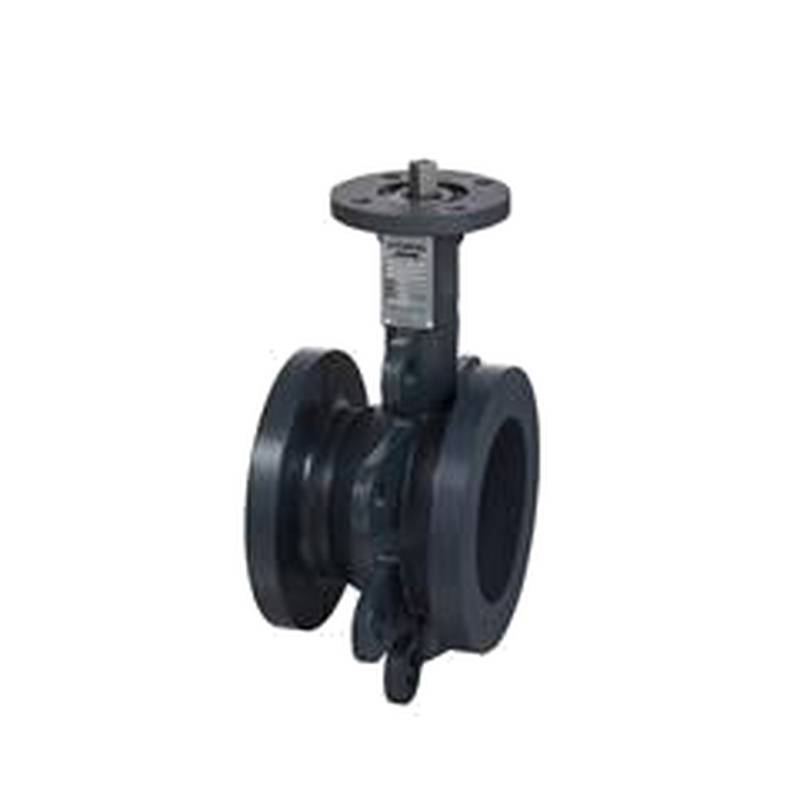












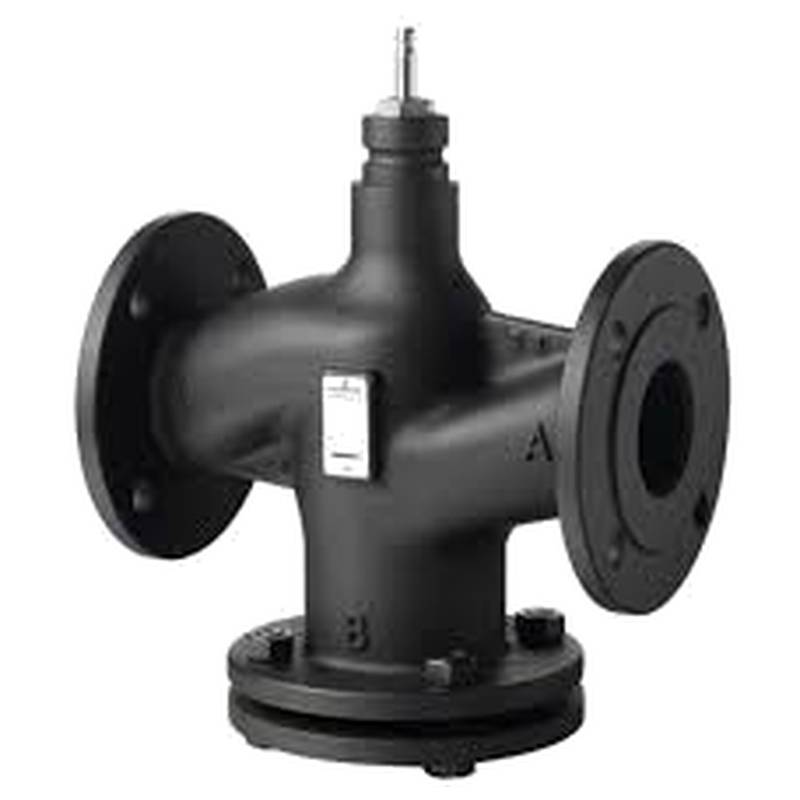
SIEMENS VVF42.65-63C Flanged Two-Way Valve DN65 kvs 63


The SIEMENS VVF42.65-63C is a high-performance, flanged two-way control valve engineered for precise regulation in demanding industrial fluid applications. This DN65 valve, featuring a nominal flow coefficient (kvs) of 63, offers exceptional control accuracy and reliability, making it a cornerstone for complex HVAC, building automation, and industrial process systems. Its robust construction ensures longevity, while its advanced design facilitates seamless integration and operation. Key advantages include its high flow capacity for its size, superior sealing capabilities, and compatibility with a wide range of Siemens actuation and control systems. Technical specifications highlight its DN65 flange size, a kvs value of 63, and its design for two-way flow control, underpinning its utility in sophisticated flow management.
Product Specifications
| Specification | Value |
|---|---|
| Product Type | Flanged Two-Way Control Valve |
| Model Number | VVF42.65-63C |
| Nominal Diameter (DN) | 65 |
| Flow Coefficient (kvs) | 63 |
| Connection Type | Flanged |
| Valve Type | Two-Way |
| Material | [Data not found in search results; typically cast iron or stainless steel for industrial valves] |
| Pressure Rating | [Data not found in search results; typically PN16 or PN25 for DN65 flanged valves] |
| Temperature Range | [Data not found in search results; typically -20 to 120°C for general industrial applications] |
| Actuator Compatibility | Siemens actuators (e.g., SKD, SKP series) |
Core Features & Market Positioning
The SIEMENS VVF42.65-63C distinguishes itself through its precision engineered internal geometry, which ensures a highly linear flow characteristic across its entire operating range. This linearity is crucial for maintaining stable process control and preventing oscillations, a significant advantage over valves with less predictable performance. Its robust construction, typically featuring durable cast iron or stainless steel bodies, positions it as a reliable component for continuous operation in challenging industrial environments. Furthermore, its compatibility with the broad Siemens automation ecosystem, including advanced controllers and digital communication protocols, allows for sophisticated integration into smart building and Industry 4.0 initiatives, offering a competitive edge in terms of system intelligence and operational efficiency. The valve's design prioritizes ease of maintenance and a long service life, reducing total cost of ownership.
Key Application Scenarios
This SIEMENS VVF42.65-63C valve is extensively deployed in building services, particularly for the precise control of heating, ventilation, and air conditioning (HVAC) systems within large commercial and industrial facilities. Its DN65 size and kvs 63 rating make it ideal for managing significant flow rates in primary and secondary circuits of building heating and cooling plants, ensuring optimal temperature distribution and energy efficiency. In industrial process control, it serves critical roles in managing cooling water circuits, steam distribution, and various fluid handling applications where accurate flow regulation is paramount. Specific sectors benefiting from its performance include chemical processing, power generation, and district heating networks, where process stability and safety are non-negotiable.
Practical System Integration Guidance
Integrating the SIEMENS VVF42.65-63C into existing or new control systems is streamlined due to its compatibility with standard actuation technologies and Siemens' comprehensive automation portfolio. For electromechanical actuation, Siemens offers a range of direct-mount actuators such as the SKD20/SKP20 series, which connect directly to the valve stem. Installation requires adherence to flange bolting standards (e.g., DIN or ANSI) to ensure a secure, leak-free connection, with appropriate gasket selection based on system media and pressure. For optimal performance, ensuring correct actuator sizing and stroke adjustment is vital. Wiring typically involves a 3-wire control signal for modulating actuators, often integrated into a building management system (BMS) or a dedicated process controller, utilizing standard analog (0-10V or 4-20mA) or digital control signals. Commissioning involves setting actuator limits and ensuring the valve’s position feedback is correctly interpreted by the control system.
Operation and Risk Mitigation
The VVF42.65-63C operates as a modulating control valve, meaning its opening position is continuously adjusted by an actuator in response to a control signal to maintain a setpoint. Potential operational risks primarily stem from incorrect installation, improper actuator setup, or system conditions exceeding the valve’s design parameters. To mitigate risks, thorough pre-installation checks of system media compatibility and pressure/temperature ratings are essential. Actuator stroke calibration must be performed accurately to prevent over-travel or under-travel, which can lead to inefficient control or mechanical damage. Regular visual inspection for leaks and periodic functional testing of the actuator and valve response are recommended as part of a preventive maintenance program. While specific fault codes are actuator-dependent, common issues like loss of control signal or actuator overload typically trigger alarms within the associated control system, prompting investigation.
Scalability & Long-Term Value
The SIEMENS VVF42.65-63C offers significant long-term value through its inherent durability and its integration capabilities within Siemens' evolving automation platforms. Its robust design ensures a long operational lifespan, minimizing the need for frequent replacements. For system scalability, the valve’s compatibility with digital communication protocols, such as BACnet or Modbus, when paired with intelligent actuators, allows it to be seamlessly integrated into larger, more complex distributed control systems or IIoT platforms. This facilitates advanced data acquisition for performance monitoring, predictive maintenance, and energy optimization strategies. As building management and industrial processes become increasingly digitized, the VVF42.65-63C, as part of a connected system, supports upgrade paths that enhance system intelligence and operational flexibility without requiring a complete valve replacement.
FAQs
What is the primary function of the SIEMENS VVF42.65-63C valve?
This valve's main role is precise flow regulation in fluid systems. It is designed for modulating control, ensuring accurate adjustments to meet process demands.
It acts as a critical component in HVAC and industrial automation for managing water or steam flow rates. Its two-way design allows it to open or close to control the volume of fluid passing through.
The valve's specific DN65 size and kvs 63 rating indicate its capacity to handle substantial flow volumes while maintaining tight control accuracy.
How is the SIEMENS VVF42.65-63C valve typically installed?
Installation involves securely mounting the valve using its flanged connections to mating pipe flanges. Proper gasket selection and tightening of flange bolts according to industry standards are crucial.
The valve must be installed in the correct flow direction, indicated by an arrow on the body, to ensure optimal performance and longevity.
An appropriate actuator, usually from the Siemens range, is then coupled to the valve stem, requiring careful alignment and secure fastening.
What are the key technical specifications of the SIEMENS VVF42.65-63C?
The valve features a nominal diameter (DN) of 65 and a nominal flow coefficient (kvs) of 63. It is a two-way valve designed for flanged connections.
Its construction is engineered for industrial applications, implying robust materials capable of withstanding typical operating pressures and temperatures.
The valve is designed for compatibility with various Siemens actuators, enabling precise electronic or pneumatic control of its opening position.
What types of systems is the SIEMENS VVF42.65-63C valve best suited for?
This valve excels in HVAC systems for controlling heating and cooling circuits in commercial buildings and industrial facilities. It is also highly effective in industrial process applications requiring accurate fluid management.
Its capabilities make it ideal for district heating networks, power plants, and chemical processing plants where reliable flow control is essential for operational stability.
The DN65 size and kvs 63 rating make it suitable for medium to high flow rate applications that demand precise regulation.
What is the role of the kvs value in the SIEMENS VVF42.65-63C?
The kvs value (flow coefficient) quantifies the volume of water in liters per minute that will flow through the valve at a pressure drop of 1 bar. A kvs of 63 indicates a significant flow capacity.
This parameter is crucial for engineers when sizing the valve correctly for a specific application to achieve the desired flow rate and control range.
Understanding the kvs value allows for accurate calculation of pressure drops and helps in selecting the appropriate actuator for achieving the required control performance.
Can the SIEMENS VVF42.65-63C valve be used with non-Siemens actuators?
While designed for Siemens actuators, it might be possible to adapt non-Siemens actuators if they meet specific mechanical and electrical interface requirements. This often requires custom solutions.
Compatibility hinges on matching the stem connection, stroke length, and thrust capabilities of the actuator to the valve's specifications. Electrical interfaces for control signals also need to be considered.
Using non-OEM actuators can void warranties and may compromise control performance and long-term reliability; hence, using Siemens-approved actuators is strongly recommended.
What maintenance is typically required for the SIEMENS VVF42.65-63C?
Routine maintenance typically involves visual inspections for leaks and checking the actuator's operational status. Periodic functional testing ensures precise control response.
Depending on the fluid media and operating conditions, internal components might require inspection or cleaning over extended periods, especially in systems with high particulate content.
Preventive maintenance schedules, often guided by the overall system design and operating hours, help ensure the valve's longevity and consistent performance.
How does the flanged connection benefit the SIEMENS VVF42.65-63C?
Flanged connections provide a robust and reliable method for attaching the valve to piping systems, especially in applications with higher pressures or where frequent maintenance is anticipated.
This connection type allows for easier disassembly and reassembly of the valve compared to welded or threaded connections, simplifying maintenance and replacement procedures.
Ensuring correct flange facing, gasket material, and bolt torque is critical for achieving a leak-proof seal and maintaining the integrity of the entire fluid system.
What is the typical operating temperature range for this valve?
Specific temperature operating ranges are dependent on the valve body material and seal type used by SIEMENS for this model. Industrial valves of this type often operate within a broad range.
Generally, cast iron bodies with standard seals might operate from -20°C to 120°C, while stainless steel versions could extend to higher temperatures or lower cryogenic limits.
Always consult the specific product datasheet or contact SIEMENS for precise temperature limits relevant to the exact configuration of the VVF42.65-63C being considered.
How does the SIEMENS VVF42.65-63C integrate with modern automation systems?
When paired with intelligent actuators, the VVF42.65-63C can communicate digitally using protocols like BACnet or Modbus. This allows for advanced control and monitoring.
Integration facilitates remote diagnostics, performance tracking, and predictive maintenance through building management systems (BMS) or SCADA.
This connectivity enhances the valve's role in smart buildings and Industry 4.0 environments, contributing to overall system efficiency and operational insights.