











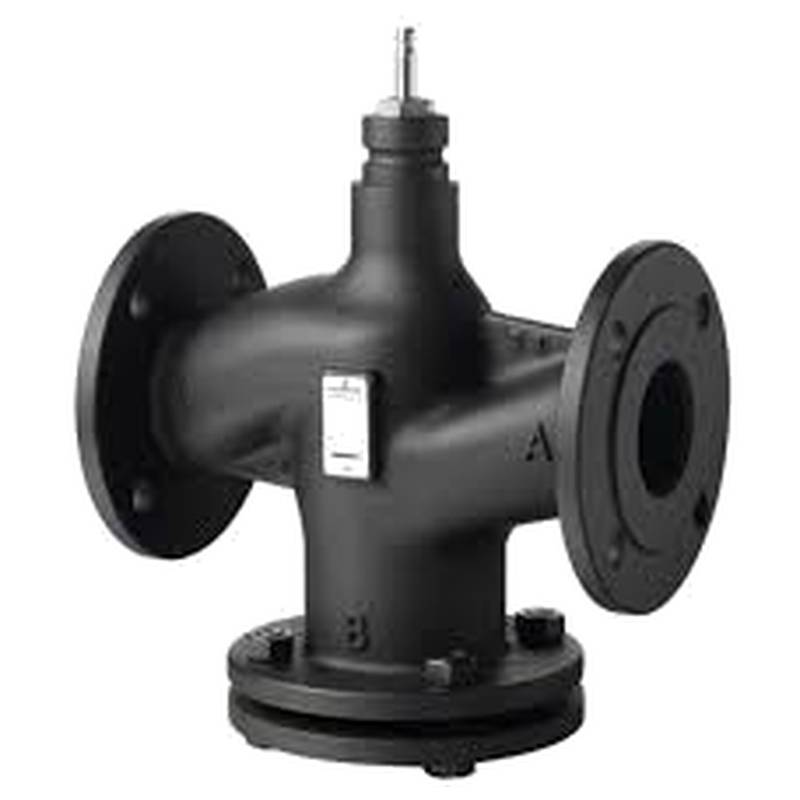
SIEMENS VVF53.15-1.25 Two-Way Valve DN15 kvs 1.25 Low Flow


The SIEMENS VVF53.15-1.25 Two-Way Valve, a DN15 low-flow control valve with a kvs of 1.25, offers precise fluid management for demanding industrial applications. Its key advantages lie in its robust construction, reliable performance, and compatibility with SIEMENS automation systems. This valve excels in applications requiring accurate flow regulation for heating, ventilation, and air conditioning (HVAC) systems, as well as process control loops where minimal flow rates are critical. The VVF53.15-1.25 boasts a maximum differential pressure of 250 kPa and a temperature range of -10 to 120°C, ensuring operational stability across diverse environmental conditions. Its compact design and standard G 3/4" connection size facilitate straightforward integration into existing piping infrastructure.
Product Specifications
| Parameter | Value |
| :-------------------- | :-------------------------- |
| Valve Type | Two-Way Control Valve |
| Manufacturer | SIEMENS |
| Model | VVF53.15-1.25 |
| Nominal Size (DN) | 15 |
| Flow Coefficient (kvs) | 1.25 |
| Connection Size | G 3/4" |
| Max. Differential Pressure | 250 kPa (2.5 bar) |
| Temperature Range | -10 to 120°C |
| Permissible Medium | Water, Water/Glycol Mix |
| Seal Material | EPDM |
| Actuator Mounting | Direct |
| Pressure Rating | PN16 |
Core Features & Market Positioning
The SIEMENS VVF53.15-1.25 distinguishes itself through its high-precision control capabilities, essential for maintaining stable system parameters in complex HVAC and industrial processes. Its low-flow characteristic makes it particularly valuable for applications where energy efficiency and precise temperature or pressure regulation are paramount, preventing overshooting and reducing waste. Positioned as a reliable component within the SIEMENS Building Technologies portfolio, this valve integrates seamlessly with SIEMENS actuators and controllers, offering a cohesive and robust automation solution. This synergy enhances system performance and simplifies commissioning and maintenance, a significant advantage in competitive industrial markets. The valve's durable EPDM seals ensure longevity and compatibility with common water-based heating and cooling fluids.
Key Application Scenarios
This SIEMENS VVF53.15-1.25 is ideally suited for controlling the flow of water or water-glycol mixtures in variable air volume (VAV) terminal units within commercial buildings. Its low kvs value ensures accurate modulation at low flow rates, critical for maintaining comfortable temperatures in smaller zones or at partial load conditions. In process industries, it serves as a precise control element in pilot plants or smaller-scale chemical processing lines where exact reagent or coolant delivery is required. Furthermore, it finds application in district heating networks for precise thermal regulation of individual building entries or specific heating circuits. The valve is also a strong candidate for fan coil units and radiant heating systems, where fine-tuned temperature control is desired for occupant comfort and energy savings.
Practical System Integration Guidance
Integrating the SIEMENS VVF53.15-1.25 involves ensuring compatibility with the chosen SIEMENS actuator, such as the SQX series, which offers direct mounting for simplified installation. The valve body connects via standard G 3/4" internal threads, requiring appropriate fittings and sealing materials (e.g., PTFE tape or paste) to ensure leak-free operation. For optimal performance, the valve should be installed in a piping section with a straight run of at least five pipe diameters upstream and two downstream to prevent flow disturbances affecting control accuracy. Commissioning typically involves end-stop calibration of the actuator via the connected controller, ensuring the full range of valve travel is utilized effectively. The valve's PN16 pressure rating dictates suitable system pressures and compatible piping standards.
Operation and Risk Mitigation
Operating the SIEMENS VVF53.15-1.25 requires adherence to its specified temperature and pressure limits to prevent damage or premature failure. During operation, regular visual inspection for leaks or external corrosion is recommended. While this valve is designed for robust industrial use, potential issues can arise from system water quality; particulate matter can obstruct the valve seat, leading to poor shut-off. Implementing adequate filtration upstream of the valve is a key risk mitigation strategy. In the event of actuator failure, the valve will assume its default position (fail-safe), which must be accounted for in system design. No specific critical error codes are associated directly with the valve; fault indications will typically stem from the connected actuator or control system.
Scalability & Long-Term Value
The SIEMENS VVF53.15-1.25 offers significant long-term value through its integration within the broader SIEMENS automation ecosystem. Its compatibility with a range of SIEMENS actuators and controllers allows for system upgrades and expansions without necessitating a complete valve replacement. For facilities moving towards digital transformation, this valve can be a component in a smart building infrastructure, feeding data on flow rates and valve position back to building management systems (BMS) or Industrial Internet of Things (IIoT) platforms. This data enables advanced analytics for energy optimization, predictive maintenance, and enhanced operational efficiency. The inherent durability and SIEMENS' reputation for quality ensure a long service life, reducing total cost of ownership.
FAQs
What is the primary function of the SIEMENS VVF53.15-1.25 valve?
This valve precisely controls the flow of fluids in industrial systems. It is designed for low-flow applications, ensuring accurate modulation. Its DN15 size and kvs 1.25 rating are key specifications for its precise operation.
The SIEMENS VVF53.15-1.25 valve is specifically engineered for modulating control of heating and cooling media. Its purpose is to regulate flow rates to maintain desired temperatures in HVAC and process applications. This ensures energy efficiency and occupant comfort by preventing over-control.
This two-way valve operates by adjusting its opening based on signals from a connected actuator. This allows for fine-tuning of flow, making it ideal for applications where exact fluid volumes are critical, such as in building terminal units or process loops.
What are the main advantages of using the SIEMENS VVF53.15-1.25 for low-flow control?
Its low kvs value provides superior accuracy at minimal flow rates. This prevents system instability and energy waste common with standard valves. It ensures precise temperature and pressure management.
This valve offers excellent shut-off capabilities, minimizing leakage when closed. This is crucial for energy savings and maintaining system integrity in low-flow scenarios. It contributes to overall system efficiency.
The SIEMENS VVF53.15-1.25 is built for durability and reliability in industrial environments. Its robust construction ensures a long service life and consistent performance, reducing maintenance needs.
What types of media can be used with the SIEMENS VVF53.15-1.25 valve?
This valve is suitable for controlling water, a common medium in HVAC systems. It can also handle water-glycol mixtures, typically used for freeze protection. Adhering to specified concentrations is important.
The valve's EPDM seals are compatible with these fluid types and offer good chemical resistance. Always confirm the specific glycol concentration limits provided by SIEMENS for optimal performance.
Avoid using aggressive chemicals or high-viscosity fluids not specified by the manufacturer. Using incompatible media can lead to seal damage and valve failure, compromising system operation.
How is the SIEMENS VVF53.15-1.25 valve installed in a system?
Installation involves connecting the valve's G 3/4" ports to your piping using appropriate fittings and sealants. Ensure the valve is oriented correctly within the pipeline. Proper thread sealing is vital.
The valve is designed for direct mounting of compatible SIEMENS actuators, simplifying the assembly process. Follow actuator-specific instructions for secure attachment and electrical connections.
Consider upstream and downstream pipe lengths for optimal flow conditions. A straight pipe run of at least five diameters before and two diameters after the valve is recommended for accurate control.
What are the typical operating temperature and pressure limits for this valve?
The SIEMENS VVF53.15-1.25 can operate within a temperature range of -10 to 120°C. This broad range covers most standard heating and cooling applications. Adherence is crucial for longevity.
The maximum permissible differential pressure for this valve is 250 kPa (2.5 bar). Exceeding this limit can cause internal damage and affect control accuracy. Ensure system pressure stays within this range.
Always consult the product datasheet for precise specifications regarding media temperature and system pressure. Operating outside these parameters voids warranty and risks equipment failure.
What is the significance of the kvs 1.25 rating for this valve?
The kvs value represents the flow rate in cubic meters per hour of water at a temperature of 20°C. A kvs of 1.25 signifies a low flow capacity, ideal for precise regulation. It ensures fine control at low demand.
This specific rating makes the valve highly suitable for applications requiring small amounts of fluid, such as individual room or zone control in HVAC. It prevents over-conditioning and saves energy.
Choosing a valve with an appropriate kvs rating is critical for system performance. A kvs too high for the application will lead to unstable control and potential system issues.
Can this valve be integrated with modern building automation systems?
Yes, the SIEMENS VVF53.15-1.25 is designed for seamless integration with SIEMENS building management systems (BMS). It connects via compatible actuators and controllers. This enables centralized control and monitoring.
The valve's digital compatibility allows it to send operational data, like position and flow, to the BMS. This supports energy optimization and advanced diagnostics. It's a key component in smart building solutions.
By using standard communication protocols, it can also interface with third-party automation systems, offering flexibility for various project requirements. This enhances its long-term value and adaptability.
What maintenance is typically required for the SIEMENS VVF53.15-1.25 valve?
Routine visual inspection for leaks or external damage is recommended. Ensure actuator connections remain secure and clean. General upkeep prevents minor issues from escalating.
The primary maintenance concern is ensuring system water quality. Installing adequate filtration upstream protects the valve seat from debris that could cause poor shut-off. This is preventative.
Periodic functional checks, especially after extended shutdowns or system modifications, are advisable. Consult the SIEMENS technical documentation for any specific servicing recommendations.
What happens if the actuator fails on a SIEMENS VVF53.15-1.25 valve?
If the actuator fails, the valve will typically move to its default or "fail-safe" position. This position is predetermined by the actuator's design, usually fully open or fully closed. System design must accommodate this.
Understanding the fail-safe position is crucial for system safety and operational continuity. For example, in a heating circuit, a fail-open position might maintain heat, while fail-closed could prevent overheating.
The specific fail-safe behavior depends on the actuator model paired with the valve. Always refer to the actuator's specifications to understand its behavior during power loss or failure.
How can I troubleshoot common issues with this valve?
First, check if the actuator is receiving power and the control signal is correct. Verify that the valve is not physically obstructed and that the actuator is properly seated. Basic electrical and mechanical checks are key.
Investigate system water quality; sediment or scale buildup can affect valve operation and shut-off. Ensure proper filtration is in place and functioning correctly to prevent such issues. Water chemistry matters.
If issues persist, consult the SIEMENS actuator manual for specific troubleshooting steps related to its operation and communication with the valve. Always refer to manufacturer guidelines.