











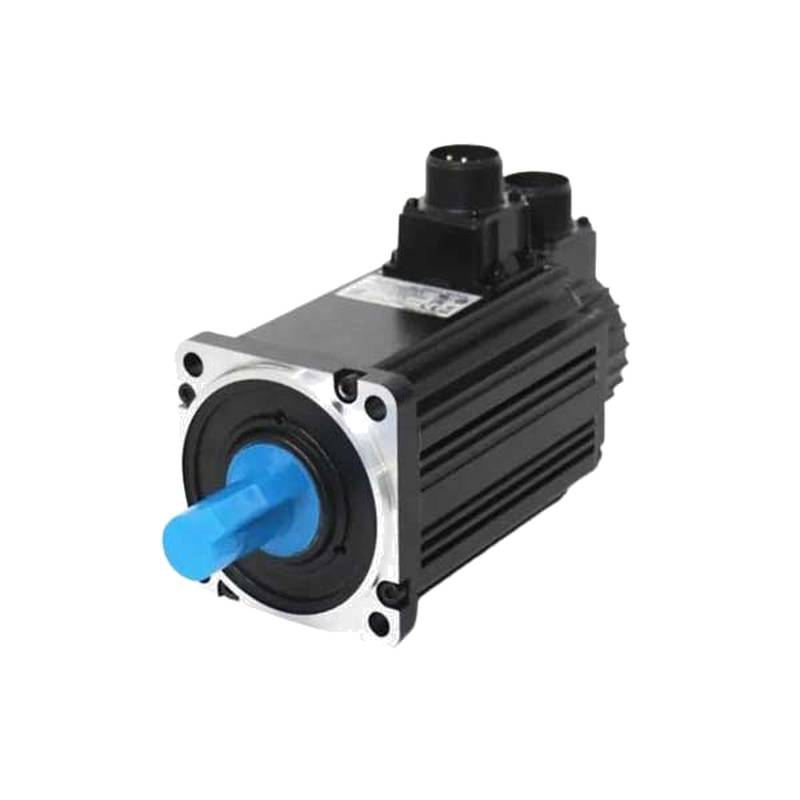
Delta ECM-B3M-LA1830RS1 Medium Inertia Automation Control Motor


The Delta ECM-B3M-LA1830RS1 is a medium inertia automation control motor engineered for demanding industrial applications requiring precision, speed, and reliability. This servo motor boasts a rated torque of 30 Nm and a peak torque of 90 Nm, enabling it to handle significant load fluctuations with ease. Its compact frame size, 180mm, facilitates integration into space-constrained machinery, while its robust construction ensures longevity in harsh environments. The ECM-B3M-LA1830RS1 operates with a rated voltage of 230V, providing ample power for a wide range of automated tasks. This motor is distinguished by its high resolution encoder, offering precise position feedback crucial for advanced motion control systems.
Product Specifications
| Parameter | Value |
| :----------------- | :------------------------ |
| Model | ECM-B3M-LA1830RS1 |
| Rated Torque | 30 Nm |
| Peak Torque | 90 Nm |
| Frame Size | 180mm |
| Rated Voltage | 230V |
| Inertia | Medium |
| Encoder Resolution | High |
| Brake | Yes (RS suffix indicates brake) |
| Flange Type | LA (specific flange type) |
| Shaft Type | 1830 (specific shaft type) |
Core Features & Market Positioning
The Delta ECM-B3M-LA1830RS1 stands out in the competitive servo motor market due to its exceptional torque density and precise control capabilities. Its medium inertia characteristics strike an optimal balance between responsiveness for rapid movements and stability under load, positioning it as a versatile solution for applications demanding both speed and accuracy. The integrated high-resolution encoder ensures superior positional feedback, minimizing errors and enhancing process efficiency—a critical differentiator in automation. Furthermore, the inclusion of a brake (indicated by the "RS" in its model number) adds a significant layer of safety and holding capability, making it a preferred choice for vertical axis applications or where immediate stopping is paramount. This robust feature set allows the ECM-B3M-LA1830RS1 to compete effectively with higher-priced, specialized motors in numerous industrial sectors.
Key Application Scenarios
This Delta servo motor is ideally suited for a broad spectrum of industrial automation tasks where dynamic performance and pinpoint accuracy are essential. Its robust torque output and medium inertia make it an excellent choice for high-speed pick-and-place operations in electronics manufacturing and packaging lines. In the machine tool industry, the ECM-B3M-LA1830RS1 excels in CNC machinery for precise contouring and milling, benefiting from its high-resolution feedback for intricate designs. It is also a strong candidate for robotic arm articulation, enabling smooth and accurate movements in assembly and material handling. The integrated brake is particularly advantageous for vertical axis applications, such as automated guided vehicles (AGVs) or automated storage and retrieval systems (AS/RS), ensuring loads are held securely when power is removed.
Practical System Integration Guidance
Integrating the Delta ECM-B3M-LA1830RS1 into an existing automation system involves careful consideration of its electrical and mechanical interfaces. The motor's wiring should connect to a compatible Delta servo drive, such as the ASD-B3 Series, ensuring proper power, control signal, and encoder feedback. Users must verify that the servo drive's firmware is updated to recognize the specific motor parameters for optimal performance tuning. During installation, mechanical mounting must be precise, utilizing the specified flange (LA) and shaft (1830) types to ensure concentricity and prevent vibration. Initial commissioning typically involves motor auto-tuning via the servo drive's software, which calibrates gains based on the ECM-B3M-LA1830RS1's inertia characteristics.
Operation and Risk Mitigation
Safe and efficient operation of the Delta ECM-B3M-LA1830RS1 hinges on adherence to operational parameters and understanding potential fault conditions. Users should always consult the accompanying servo drive's manual for specific safety precautions and emergency stop procedures. Over-torque conditions, prolonged operation beyond rated limits, or inadequate cooling can lead to motor overheating and premature failure. Common troubleshooting involves checking encoder connections for signal integrity and verifying the servo drive's diagnostic codes. Fault codes related to over-current, over-voltage, or encoder errors are indicative of issues that require immediate attention and inspection of the motor and its associated drive system. Ensuring proper ventilation around the motor and drive is critical for heat dissipation.
Scalability & Long-Term Value
The Delta ECM-B3M-LA1830RS1 offers significant long-term value through its compatibility with Delta's broader automation ecosystem and its inherent design for performance. Its integration capabilities extend to various industrial control platforms, allowing for seamless incorporation into existing PLC-based systems or advanced PC-based control architectures. For future upgrades or expansions, Delta's range of servo drives and controllers are designed to support a variety of motor sizes and performance levels, facilitating system scalability. Furthermore, the motor's robustness and the availability of technical support contribute to a lower total cost of ownership, as it is built for demanding industrial duty cycles. Its potential for integration with Industry 4.0 initiatives, through connected drives and data acquisition, enhances its long-term relevance in smart manufacturing environments.
Frequently Asked Questions
What is the rated torque of the Delta ECM-B3M-LA1830RS1?
The motor's rated torque is 30 Nm. This indicates the continuous torque it can deliver under normal operating conditions without overheating. It is a crucial parameter for determining if the motor can handle the sustained load of the application.
This torque value is essential for engineering calculations related to drive train design and performance estimation. A higher rated torque allows for more demanding continuous operations and heavier payloads.
Understanding the rated torque ensures the motor operates within its design limits, preventing premature wear and guaranteeing consistent performance over its lifespan.
Does the Delta ECM-B3M-LA1830RS1 include a brake?
Yes, the "RS" suffix in the model number ECM-B3M-LA1830RS1 signifies that it is equipped with a brake. This brake is typically a spring-applied, electromagnetically released type.
The integrated brake provides holding torque when the motor is de-energized, crucial for preventing unwanted movement of loads in vertical axes or during power outages. It enhances safety and operational reliability.
When specifying this motor, confirm the brake's holding torque specifications to ensure it meets the application's requirements for load stabilization and emergency stops.
What are the main advantages of using a medium inertia servo motor like the ECM-B3M-LA1830RS1?
Medium inertia motors offer a balanced performance profile. They are more responsive than high inertia motors but more stable under load than low inertia motors.
This balance makes them versatile for applications requiring both speed and precision, such as pick-and-place, packaging, and general automation tasks. They provide a good compromise for dynamic performance.
The ECM-B3M-LA1830RS1's medium inertia allows for quick acceleration and deceleration while maintaining accuracy, reducing cycle times and improving throughput in manufacturing processes.
How do I connect the Delta ECM-B3M-LA1830RS1 to a servo drive?
Connect the motor's power and feedback cables to the appropriate terminals on a compatible Delta servo drive, such as the ASD-B3 Series. Refer to the drive's manual for specific pinouts and wiring diagrams.
Ensure all connections are secure and correctly polarized to prevent damage to the motor or drive. Proper grounding is also essential for electrical safety and noise reduction.
After wiring, perform an auto-tuning procedure through the servo drive's software. This process calibrates the drive's parameters to the motor's inertia and characteristics for optimal control.
What type of encoder does the ECM-B3M-LA1830RS1 use for feedback?
This motor is equipped with a high-resolution encoder. The exact resolution (e.g., number of pulses per revolution) would be detailed in the full product datasheet.
High-resolution encoders provide very precise positional feedback, enabling the servo system to achieve accurate and repeatable movements, which is critical for complex automation tasks.
The encoder's data is transmitted back to the servo drive, allowing for closed-loop control that continuously corrects any deviations from the commanded position.
What is the frame size of the Delta ECM-B3M-LA1830RS1 and why is it important?
The frame size is 180mm. This dimension is standardized and indicates the motor's physical footprint and mounting interface.
A smaller frame size for a given torque output signifies higher power density, allowing the motor to fit into compact machinery where space is limited.
The 180mm frame size dictates the mounting bolt pattern and shaft diameter, ensuring compatibility with specific mechanical couplings and machine designs.
What are typical applications for a 30 Nm servo motor in industrial automation?
A 30 Nm motor is suitable for moderate to heavy-duty applications, such as driving axes on CNC machines, robotic arms in assembly, or large conveyor systems. It can also power packaging machinery and material handling equipment.
It can handle tasks requiring significant torque for continuous operation or rapid acceleration of substantial loads. This includes applications where precise positioning under load is paramount.
The ECM-B3M-LA1830RS1's torque allows it to manage dynamic loads and maintain accurate control, contributing to increased productivity and product quality in various manufacturing sectors.
What does the "LA" designation typically refer to in Delta motor model numbers?
The "LA" designation in the model number ECM-B3M-LA1830RS1 usually refers to a specific flange mounting type or mechanical configuration. This is crucial for physical integration with the driven equipment.
Different flange types (e.g., NEMA, IEC, or proprietary designs like Delta's LA) have unique bolt circle diameters, face dimensions, and shaft configurations that must match the machine interface.
Always verify the exact specifications of the "LA" flange against your machine's mounting requirements to ensure proper alignment and secure attachment of the motor.
What troubleshooting steps should I take if the ECM-B3M-LA1830RS1 is not performing correctly?
First, check all electrical connections, ensuring the power, encoder, and brake (if applicable) cables are securely fastened and free from damage. Verify the servo drive's diagnostic indicators for any fault codes.
Review the servo drive's parameters, particularly those related to motor identification and auto-tuning. Ensure the motor is correctly identified and the tuning was successful. Check for excessive vibration or unusual noises.
Inspect the motor for signs of overheating or mechanical obstruction. If the issue persists, consult the servo drive's troubleshooting guide or contact Delta technical support for further assistance.
Can the ECM-B3M-LA1830RS1 be used in environments with dust or moisture?
The ECM-B3M-LA1830RS1 typically has an IP rating that defines its protection against solids and liquids. Check the product's official datasheet for its specific IP rating, such as IP65.
An IP65 rating, for example, indicates the motor is dust-tight and protected against water jets, making it suitable for many industrial environments where cleaning or exposure to some moisture is common.
However, extreme conditions may require additional protective measures, such as specialized enclosures or seals, to ensure the longevity and reliable operation of the motor.