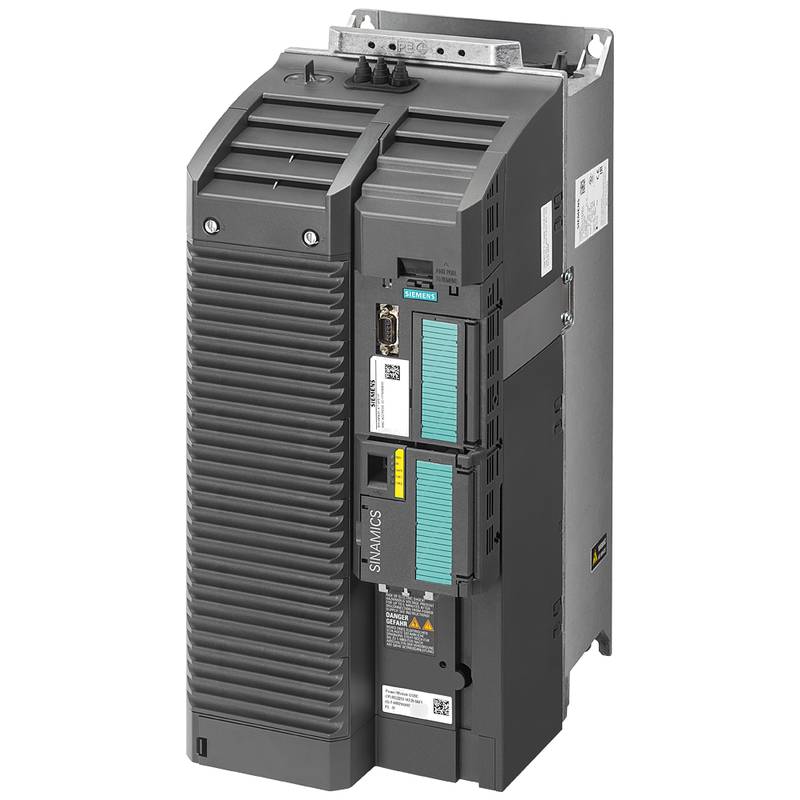












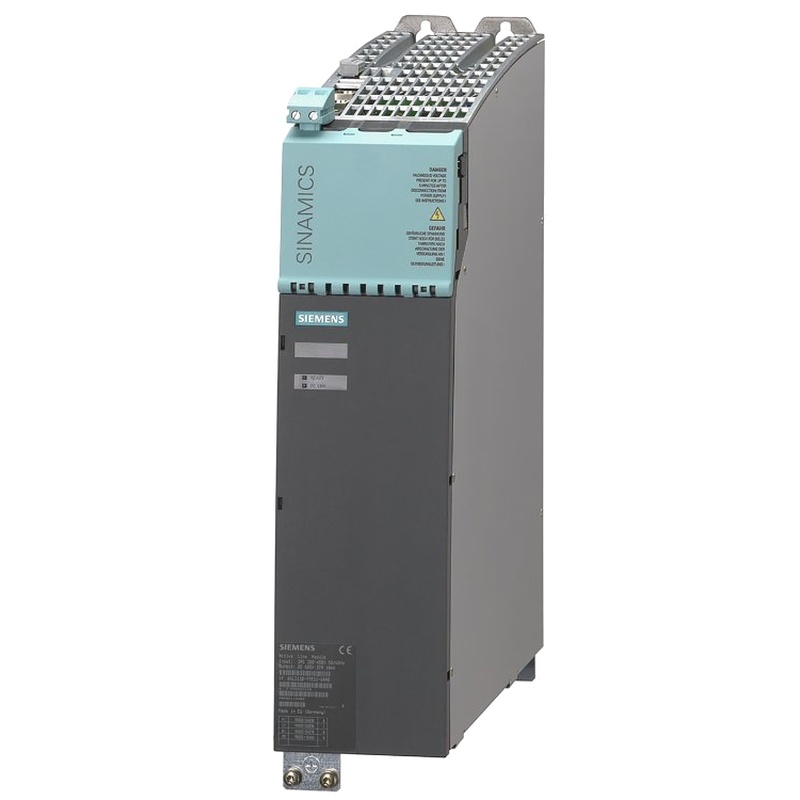
SIEMENS 6SL3731-7TE38-4RE0 SINAMICS S120 Cabinet Modules 2 Active Line Module 500kW 840A Right Side Configuration 400V


The SIEMENS 6SL3731-7CE38-4RE0 SINAMICS S120 Cabinet Module represents a pinnacle of industrial automation technology, offering unparalleled performance and reliability for demanding applications. This 500kW, 840A Active Line Module, configured for a 400V system with a right-side layout, is engineered for maximum energy efficiency and precise motor control. Its advanced features include a high-performance control unit, integrated safety functions, and seamless integration into the broader SINAMICS S120 system, making it an ideal choice for optimizing complex machinery and production lines across various industries.
Product Specifications
| Feature | Specification |
| :---------------------- | :----------------------------------------------- |
| Product Number | 6SL3731-7CE38-4RE0 |
| Product Line | SINAMICS S120 Cabinet Modules |
| Type | Active Line Module |
| Power Rating | 500 kW |
| Continuous Current | 840 A |
| Voltage Rating | 400 V |
| Configuration | Right Side |
| Control Unit | Integrated (typically CU320-2 DP or PN) |
| Communication Interfaces| PROFINET, PROFIBUS DP (depending on CU) |
| Protection Rating | IP20 |
| Dimensions (approx.) | Varies based on cabinet size, but designed for standard cabinet footprints |
| Operating Temperature | 0°C to +50°C (derating may apply above 40°C) |
Core Features & Market Positioning
The SINAMICS S120 Cabinet Module stands out in the industrial drive market due to its robust Active Line Module technology, which actively feeds generated energy back into the mains, significantly improving overall system efficiency and reducing operational costs. This regenerative capability, coupled with its high power density and precise control algorithms, positions the 6SL3731-7CE38-4RE0 as a superior solution for applications requiring dynamic performance and energy savings. Its integration within the modular SINAMICS S120 platform allows for flexible and scalable drive solutions, catering to both standard and highly specialized automation tasks. The inherent reliability and Siemens' renowned engineering ensure a low total cost of ownership, further solidifying its market leadership.
Key Application Scenarios
This powerful SINAMICS S120 Cabinet Module is engineered for a wide array of demanding industrial applications. Its high power rating and precise control make it exceptionally well-suited for heavy-duty machinery such as extruders, printing presses, and winding machines where accurate speed and torque control are paramount. Furthermore, it excels in complex material handling systems, including cranes and large conveyor belts, where dynamic acceleration and deceleration are critical. In the metal processing industry, it's frequently deployed in rolling mills and metal forming machines, benefiting from its robust construction and ability to handle high inertial loads. The module's energy-saving regenerative capabilities also make it an attractive option for applications with frequent braking cycles, such as elevators and robotics.
Practical System Integration Guidance
Integrating the SIEMENS 6SL3731-7CE38-4RE0 SINAMICS S120 Cabinet Module into an existing or new system requires careful planning. The module is designed for cabinet installation, and proper ventilation is crucial to maintain optimal operating temperatures. Connection to the motor is typically achieved via shielded motor cables to minimize electromagnetic interference. For control, the module interfaces with a SINAMICS S120 Control Unit (CU), such as the CU320-2 DP or CU320-2 PN, via a drive-cliQ interface. Commissioning involves configuring the drive parameters using Siemens' STARTER or SCOUT engineering software, setting up communication protocols (PROFINET or PROFIBUS), and defining motor data and control modes. Ensuring correct phase rotation and grounding is vital for safe and efficient operation.
Operation and Risk Mitigation
Safe and effective operation of the SIEMENS 6SL3731-7CE38-4RE0 SINAMICS S120 Cabinet Module relies on adherence to operating procedures and proactive risk mitigation. Always ensure that the power supply is de-energized and locked out before performing any maintenance or wiring. Familiarize yourself with the emergency stop functionalities integrated into the SINAMICS S120 system. Common operational risks include over-temperature faults, which can be mitigated by ensuring adequate cooling and not exceeding the module's rated load. Communication errors, often indicated by specific fault codes on the control unit, typically require checking the physical connections and the communication settings within the engineering software. Regular performance monitoring and diagnostic checks via the control unit's display or the engineering software can help identify potential issues before they lead to downtime.
Scalability & Long-Term Value
The SIEMENS 6SL3731-7CE38-4RE0 SINAMICS S120 Cabinet Module offers significant long-term value through its inherent scalability and integration capabilities. As part of the highly modular SINAMICS S120 platform, additional drive units or line modules can be added to expand system capacity or incorporate new functionalities, ensuring that automation investments can grow with production demands. Compatibility with a wide range of Siemens automation components and a variety of industrial fieldbus systems ensures seamless integration into existing infrastructure and future upgrades. Furthermore, its readiness for digital industrial solutions and the Industrial Internet of Things (IIoT) allows for advanced diagnostics, predictive maintenance, and remote monitoring, maximizing uptime and operational efficiency over the product's lifecycle.
Frequently Asked Questions
What is the primary function of the SIEMENS 6SL3731-7CE38-4RE0?
This module is an Active Line Module for the SINAMICS S120 drive system. It provides power to the motors and feeds regenerated energy back to the grid.
It enables efficient and precise motor control in industrial applications. Its key role is to manage the power flow for high-performance drives.
This component is crucial for applications requiring dynamic response and energy savings in 400V systems.
What are the key technical specifications of the 6SL3731-7CE38-4RE0?
The module has a power rating of 500 kW and a continuous current of 840 A. It operates at a voltage of 400V.
It features a right-side configuration and is designed for cabinet installation. The protection rating is IP20.
It integrates with SINAMICS S120 Control Units for advanced control and communication.
How does the Active Line Module contribute to energy efficiency?
The Active Line Module actively feeds regenerated energy back into the power supply grid. This reduces overall energy consumption by recovering energy during braking.
This regenerative capability minimizes energy waste compared to passive line modules or braking resistors. It lowers operational costs and environmental impact.
Applications with frequent motor braking cycles benefit significantly from this feature, making the system more sustainable.
What types of industries commonly use the SINAMICS S120 Cabinet Modules?
These modules are used in heavy manufacturing, such as metal processing, plastics extrusion, and printing. They are also found in complex material handling systems.
Industries requiring precise motion control, like robotics and automated assembly lines, also benefit from S120 drives. Packaging and textile machinery are other common sectors.
The versatility allows for deployment in demanding applications across automotive, food and beverage, and logistics.
What are the requirements for installing the 6SL3731-7CE38-4RE0?
Installation requires a suitable industrial cabinet with adequate ventilation. Proper grounding and shielded motor cabling are essential.
The module connects to a SINAMICS S120 Control Unit via a drive-cliQ interface. Power supply and motor connections must be correctly made.
Adherence to electrical safety standards and local regulations is mandatory during installation.
How is the SIEMENS 6SL3731-7CE38-4RE0 commissioned?
Commissioning is performed using Siemens' STARTER or SCOUT engineering software. This involves configuring drive parameters and motor data.
Setting up communication protocols like PROFINET or PROFIBUS is also part of the commissioning process. Motor identification runs are crucial for optimal performance.
Safety functions and basic control modes are defined to ensure safe and efficient operation.
What are common troubleshooting issues with SINAMICS S120 modules?
Over-temperature faults can occur if ventilation is insufficient or the load is too high. This requires checking cooling and load conditions.
Communication errors might arise from incorrect cabling or configuration. Verifying physical connections and software settings is key.
Motor control issues can be related to incorrect motor data or tuning parameters. Re-running motor identification or adjusting control loops may be necessary.
How can I ensure the long-term value of my SINAMICS S120 system?
Utilize the modularity of the S120 platform for future expansions and upgrades. This allows the system to adapt to evolving production needs.
Integrate with Siemens' broader automation portfolio and IIoT solutions for enhanced diagnostics and predictive maintenance. This maximizes uptime and operational efficiency.
Regular firmware updates and adherence to maintenance schedules will ensure optimal performance and longevity.
What safety features are integrated into SINAMICS S120 Cabinet Modules?
SINAMICS S120 systems typically include integrated safety functions like Safe Torque Off (STO). This prevents unexpected machine startup.
Depending on the control unit, advanced safety functions such as Safe Stop 1 (SS1) and Safely Limited Speed (SLS) can be implemented. These enhance operational safety.
Proper implementation and wiring of safety circuits are critical to ensure these functions perform as intended.
Can this module be integrated with existing automation systems?
Yes, SINAMICS S120 modules support common industrial fieldbus systems like PROFINET and PROFIBUS DP. This facilitates integration with PLCs and SCADA systems.
The open architecture allows for flexible connectivity and interoperability with various third-party components and existing infrastructure. This ensures smooth system upgrades.
Siemens provides extensive libraries and tools to aid in the integration process, simplifying the connection to diverse automation architectures.