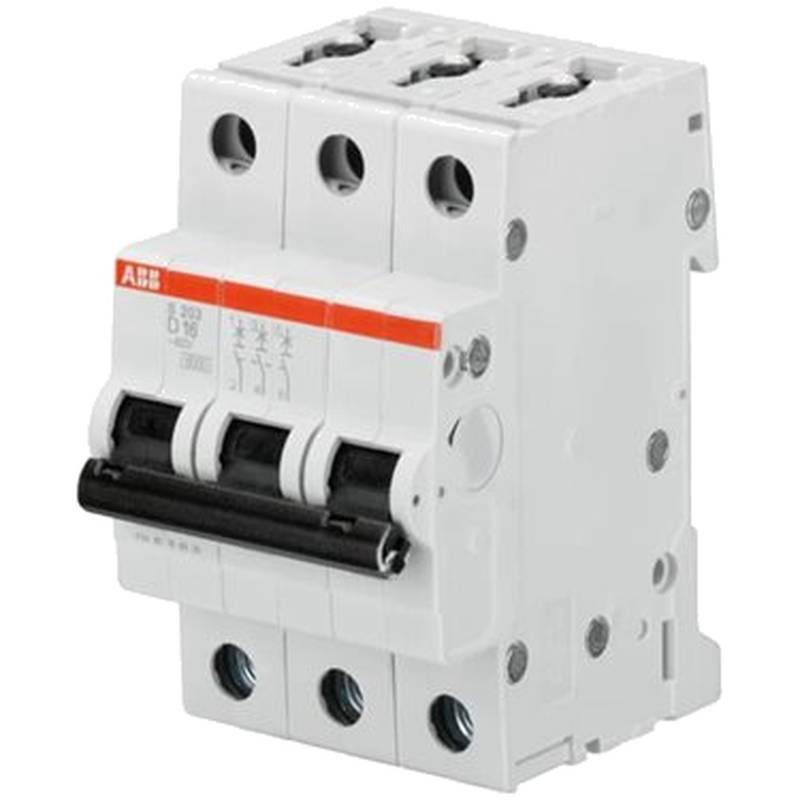
ABB S203-D63 63A D Curve Circuit Breaker Triple Pole


The ABB S203-D63 63A D Curve Circuit Breaker Triple Pole is engineered for robust protection in demanding industrial environments, offering superior performance and reliability. Its key advantages lie in its high breaking capacity, suitability for inductive loads, and adherence to stringent international safety standards. This triple-pole breaker features a D-curve tripping characteristic, providing rapid disconnection for high inrush currents commonly associated with motors and transformers, thereby safeguarding sensitive equipment. With a rated current of 63A and a breaking capacity of 6 kA, it is designed to handle significant fault levels, ensuring operational continuity and personnel safety.
Product Specifications
| Specification | Value |
| :--------------------- | :----------- |
| Product Type | Miniature Circuit Breaker (MCB) |
| Series | S200 |
| Poles | 3 |
| Rated Current (I_n) | 63 A |
| Tripping Curve | D |
| Rated Breaking Capacity (I_cn) | 6 kA |
| Rated Voltage (U_e) | 400/415 V AC |
| Frequency | 50/60 Hz |
| Protection Type | Thermal-magnetic |
| Terminal Type | Screw Terminal |
| Mounting Type | DIN rail |
| Ambient Temperature | -25 to +55 °C |
| Compliance Standards | IEC/EN 60898-1, IEC/EN 60947-2 |
Core Features & Market Positioning
The ABB S203-D63 stands out in the industrial protection market due to its specialized D-curve characteristic. This feature is critical for applications involving heavy inductive loads, such as large electric motors, transformers, and discharge lighting, which experience high startup currents that can falsely trip standard B or C curve breakers. The S200 series, to which this breaker belongs, is renowned for its compact design, high performance, and consistent quality, making it a preferred choice for panel builders and system integrators seeking reliable and efficient circuit protection solutions. Its robust construction ensures longevity and operational stability even under harsh industrial conditions.
Key Application Scenarios
This triple-pole circuit breaker is ideally suited for industrial power distribution systems, particularly for protecting circuits with motors, pumps, fans, and compressors. Its D-curve is essential in applications where the motor's starting current can be as high as 10-20 times its rated current. It is commonly deployed in manufacturing plants, heavy industry facilities, and commercial buildings to protect main feeders and individual motor circuits. The triple-pole configuration ensures complete isolation of all phases, a critical safety requirement for three-phase equipment.
Practical System Integration Guidance
Installing the ABB S203-D63 is straightforward, designed for mounting on standard 35mm DIN rails. Ensure that the incoming power supply is disconnected before commencing installation. The line side (input) terminals should be connected to the power source, and the load side (output) terminals to the protected equipment. For a triple-pole breaker, all three phases must be correctly wired to the corresponding terminals to ensure proper protection and switching. Verify that the conductor size is appropriate for the 63A rating to prevent overheating. Always adhere to local electrical codes and regulations during installation.
Operation and Risk Mitigation
The S203-D63 operates via a thermal-magnetic tripping mechanism. The thermal element protects against overloads by reacting to sustained overcurrents, while the magnetic element provides rapid disconnection in response to short circuits. To mitigate risks, ensure the breaker is correctly rated for the load and that the supply voltage is within its operational range. Regular inspection of terminals for tightness and signs of overheating is recommended. In case of nuisance tripping, investigate the load for potential issues, such as motor starting problems or wiring faults, rather than assuming the breaker is faulty.
Scalability & Long-Term Value
As part of ABB's extensive S200 product line, the S203-D63 offers excellent compatibility with other ABB components and a wide range of third-party devices designed for DIN rail mounting. This ensures flexibility for future system expansions or modifications. While MCBs are primarily protective devices, their reliability contributes to long-term operational value by preventing costly equipment damage and minimizing downtime. ABB's commitment to quality and innovation means that components like the S203-D63 are designed for dependable service life, supporting the evolving needs of industrial automation and digital integration.
Frequently Asked Questions
1. What is the primary advantage of the D-curve on the ABB S203-D63 breaker?
The D-curve on this breaker allows for a higher inrush current without tripping. This is crucial for inductive loads like motors. It prevents nuisance tripping during startup.
This characteristic makes it ideal for heavy industrial applications. It ensures reliable operation of machinery. The breaker protects without interrupting normal startup processes.
Therefore, it’s the preferred choice for motor protection circuits. It offers robust safeguarding for high-demand equipment. This enhances overall system uptime and efficiency.
2. How do I correctly wire the ABB S203-D63 triple-pole circuit breaker?
Connect the incoming power supply to the line-side terminals. Ensure all three phases are connected to their respective terminals. The load, or protected circuit, connects to the output terminals.
Always verify the polarity of the incoming power. Incorrect wiring can lead to equipment damage. Follow standard electrical wiring practices and local codes.
Use appropriately sized conductors for the 63A rating. Tighten terminals securely to ensure good electrical contact and prevent overheating. Disconnect power before installation.
3. What type of loads is the ABB S203-D63 circuit breaker best suited for?
This breaker is best suited for loads with high starting currents. This includes electric motors, transformers, and solenoids. It handles inductive loads effectively.
The D-curve characteristic is specifically designed for these applications. It allows for the temporary surge of current during equipment startup. This prevents premature tripping.
Typical applications include pumps, fans, compressors, and industrial machinery. It ensures reliable protection for such equipment. It is a staple in heavy industrial settings.
4. Can the ABB S203-D63 be used in residential applications?
While technically possible, it's generally not recommended for typical residential use. Residential circuits usually employ B or C curve breakers. These are designed for lower inrush currents found in lighting and standard appliances.
The D-curve's sensitivity to high inrush currents can lead to unnecessary tripping in a home environment. This might occur with devices like refrigerators or air conditioners if they are connected to circuits protected by a D-curve breaker.
Its application is primarily industrial, where high inductive loads are common. Using it in a residential setting may not comply with standard residential electrical practices.
5. What is the breaking capacity (kA) of the ABB S203-D63, and why is it important?
The ABB S203-D63 has a breaking capacity of 6 kA. This indicates the maximum fault current it can safely interrupt. It prevents damage to the breaker and surrounding equipment during a short circuit.
A higher breaking capacity is crucial in industrial settings. These environments often have lower source impedance, leading to potentially higher fault currents. 6 kA is suitable for many common industrial distribution systems.
Selecting a breaker with adequate breaking capacity is vital for safety. It ensures the breaker can handle worst-case fault scenarios. This protects personnel and prevents widespread electrical system damage.
6. What does "triple pole" mean for this circuit breaker?
"Triple pole" means the breaker has three independent poles, or switching contacts. It is designed for three-phase power systems. Each pole controls one phase of the electrical supply.
This allows it to simultaneously disconnect all three phases of a three-phase circuit. This is a critical safety feature for three-phase equipment like motors. It ensures complete isolation from the power source.
Using a triple-pole breaker provides enhanced safety and protection for three-phase loads. It prevents single-phasing issues and ensures symmetrical fault interruption.
7. How does the thermal-magnetic tripping mechanism work in the S203-D63?
The thermal tripping mechanism uses a bimetallic strip that heats up with overcurrent. If the overcurrent persists for a significant duration, the strip bends and trips the breaker. This protects against gradual overloads.
The magnetic tripping mechanism uses an electromagnet. When a very high current (short circuit) occurs, the electromagnet is energized. This immediately trips the breaker, providing fast protection against damaging short circuits.
Together, these mechanisms offer comprehensive protection. The thermal element handles overloads, while the magnetic element handles short circuits. This dual action ensures equipment safety.
8. Is the ABB S203-D63 compatible with other S200 series accessories?
Yes, the ABB S203-D63 is fully compatible with accessories designed for the S200 series. This includes auxiliary contacts, signal contacts, and shunt trip devices. These accessories can be easily mounted on the breaker.
This compatibility allows for enhanced functionality. For example, auxiliary contacts can signal the breaker's status to a control system. Shunt trips allow remote electrical tripping.
This modularity provides flexibility in system design. It allows for custom solutions and integration with automation systems. It ensures long-term adaptability of the electrical installation.
9. What are the environmental operating conditions for the ABB S203-D63?
The ABB S203-D63 is designed to operate within an ambient temperature range of -25°C to +55°C. This broad range makes it suitable for various industrial environments, from cold storage to hot manufacturing floors. It also has a storage temperature range specified by ABB.
The breaker should be installed in a location protected from excessive dust, moisture, and corrosive substances. Proper ventilation is important, especially when multiple breakers are installed in a panel. This helps maintain performance and longevity.
Its robust construction ensures it can withstand typical industrial environmental challenges. However, extreme conditions outside the specified ranges may affect performance or lifespan.
10. Where can I find the official datasheet or technical documentation for the ABB S203-D63?
Official datasheets and comprehensive technical documentation for the ABB S203-D63 can typically be found on the official ABB website. Search for the product code "S203-D63" within their product catalog or technical library.
ABB provides detailed specifications, installation manuals, and compliance information. These documents are essential for engineers and technicians. They ensure correct application and installation.
You can usually download these documents in PDF format. They are the most reliable source for all technical data and safety information regarding the product.